

AI-based diagnosis of Lyme disease

Lyme borreliosis(opens in new window) or Lyme disease is a vector-borne infection that spreads to humans by the bite of certain types of ticks. Current serological tests offer a sensitivity below 40 % in early stages and are highly dependent on the immune response against the bacteria Borrelia burgdorferi(opens in new window) that cause the infection. These tests focus on the antibodies produced to fight off the disease. However, in many cases the host’s immune reaction is delayed, weak or even absent.
An improved diagnostic assay for Lyme disease
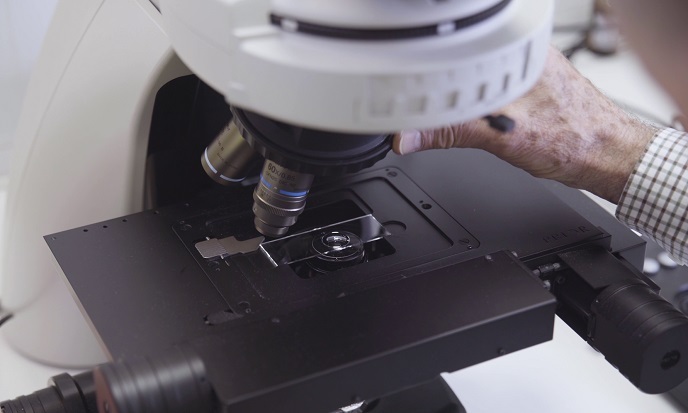
To address these shortcomings, the EU-funded DualDur project developed an in vitro diagnostic (IVD) method that can directly identify pathogens. “DualDur® reagent and method was developed in 1986 in Hungary and was routinely used on thousands of samples as a confirmatory test. With the help of the Horizon 2020 grant we have been able to transform it into a standard testing procedure that is compatible with the most modern laboratory systems,” explains Andras Pal Bozsik, DualDur coordinator and founder of Lyme Diagnostics Ltd(opens in new window). The method entails the use of the special cell technology medium DualDur®, followed by a preparation and concentration method of bacteria from blood. The medium maintains the stability of samples for over a week at room temperature. The samples are subsequently examined using a uniquely designed automated microscope combined with an AI module that identifies the live and moving pathogens while minimising human error. Sample concentration ensures sensitivity even when bacteria numbers in the blood are low. Thus, the DualDur® method can detect even the lowest concentration of B. burgdorferi that exists in humans during an infection. Importantly, it does so at all stages of the disease, offering a more certain diagnosis in the early stage of the infection, as well as in the more advanced phase of the disease with chronic symptoms. Moreover, it remains the only clinically tested and CE IVD marked direct test that can be used as a tool for monitoring treatment efficacy. DualDur and the data collected during the project preparation were mentioned in the European Parliament resolution of 2018 on Lyme disease(opens in new window) and were quoted in further answers to EP interpellations. DualDur was selected as a flagship project by the Representation of the European Commission in Hungary in 2019 to demonstrate the benefits of European grants. In 2020, it was also selected as a flagship project for the European Parliament to emphasise the advantages of its work on the health and well-being of European citizens.
Clinical efficacy and impact
In vitro tests on hundreds of artificially inoculated samples confirmed the DualDur® method’s level of detection. Using this method, an average operator can differentiate B. burgdorferi from similar spirochaetes(opens in new window) with great certainty. After these encouraging results, DualDur® entered a multi-centre prospective clinical study of 400 patients, where it was tested against standard methods. The clinical trial plan created a new standard for clinical testing in a case where no ‘golden standard’ test exists to define the positive and negative patient groups. It was the largest clinical trial on the diagnosis of Lyme borreliosis, enlisting eight trial sites from six countries across central Europe. “The automated AI-based DualDur® system outperformed all other tested laboratory methods, reaching a sensitivity that is by 60 % higher than the first-choice serological method,” emphasises Bozsik. The results of the clinical trial have been submitted to and accepted by the relevant authorities and ethical commissions, and DualDur partners have completed the CE registration process according to the EU regulation on IVD methods. The automated system has been installed at selected laboratories, while the development of new features and stability solutions is ongoing. A new version is currently being prepared for clinical testing according to CE IVD software. Despite the COVID 19 pandemic hindering progress and significantly slowing down the business plan execution, the system was launched on the market in August 2021. Samples from 35 countries have already been tested, and selected blood draw sites and on-demand sampling(opens in new window) are available in the EU and UK directly or via partners. Lyme disease is the most common zoonotic disease(opens in new window) in Europe with at least 650 000-850 000 estimated cases every year, and a seroprevalence of 20.7 % in central Europe. Late-stage disease poses a heavy burden on patients in terms of quality of life and incurs direct and indirect healthcare costs. Implementation of the DualDur® system is expected to improve early diagnosis and treatment of patients suffering from Lyme disease.