Catching up with CHARTER: Improving adaptation to the changing Arctic


In 2020, 21 research institutions supported by the EU-funded CHARTER(opens in new window) project set out to gain a better understanding of the processes related to rapid climate and land use changes in the European Arctic. They investigated changes in land use, biodiversity, snow and ice cover, and permafrost, and how they impact Arctic climate patterns and socio-ecological systems. Since the project ended in January 2025, the CHARTER team continues to network and disseminate its achievements through forum presentations and the media.
Data and tools for an Arctic future
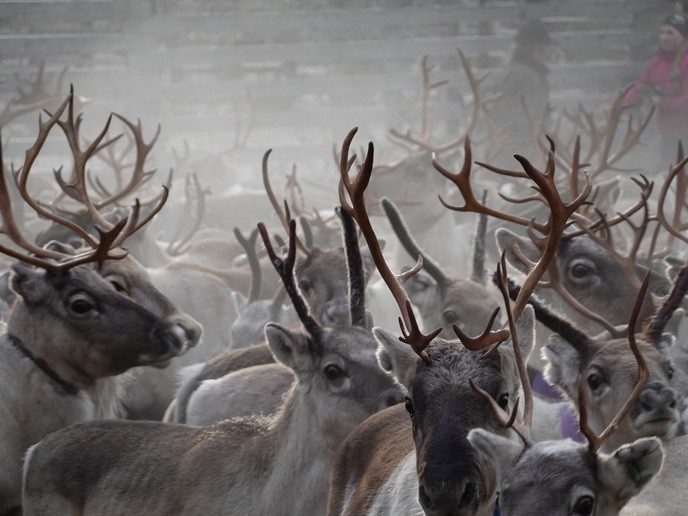
Natural records like lake peat sediments, a combination of remote sensing techniques like drone and satellite data, and AI were all used to explore biodiversity changes over millennia. Bruce Forbes, a research professor at CHARTER project coordinator University of Lapland, Finland, spoke about these analytical tools and datasets in June 2025 at the EU Arctic Forum held in Finland. His well-received presentation summarised the project’s achievements and takeaways for decision-makers and Arctic indigenous youth. The researcher also discussed the project’s exploration of how Arctic biodiversity has responded to the grazing regimes of large herbivores such as reindeer at local and regional scales. Reporting on a key achievement of the project, Forbes and researcher Sirpa Rasmus, also from the University of Lapland, commented: “CHARTER created the first ever comprehensive Holocene Arctic Biodiversity Indicators Database(opens in new window), which will long outlive the project.” Comprising more than 1 000 sites, the database is a collection of data showing how Arctic plants and animals have changed over time. It includes information gathered from many studies that tracked these changes in Arctic land and freshwater environments. CHARTER was able to confirm the substantial positive impacts that reindeer have on ecosystem structure and functioning. It also made significant strides in using climate modelling to better reflect the concerns of Arctic livelihoods and communities. Knowledge was co-created with reindeer herders, requiring varied interaction between local practitioners and researchers. “Trust, clear communication and timing of activities were found to be key,” observed Forbes and Rasmus. Project findings negate commonly held beliefs about excessively high reindeer numbers in northern Fennoscandia. They also confirm that knowledge of history is a prerequisite for understanding ecosystems in the north, and biodiversity changes cannot be analysed without understanding the land use changes within the region. “Moreover, local communities and traditional livelihood should not merely be considered as ‘victims’ of change,” remarked the two researchers, adding: “rather, they participate in shaping the ecosystems.” CHARTER work further confirmed the importance of land use planning given the rapid and interlinked socio-environmental changes the Arctic is experiencing. Also, governance approaches need to consider links between climate, biodiversity, land use and local livelihoods, with direct and meaningful participation by local and indigenous peoples. To further the dissemination of its results, CHARTER (Drivers and Feedbacks of Changes in Arctic Terrestrial Biodiversity) has published policy briefs(opens in new window) in multiple languages and created online story maps(opens in new window) that continue to attract audiences. It is also collaborating with national and regional media and networking with local communities. Collaborations are also being established for funding to continue the work begun in CHARTER. The ‘Life After’ feature shines a light on finished EU-funded projects and what they have achieved since the end of EU funding. If you are interested in having your project featured as a ‘Life After’ project, please send us an email to editorial@cordis.europa.eu and tell us why! CHARTER Coordinated by: University of Lapland Factsheet URL: https://cordis.europa.eu/project/id/869471