What would a Mars base be built out of?


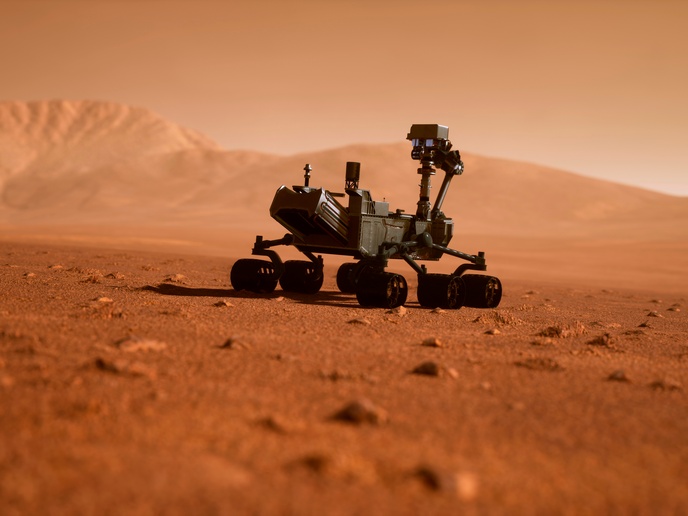
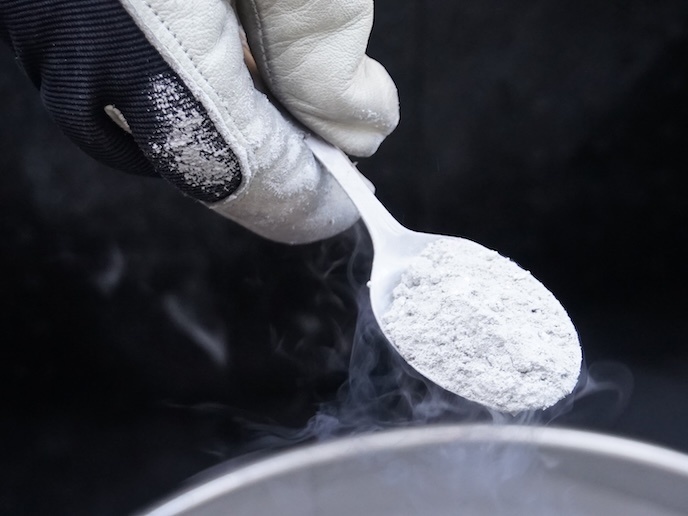
The Martian climate is particularly harsh. The red planet’s atmosphere is less than a hundredth the density of Earth’s, which makes it very cold, and very dusty. A thinner atmosphere can’t retain as much heat, which means huge temperature swings: it could be a rather pleasant 20 °C during the day, but plummet to -60 °C overnight. “If we could live without spacesuits, you would even feel the difference in temperature within your body – your head would be much colder than your feet,” says Anyszka. It’s also the reason that colossal dust storms frequently sweep around the planet, and completely encircle it every few years. This dust is very abrasive, as it doesn’t erode like the soil on Earth. “It can stick to materials, and then it’s not so easy to remove it,” adds Anyszka. Another minor complication for future inhabitants: the dust is thought to be toxic. Shipping building supplies from Earth would be prohibitively expensive, so a Martian base would need to make use of local-sourced materials. To make a strong structure that keeps the heat in and the dust out, concrete would be a good option. But making regular concrete requires a lot of water as a binder, which – at this point in time – doesn’t seem to be in abundance on Mars. One promising alternative is concrete which uses sulfur in place of water as a binding agent, and offers better resistance to abrasive dust. The regolith of Mars – the dust and rocks covering the surface – has a variety of sulfates which could be extracted. To work as a binding agent, this sulfur needs to be stabilised with carbon, which could be wrung out of the thin atmosphere of Mars. Other researchers have suggested using polylactide as a binder, a compound which comes from plants. “On Mars, plants could be our reactors, to get substrates for making other materials,” explains Anyszka. “Plants can also provide us with fibres from cellulose, which could be used as reinforcements, fillers or cords.” Plants could also be genetically engineered to produce lots of limonene, a sulfur-stabilising compound that occurs naturally in citrus fruits. Then with a lot of inorganic filler from the Martian regolith, you’d have yourself Martian concrete.
Rolling on Martian roads
In the RED 4 MARS project, which was funded by the Marie Skłodowska-Curie Actions(opens in new window) programme, Anyszka and his colleagues developed a customised rubber that can stand up to the harsh Martian climate. Temperature swings in particular are challenging for the tyres and tyre tracks of rovers exploring the planet, especially under heavy loads. The researchers designed a rubber based on a mixture of silicone rubber and butadiene rubber, which testing showed can retain elasticity at very low temperatures. A new PhD project has been launched to build on the successful results of the project. And the rubber itself may be a vital component for a future Martian base, to allow astronauts in and out. “If we need a dynamic ceiling, like doors, a ceiling that is opened and closed many times, then you really need a good seal, and rubber is the best material,” notes Anyszka. Anyszka and his team are now embarking on a new project with the European Space Agency, to design flexible materials to be used in origami-style structures in space and on other planets. These could be used, for example, to unfold as a spacecraft enters the atmosphere, and increase the surface area used for braking on descent. “Then we could either land in thinner atmospheres, like on Mars, or bring down bigger elements, like the last stages of Ariane rockets,” says Anyszka. Read more about Rafał Anyszka’s research: The customised rubber able to hit the Martian road