
Smart surveillance of blocked arteries at home

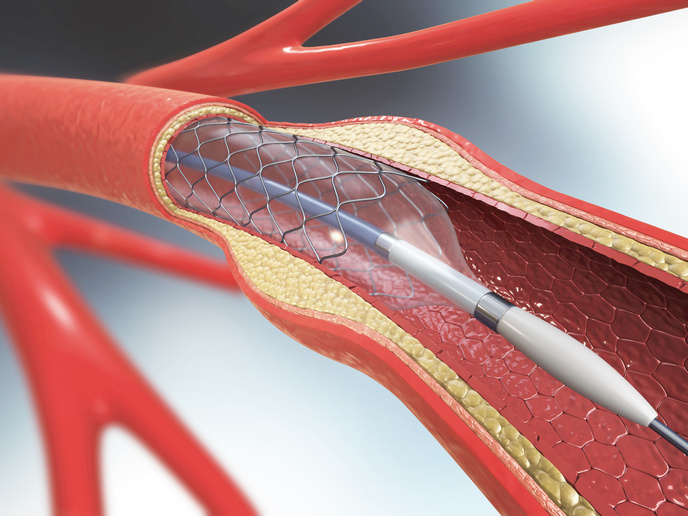
Millions of people worldwide are affected by peripheral artery disease(opens in new window) (PAD) which is commonly treated through the implantation of stents that widen narrowed arteries. While the procedure restores blood flow, up to 20 % of patients experience restenosis(opens in new window), a gradual re-narrowing of the artery within six years. This often goes unnoticed until circulation is critically impaired, leading to chronic pain, disability, or even amputation.
Vascular monitoring at home
Millions of stents are implanted each year with standard follow-up relying on occasional clinic visits, ultrasound scans, and patient-reported symptoms. This places a heavy economic burden on national health systems, necessitating better ways to detect complications earlier and intervene before permanent damage occurs. To address this need, the EU-funded StentGuard project set out to develop an innovative solution for simple, daily monitoring that can be performed at home. The system comprises a tiny, battery-free implantable sensor placed next to the stent in a peripheral artery. A hand-held or wearable external reader captures data within seconds and transmits it to a cloud-based platform for analysis. Using AI, the system detects subtle changes in blood flow and passes on the information to the cardiologist or physician. “StentGuard is the first fully remote, automated monitoring solution designed to detect early complications after vascular stent placement, particularly occlusion, without requiring patients to visit a clinic,” explains Alexej Domnich CEO/CTO of VesselSens Limited(opens in new window) and StentGuard project coordinator.
Innovative technology
Unlike traditional methods that rely on intermittent snapshots, StentGuard measures the resonance behaviour of the implanted sensor. Changes in these parameters correlate with reduced blood flow or increased pulse wave velocity, which are both early signs of restenosis. By taking quick measurements at home, patients generate near-continuous data, supporting faster decision-making. “The key innovation is that StentGuard shifts vascular monitoring from a clinic-based approach to a quasi-continuous and data-driven model,” notes Domnich.
Advanced digital tools for data reliability
Because the system processes signals remotely, robust analytics were essential. The team placed particular emphasis on robustness, reproducibility, and explainability of the detection algorithm. The cloud environment integrates automated artefact removal, compensation for device variability, and a machine-learning model that enables stable trend detection. Clinicians receive continuous records instead of isolated scans, vastly improving diagnostic confidence. The signal-processing engine, now packaged as a validated software library, is designed for integration into secure telemedicine platforms.
System validation and future prospects
Phantom and ex vivo animal studies demonstrated that StentGuard detects blood flow deterioration far earlier than current diagnostic tools. Early detection could reduce emergency revascularisation procedures, prevent amputations, and save substantial hospital costs. With technical feasibility established, the team is now preparing for the next development phase. Priorities include completing good laboratory practice testing and scaling sensor manufacturing. Moreover, clinical trials and platform integration with hospital systems will ensure StentGuard is ready for clinical deployment. “Our long-term vision is to establish StentGuard as the standard of care for post-stent surveillance, turning today’s reactive treatment paradigm into proactive vascular health management,” concludes Domnich.