Detecting cancer and heart disease using antibody signatures

Glycans are complex carbohydrates, or ‘sugar chains’, that coat all cells and are essential to many biological processes. Our blood contains antibodies, and many of these bind glycans. The glycans can be used to ‘trap’ selected antibodies, and a particular set of trapped antibodies forms a signature that can be interpreted, to reveal what target diseases may be lurking, undiagnosed, in a patient. For example, a person with cardiovascular disease (CVD) will have related antibodies circulating in their blood well before the condition can be diagnosed. This has the potential to enable healthcare providers to identify CVD and/or cancers, at an early stage. “The condition could then be mitigated by dietary interventions – that is the goal but needs to be proven,” notes Vered Padler-Karavani(opens in new window), principal investigator on the SugarBiomarker(opens in new window) project, supported by the European Research Council(opens in new window). “We really are what we eat – our diet can be reflected by the profile of antibodies we find in blood. These profiles are expected to differ between someone eating a lot of red meat, compared to someone who does not. We also know from many other studies that high red meat consumption is associated with cancer and CVD. So, building on that notion, we are trying to find signatures of specific antibodies that would appear early in people that have a risk of developing such diseases,” says Padler-Karavani.
Printing glycans to reveal biomarkers for cancer and cardiovascular disease
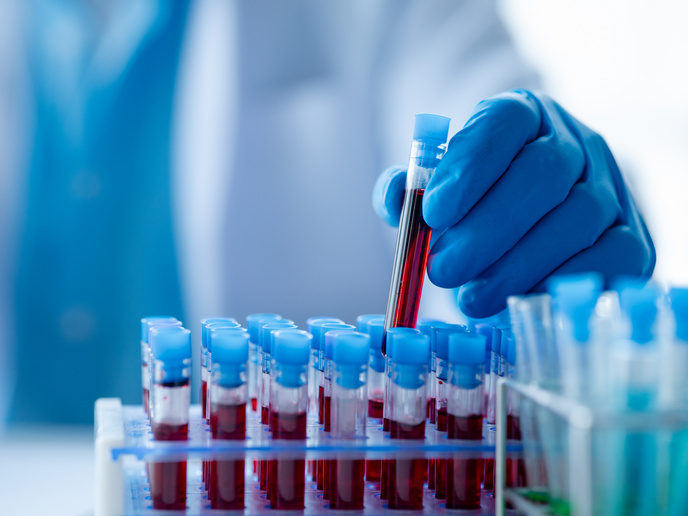
To unravel the connection and discover if the glycans can be used to reveal biomarkers, the team nano-printed the glycans that might be associated with cancer or CVD. The printing process is innovative. “We print a very small spot on a glass slide in a way that allows us to screen thousands of blood samples against hundreds of nano-printed glycans very quickly. We have a special nano-printer for that, and we can print close to 1 000 arrays in each print run.” Once the glycans have been printed, they attach firmly to the slides. Then the team exposes antibody-rich human serum or plasma to the printed glycans on the glass surface. Padler-Karavani takes up the explanation: “If a certain individual has an antibody that can bind to one or more of the printed glycans on the array, we can detect it. This way, in each individual, only some of the printed glycans will be recognised. We look for such barcodes/signatures that will be shared between individuals with CVD and, perhaps, other signatures for individuals with cancer.”
Antibody signature tests could eventually be used for home-testing
Currently, the team uses special machinery to analyse the samples, but they envision further developments that will make it possible for anyone to do this at home, just like the COVID home tests are used today. There could also be a slightly more sophisticated format that could be used with more accuracy at the clinic. “We envision being able, potentially, to recommend certain diets for certain antibody signatures,” adds Padler-Karavani. This project opens up new opportunities to examine how ‘sugary blood testing’ could be used to identify the presence of other conditions, and the factors that are influential. So, will such tests be coming to a pharmacy near us any time soon? “We have defined an initial business plan, and a commercial entity has already expressed an interest in our studies and technology. At this stage, we are seeking to continue development based on licensing or partnership,” Padler-Karavani explains.