How three-parent breeding improves efficiency in crop breeding

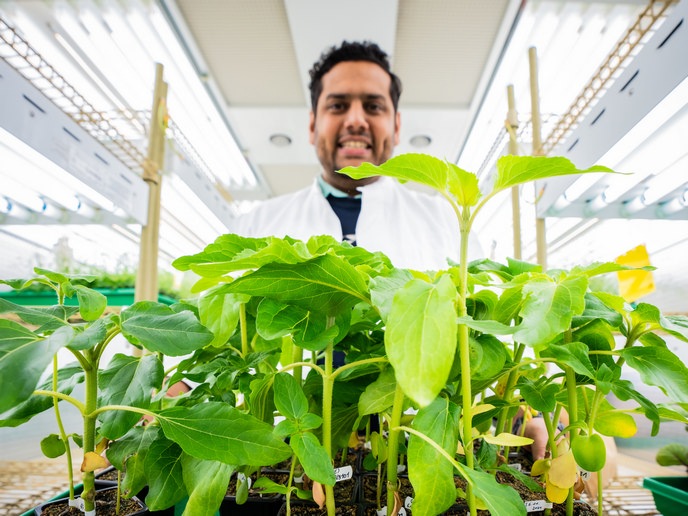
Heat, drought and shifting pest pressures are changing farming conditions faster than new crop varieties can be developed. Breeders must balance yield, quality, and resilience; yet combining traits from distant or wild plant relatives is slow and often prevented by biological incompatibilities. With funding from the European Innovation Council (EIC)(opens in new window), the 3P-Tec(opens in new window) project worked on a shortcut: a three-parent breeding method that can enable the combination of traits from three plants in a single crossing event, with the potential to incorporate traits from wild relatives that are often difficult to introduce into modern crop varieties using conventional crosses.
Three-parent crosses widen breeding options
In standard breeding, an egg cell is fertilised by one sperm cell, producing offspring with two parents. 3P-Tec builds on an unusual but real biological event where an egg cell fuses with two sperm. As project coordinator Rita Gross-Hardt explains, “3P-Tec builds on the fundamental insight that a plant egg cell can be fertilised by sperm from two different fathers to produce viable offspring with genetic contributions from one mother and two fathers.” For breeders, this can mean fewer generations to assemble valuable traits, since two paternal trait sets can be introduced simultaneously. The method also targets a common roadblock in crop improvement: hybridisation barriers that cause seed abortion when breeders try to cross genetically distant plants.
A gene lever that raises triparental success rates
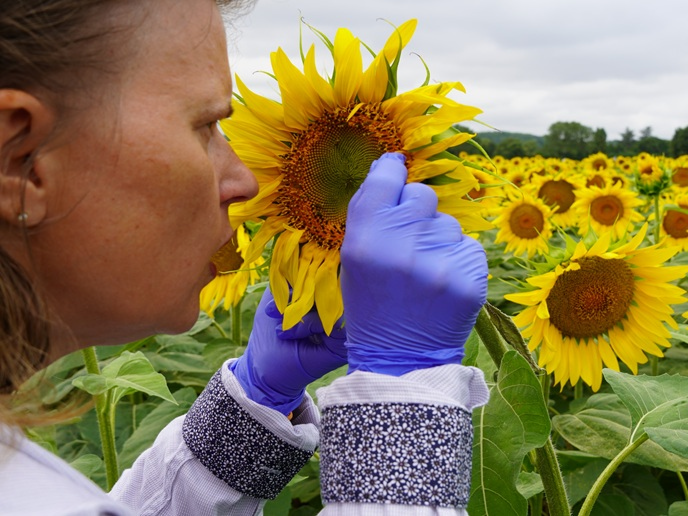
Beyond the crossing concept, researchers showed that two enzymes, ECS1 and ECS2, influence the frequency of an egg cell fusing with more than one sperm, a process called polyspermy. Using a high-throughput screening method, the team found that plants lacking both enzymes showed a threefold increase in polyspermy. This higher rate raises the likelihood of producing three-parent offspring, making the approach more efficient. This key mechanism and its impact on the efficiency of triparental plant recovery have been documented in a peer-reviewed scientific publication(opens in new window).
From sugar beet prototype to future crop pipelines
The 3P-Tec project builds on earlier work funded by the European Research Council -ERC(opens in new window) through the bi-BLOCK and TriVolve projects and has progressed beyond proof-of-principle towards crop-breeding use. One concrete milestone is the transfer into a major European crop. Gross-Hardt notes, “A major milestone was the successful establishment of a triparental sugar beet as the first crop prototype.” Demonstrating the approach in sugar beets shows it can be applied beyond model plants, a key hurdle before breeders can use the method at scale. The project also aimed to pave the way for use in additional crops, including potato, where breeders face growing pressure to deliver climate-robust varieties without sacrificing yield. Industrial breeders have been involved to ensure the work stays aligned with commercial timelines, robustness and scale-up requirements.
A non-transgenic route to faster, climate-smart breeding
The project coordinator frames 3P-Tec as non-genetically modified and closer to conventional breeding routes than transgenic methods, in accordance with current EU rules. Scaling this process could help breeders rapidly combine key performance and resilience traits, stabilising yields in extreme climates. Once fully implemented, the technology’s practical value becomes most apparent in areas where conventional breeding has long struggled: enabling traits to be transferred across species boundaries without years of failed crosses, repeated backcrossing, and lost growing seasons.