


Engineered enzymes accelerate viral diagnosis to minutes


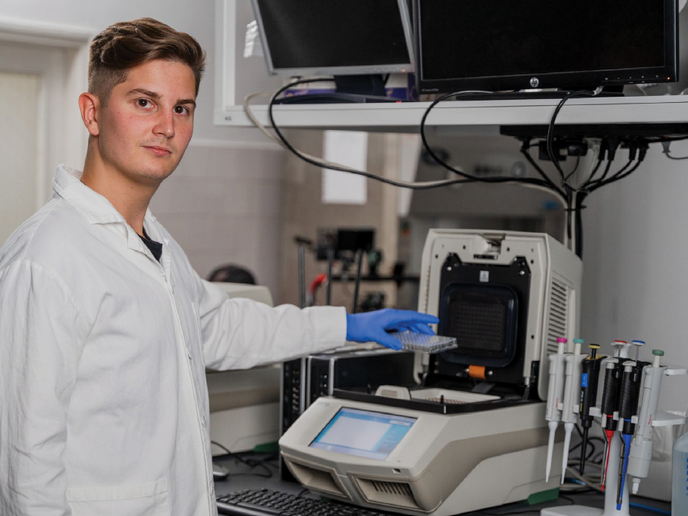
RVDR tackled one of the most persistent constraints of molecular testing by removing the need for nucleic acid extraction, significantly expediting viral detection.
Zsolt Lőrincz, RVDR project coordinator and CEO at TargetEx Biosciences
The COVID-19 pandemic made it clear that advanced healthcare systems struggle to scale molecular diagnostics quickly enough during emergencies. A major reason is the dependence of molecular assays on nucleic acid extraction, which is a labour-intensive step that slows testing and requires specialised infrastructure. This bottleneck becomes especially problematic in resource-limited settings, where cold-chain logistics and trained personnel are not always available. Most viral diagnostics rely on polymerase chain reaction (PCR)(opens in new window), which detects viral RNA or DNA following extraction and amplification of genetic material from patient samples. While highly sensitive, this workflow introduces delays that can hinder timely clinical decision-making and outbreak control. Fast and accurate viral detection is essential for preventing transmission, enabling timely treatment and guiding public health responses during outbreaks.
Faster diagnostic workflow
Funded by the EU through Horizon Europe(opens in new window), NKFIH(opens in new window) and Innovate UK (UKRI)(opens in new window), the RVDR project recognised this gap and set out to develop a new generation of extraction-free diagnostic technologies that could make rapid molecular testing widely accessible. In conventional assays, extraction adds 30-60 minutes and requires specialised equipment, trained personnel and cold-chain logistics. The RVDR approach enables raw samples to proceed directly to amplification, cutting the total turnaround to as little as 15-30 minutes and reducing hands-on procedures to a minimum. “RVDR tackled one of the most persistent constraints of molecular testing by removing the need for nucleic acid extraction, significantly expediting viral detection,” explains project coordinator Zsolt Lőrincz.
Improved assay reagents
Overcoming the inhibitory components of saliva was central to the project’s innovation strategy. The team developed optimised engineered enzymes that retain activity under physiologically relevant salt and inhibitor concentrations. A key breakthrough was BeaSTEx, a redesigned Bst polymerase(opens in new window) used for DNA amplification. BeaSTEx exhibits higher catalytic efficiency and amplification kinetics compared to the native enzyme. These enhanced properties make this enzyme ideal for fast assays. Automated, high-throughput screening enabled the evaluation of thousands of formulation candidates, revealing stabilisers and kinetic enhancers that accelerated enzyme performance without compromising specificity. The team also created air-dried reagent formats that can be stored without refrigeration and can be instantly rehydrated. These combined advances allowed RVDR to produce ultra-rapid assays capable of reliable detection in challenging matrices such as untreated saliva, setting a new benchmark for the speed of molecular diagnostics.
Integration into existing workflows and future directions
The RVDR formulations were designed to integrate seamlessly with existing diagnostic devices, particularly portable and point-of-care systems. The stability of these reagents eliminates many of the operational barriers that limit current assays in field environments. “Our approach also has potential to find application beyond viral diagnostics,” highlights Lőrincz. The same biochemical features make the technology promising for bacterial pathogen detection, food safety testing and environmental surveillance. This versatility establishes a new standard for decentralised diagnostics, strengthens its potential impact across multiple sectors and offers a powerful tool for future outbreak preparedness. The next phase involves scaling up production under ISO9001 and ISO13485 quality standards, completing stability studies and transferring the formulations to commercial diagnostic platforms. The team also aims to build partnerships to support deployment in remote and resource-limited settings. The consortium brought together TargetEx Biosciences and PCR Biosystems UK, co-funded by Horizon Europe, the National Research, Development and Innovation Office in Hungary (NKFIH) and the UK’s Innovation Agency (Innovate UK).