Neural networks meet quantum computing

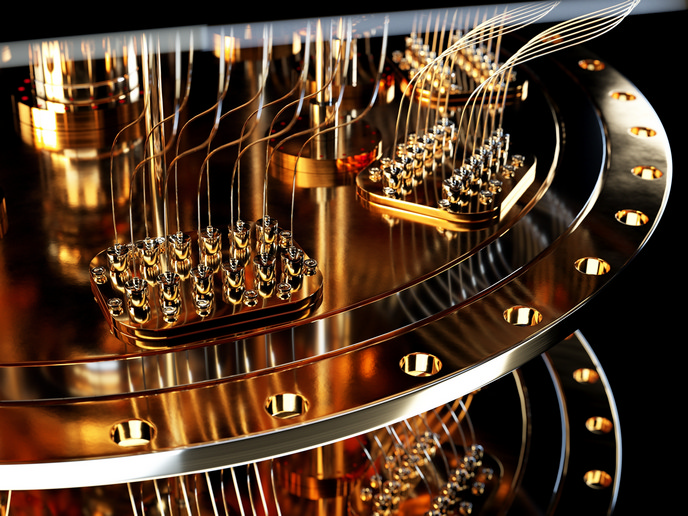
Inspired by the neural structure of the brain, classical neural networks are computational models designed to recognise patterns and learn functions using interconnected layers of artificial neurons. Today, they are used with impressive success for tasks as diverse as image and speech recognition and classification, machine learning, and the analysis of big data. The development of classical neural networks happened in parallel with the evolution of quantum computing, an advanced computing paradigm that leverages quantum mechanics to process information using qubits instead of classical bits. Although the two technologies were largely developed independently, scientists quickly identified potential synergies. “Driven by the hope of combining the massive parallel information processing capabilities of neural networks with the computational speed-up promised by quantum computing, there have been several efforts to develop quantum-mechanical generalisations of neural networks,” says Markus Müller, a professor at the Jülich Research Centre(opens in new window). One of those efforts is the QNets project, which was funded by the European Research Council(opens in new window). The project aimed to explore the potential of quantum neural networks as an alternative pathway for achieving scalable quantum information processing. “On the one hand, we wanted to conceptually understand which quantum neural architectures can be formulated and what benefits they can provide for quantum information processing,” adds Müller, who coordinated the project. “On the other hand, we looked to identify the physical building blocks for the practical implementation of neural networks in state-of-the-art quantum technological platforms.”
Advancing the field of scalable quantum information processing
The project achieved numerous results, each of which has significantly advanced the field of scalable quantum information processing. For example, a formalism for evaluating the maximal storage capacity of quantum networks allows one to determine the maximum amount of information that can be stored in a quantum neural network of any given size. Researchers also explored quantum generalisations of auto-encoder type neural networks and quantum cellular automata, two paradigmatic classical neural network and information processing frameworks. “We showed that the quantum generalisations of these approaches can be formulated in a meaningful way and in a manner that enables the quantum neural networks to be either trained or carefully designed to have emergent quantum error correction capabilities,” explains Müller. Another key outcome of the project is the development and implementation of a new framework and practical protocols for both autonomous, measurement-free quantum error correction and quantum computing in state-of-the-art quantum processors. “By bridging the gap between theory and experiment, we achieved the world’s first demonstration of measurement-free, fault-tolerant universal quantum computation,” notes Müller.
Highlighting the potential of open quantum neural networks
QNets successfully highlighted the potential of open quantum neural networks as an alternative pathway to scalable quantum information processing, delivering proof-of-principle theory results as well as demonstrating the feasibility of its new ideas. “We laid the groundwork for further exploring quantum neural-network and measurement-free quantum information processing and I’m excited to see which approaches will find application in future scalable quantum computers,” concludes Müller.