Practical solutions for climate-smart farming

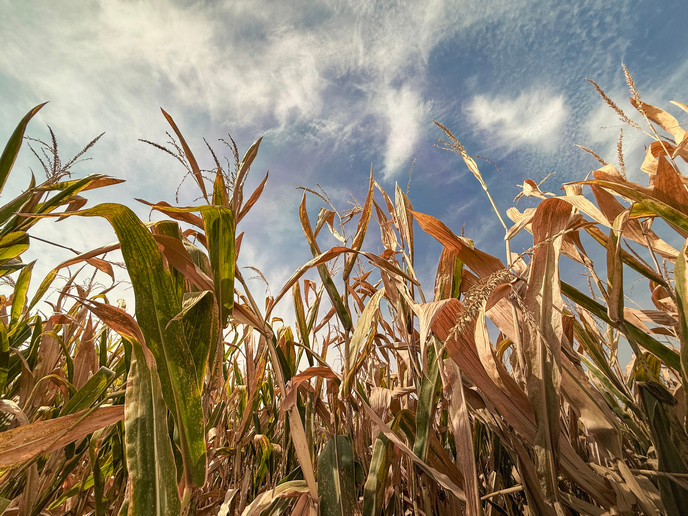
Agriculture, accounting for nearly 11 % of the EU’s total greenhouse gas emissions(opens in new window), is a major contributor to climate change. But it is also a sector that is particularly vulnerable to climate change, with droughts, heatwaves and flooding all impacting agricultural productivity. With the dual aim of reducing farming’s environmental footprint and increasing its climate resilience, the EU has set some high targets for agriculture – including achieving carbon neutrality by 2050. Helping to advance this goal is the EU-funded ClieNFarms(opens in new window) project. The project developed, tested and deployed a range of systemic solutions designed to reduce agriculture’s climate impact. “Systemic solutions recognise that while farmers are central to the agricultural ecosystem, they alone cannot make agriculture fully sustainable,” says Jacques-Eric Bergez, a researcher at France’s National Research Institute for Agriculture, Food and Environment(opens in new window) (INRAE), the project’s coordinating partner. “To succeed, they must be actively supported by other stakeholders, including advisors, banks, agri-food actors and investors.”
Climate solutions for the farm
Working directly with farmers and other stakeholders, the project delivered a portfolio of farm-level, climate solutions. These solutions, which cover both livestock and crop farming, can be used to reduce fertiliser use, better manage soil and improve animal feed, nutrition and rearing. For example, one solution geared to livestock farming outlines how feeding animals specific herbs or plant extracts can reduce methane synthesis and thus methane emissions. Likewise, a solution for olive farmers focuses on how cultivating permanent vegetation such as clover to cover soil under and between olive trees can reduce soil erosion and possibly productivity. All the project’s climate solutions have been compiled into a comprehensive catalogue(opens in new window). They were also fully tested and validated in real-world scenarios, the locations and production systems of which can be explored via this interactive map(opens in new window).
Towards sustainable, climate-neutral agriculture
In addition to the farm practices and climate solutions, the project developed transition roadmaps and a scale-up toolkit(opens in new window). While the former aims to help agri-food actors adapt climate-neutral practices, the latter looks to provide a step-by-step guide to doing so. The project also delivered microlearning content(opens in new window) to support the adoption of its solutions, as well as detailed policy briefs(opens in new window) highlighting, for instance, some of the potential roadblocks to achieving climate-neutral production. “Thanks to the comprehensive work done by the project’s partners, ClieNFarms has moved the needle towards achieving a sustainable, climate-neutral agricultural sector,” concludes Bergez. Although the ClieNFarms project is now finished, its impact continues through the work of the EU-funded ClimateSmartAdvisors and Climate Farm Demo projects, as well as the Farming for Climate(opens in new window) platform.