


Delivering the potential of Copernicus to everyone


Copernicus(opens in new window) products and services have the potential to transform the agriculture and rural development sectors worldwide. But turning this potential into practice requires that the relevant sectors know how to use these services. “With the goal of building regional capacity in Chile and Colombia, we developed the platforms, tutorials, workshops and training users need to fully benefit from everything Copernicus has to offer,” says Karel Charvát Jr., project manager at LESPROJEKT-SLUŽBY(opens in new window), the COMUNIDAD(opens in new window) project’s coordinating partner.
Easy-to-use Earth Observation solutions
The project developed a suite of integrated tools designed to help local researchers and developers explore and analyse Copernicus data, as well as use it to create their own applications. The COMUNIDAD Platform is a modular, interoperable solution that helps users transform Copernicus and other data into actionable decision support tools. “By leveraging multi-source data, pre-configured processing pipelines, and user-friendly interfaces, this solution can be easily used by anyone – no advanced technical training required,” explains Charvát. COMUNIDAD also delivered ready-to-use algorithms and services that use Earth Observation(opens in new window) data to provide users with actionable insights for decision-making, risk management and sustainability assessment. “Designed for direct operational use, these solutions help public authorities, private actors and researchers unlock localised, high-impact applications and scalable replication,” adds Charvát.
Turning space data into strategy
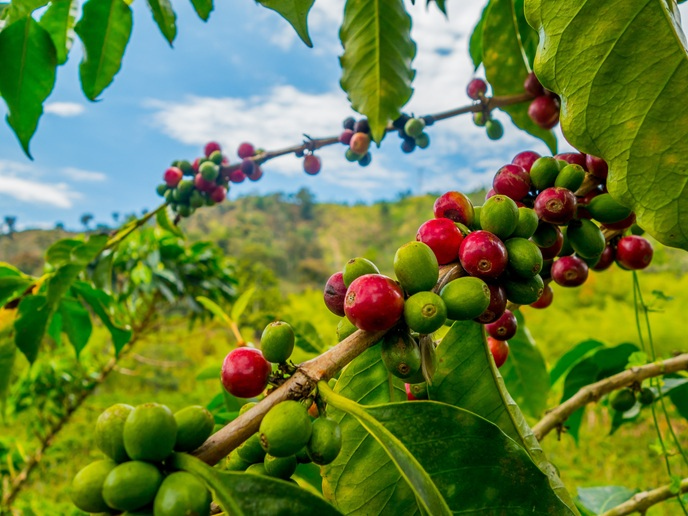
One such application involves assessing how coffee production impacts the local environment. During a pilot in Colombia’s Caldas region, the project used Copernicus imagery to map the distribution of coffee crops and vegetation. This information helps decision makers(opens in new window) to assess an area’s suitability for cultivation, forecast harvest yields and implement sustainability strategies. Other applications can be used to calculate water balance and manage the risk of landslides, both of which impact coffee planters and the wider local community. The project conducted a second pilot in Chile, where its platform used Copernicus data to monitor snow coverage in the country’s Aysén region and support land-use management. “Snow accumulation has a direct impact on water availability and life in the region in general,” notes Charvát. “The COMUNIDAD platform helps local decision makers turn Earth Observation data into effective water management strategies.”
Addressing challenges with Copernicus data
While the project is now over, its impact continues to be felt – and to grow. “Beyond the platform, the applications and the algorithms, COMUNIDAD’s most important legacy is a number of stakeholders who see opportunities in using the COMUNIDAD platform and Copernicus data to address other challenges affecting their lives,” says Charvát. The project is currently working to host the COMUNIDAD platform at two consortium members in Chile and Colombia, where it can be used to develop new solutions. Project partners are also exploring expanding the platform to other Latin American and Caribbean countries.