Unpicking the genetics behind the moon’s effects on marine life

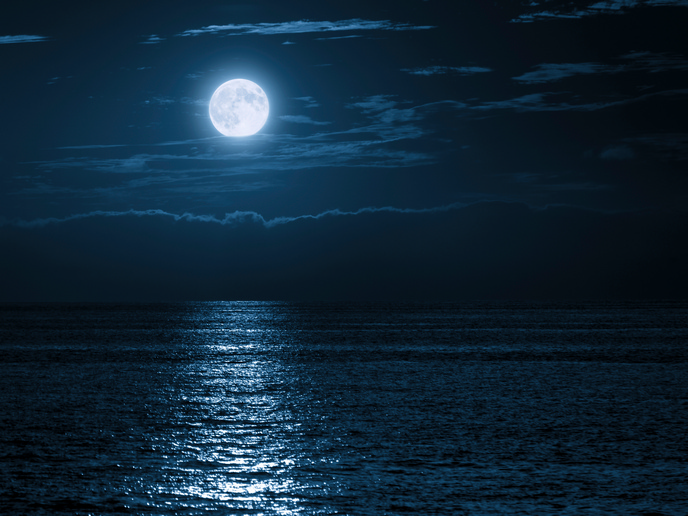
The moon holds great sway over life on Earth. Many marine organisms, including fishes, algae and coral time their lives in rhythm with the moon. Lunar cues can act either directly or through the synchronisation of monthly, ‘circalunar’ clocks, which function like subconscious internal calendars and control key processes linked to reproduction. Many marine organisms fertilise externally, meaning reproduction must be synchronised with the same hour and day, the latter of which depends on the moon. This results in often spectacular mass spawning events across the ocean noticed even by ancient fishermen. “Lunar time is just a very prominent environmental cue that organisms can rely on,” explains Kristin Tessmar-Raible, researcher at the Alfred Wegener Institute(opens in new window), and professor of Chronobiology at the University of Vienna(opens in new window) and Marine Chronobiology at the University of Oldenburg(opens in new window). “It has been there since the beginning of life.” Nevertheless, we still know little about how exactly organisms respond to these lunar cues at the genetic level. Through the Mari.Time project, which was funded by the European Research Council(opens in new window), Tessmar-Raible and her colleagues further investigated the influence of genes and the environment on the circalunar clock, identified molecules that play a key role and tested their results from the lab in the wild.
Exploring the lunar rhythms of the marine bristle worm
The research involved disrupting specific genes in the marine bristle worm (Platynereis dumerilii), especially photoreceptors (light-detecting nerve cells) and core circadian clock genes, which turn off and on depending on the time of day. They then tested how these disruptions affected molecular and behavioural rhythms in the worms, both the circadian (daily) and the circalunar (monthly). A significant amount of work, including protein interaction studies, went into understanding how photoreceptors signal further into the cell by employing biochemical methods. The project also explored the impacts of natural versus artificial light, by designing specific illumination devices that mimic both sources. They then tested how worms can set their inner calendars, comparing wild organisms to those with photoreceptors knocked out.
Discovering mechanisms behind circalunar clocks
The first major result was to find a molecular mechanistic explanation for how sun and moonlight are discriminated and how the worms decode the duration of moonlight. Consistent with work from the 1960s, they found the worms synchronise their inner calendar with the full moon, which has the longest duration of light in the night sky. The team also began to uncover a mechanism to explain how moonlight and the circalunar clock can impact daily timing and confirmed previous findings that the circadian clock is not required for the function of the circalunar clock itself.
Potential influences on the human reproductive cycle
Tessmar-Raible believes the work may also help to better understand the human female reproductive cycle, the monthly timing of which is still not fully understood. “This is quite relevant, given that about 50 % of all women experience menstrual cycle irregularities during their lives, which often lead to fertility problems.” The team has only begun to scratch the surface of this emerging area of science. Further work will help to clarify the monthly clock mechanism and its evolution, and the exact role of moonlight. “We have the first puzzle pieces here, but we still need further ‘knowledge puzzle pieces’ to see the emerging picture,” says Tessmar-Raible.