Turning heavy-duty vehicles electric

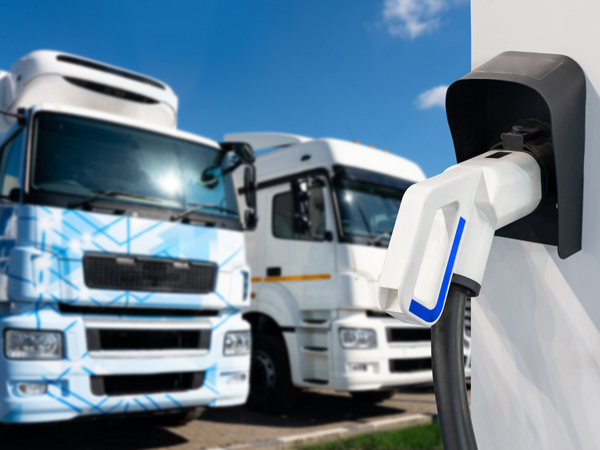
Europe is turning to eco-friendly modes of transportation such as electric vehicles in order to reduce harmful emissions and protect the environment. However, the switch to electric vehicles is not always straightforward. Heavy-duty vehicles for example account for nearly 40 % of the total road-related carbon dioxide emissions in Europe. While the electrification of passenger vehicles has seen significant progress, transitioning the heavy-duty sector remains hindered by substantial technological constraints. “Power electronic converters are the critical interface for managing energy flow from the battery to the electric motor,” explains RHODaS(opens in new window) project member David Lumbreras from UPC(opens in new window) in Spain. “Historically, these systems have relied on silicon-based semiconductors. However, emerging wide-bandgap semiconductors enable operation at high switching frequencies exceeding 100 kHz while exhibiting significantly lower losses than their silicon counterparts. These properties allow building high-power-density converters ideal for the high-power demands of long-haul trucking.”
Power for heavy-duty, long-haul applications
The EU-funded RHODaS project sought to address these challenges by developing power converter components made of emerging materials such as silicon carbide and gallium nitride. The central innovation is an integrated motor drive designed specifically for heavy-duty, long-haul applications. “This solution integrates power electronics, thermal management and digital control technologies directly into a compact, modular motor housing,” adds Lumbreras. “By combining silicon carbide for high-voltage robustness and gallium nitride for high-frequency switching, we were able to achieve superior efficiency, reduced system volume and mitigated electromagnetic interference.” Furthermore, the adoption of a modular converter architecture enhances repairability and fault tolerance while ensuring power scalability, allowing the same fundamental design to be adapted for various power requirements. This could open the door to a number of commercial opportunities further down the road.
Material-level characterisation to validation
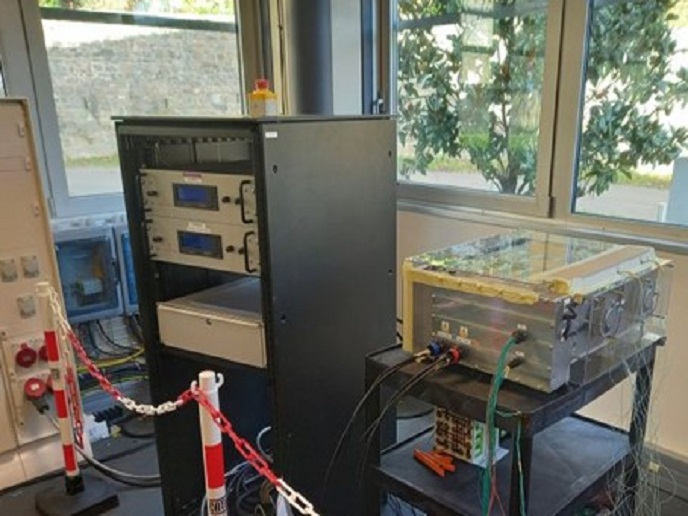
The proposed innovations were validated in three steps. First, devices and drivers underwent material-level characterisation to evaluate stress and functional integrity, and electromagnetic noise immunity. This was followed by the testing of a laboratory-scale converter. The final stage involved a full-scale integrated motor drive coupled with a gearbox, validated within a test bench environment. “We successfully met our technical milestones,” says Lumbreras. “A critical technical lesson involved the observed instability of early pre-series gallium nitride transistors, which required a comprehensive hardware redesign to ensure stability.”
Innovations for Europe’s mobility sector
Overall, the project has successfully advanced the development of high-performance power converters for heavy-duty electric transport. Next steps include scaling and adapting the modular integrated motor drive for a wider range of vehicle classes and integrating RHODaS solutions into the technology roadmaps of industrial partners such as Valeo Siemens. The consortium will also continue to refine circular business models, such as ‘product-as-a-service’ or leasing, and digital vehicle passports (DVPs) to facilitate component-level maintenance and second-life applications. DVPs are secure, cloud-based digital records of a vehicle’s entire life cycle. “We hope the project will have lasting impact through directly contributing to the EU Green Deal targets and improving air quality,” notes Lumbreras. “Establishing a solid European supply chain for power electronics will also help to reduce our dependency on non-EU manufacturers.” RHODaS also successfully promoted innovation networks(opens in new window) between academia and industry. These will help to build on the project’s results and continue to supply cutting-edge technologies and innovations to Europe’s mobility sector.