Applying innovation to preserve cultural heritage colour

Museums and heritage professionals face a double challenge. They need reliable scientific methods to analyse and predict colour change, but they also need engaging ways to share this knowledge with visitors. A reconstruction that looks convincing is not enough; it must be transparent about evidence, uncertainty and interpretation. “Colour is not simply an aesthetic layer,” says PERCEIVE(opens in new window) project coordinator Sofia Pescarin from the Institute of Heritage Science of the National Research Council(opens in new window) (CNR ISPC) in Italy. “It carries historical, symbolic and emotional meaning. When colours disappear or change, our understanding of the past changes with them. This can lead to distorted interpretations, from the long-standing idea of ‘white antiquity’ to the difficulty of explaining how fragile works should be exhibited without accelerating their deterioration.”
New tools and methods to recover colours
PERCEIVE was launched to address these challenges. Coordinated by CNR ISPC, the project brought together research centres, universities, museums and creative industry partners to apply new tools and methods to recover the colours of the past. These included artificial intelligence (AI)-based processing, image-based rendering and three-dimensional (3D) visualisation. “The work focused on five types of heritage problems or scenarios,” explains Pescarin. “These were: lost colour in ancient sculpture and architecture; colour change in paintings; fading historical textiles; historical photography and film; and born-digital art (i.e. materials that originated in digital form). This allowed the team to test its methods across very different materials, institutions and conservation problems.” Out of this work came a number of tools and services(opens in new window) designed for both specialists and wider audiences. The PERCEIVE Platform for example connects digital tools and services. These include new applications such as MuLaX for multilayer Web 3D visualisation, and the Light Damage Estimator for preventive conservation. Other tools developed for restoring early colour photographs (autochromes) as well as for colour simulation and reconstruction have been made accessible.
Citizen-based multisensory experiences
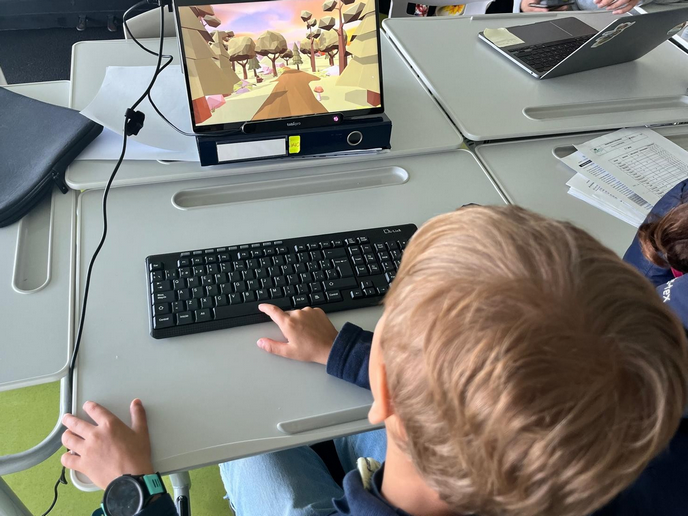
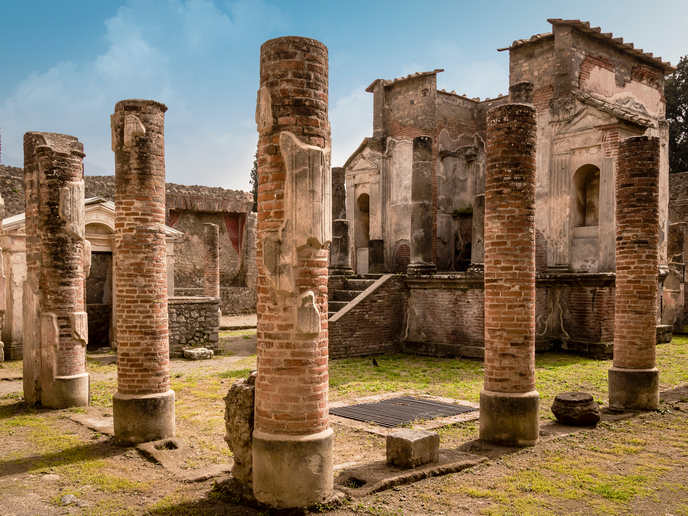
Many of the project’s tools and methods were demonstrated through public exhibitions. These included the ‘Perceive Isis’ Colours’ installation designed by CNR and the National Archaeological Museum of Naples (MANN). This invited visitors to explore the colours of the Temple of Isis in Pompeii through a collaborative multisensory experience including 3D visualisation (‘The Gifts of Isis’ installation) and to discover the complexity of colour analysis and reconstruction (Echoes of Loss). Similarly, the ‘Tiny Conservators’ temporary exhibition at the Munch Museum in Oslo sought to engage families using game-based interactions to communicate conservation challenges, while the ‘Fragile Colours’ exhibition in Trondheim shared with citizens the challenges of autochromes’ colour conservation and restoration, while demonstrating the potential of digital colour-restoring tools. “PERCEIVE developed a Design Toolbox to help museums, designers and educators create meaningful digital and hybrid experiences,” adds Pescarin. “Rather than treating visitors as passive viewers, the project explored how digital heritage can foster care, authenticity and participation.”
From theory to real-world demonstration
For Pescarin and her team, a key success of the project has been to move beyond theory into real-world demonstration. At Digital Heritage 2025 in Siena, the ‘Perceive Isis’ Colours’ innovation received the Best Digital Heritage Exhibition Award. “The next step is to bring these methods into everyday museum and professional practice,” notes Pescarin. “We think that PERCEIVE’s results can support conservators, exhibition designers, educators and digital archivists, to name a few. The work will also continue through related European research, including COLOURS, which builds on PERCEIVE’s outcomes.”