Training tomorrow’s experts in water quality forecasting

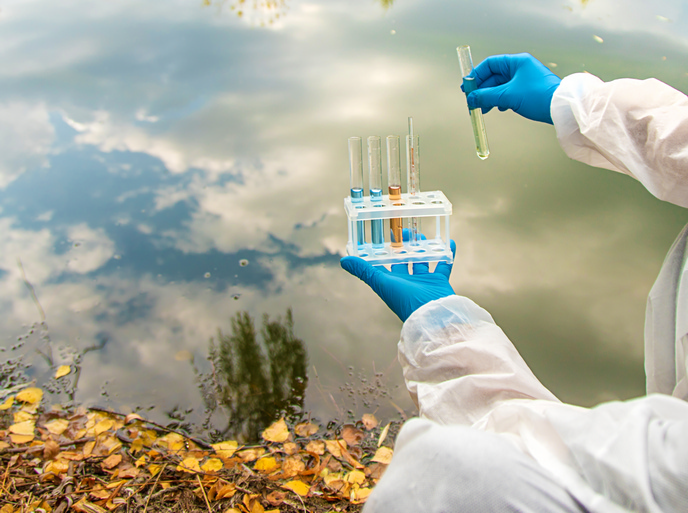
Climate change and the water crisis are inextricably linked: extreme and unpredictable events such as droughts and floods can make our waters more scarce, more polluted or both. It has been estimated that just 0.5 % of Earth’s water is usable and available fresh water(opens in new window), with climate change putting further pressure on this limited supply. Supported by the Marie Skłodowska-Curie Actions programme, the inventWater(opens in new window) project developed a proactive approach to water management. Project work centred on generating the know-how and tools to anticipate how climate change, extreme events and seasonal variability affect the water quality of rivers, lakes and reservoirs.
A network of water quality experts
The initiative’s main goal was to create a platform connecting young water professionals, supporting their research and providing opportunities for advanced interdisciplinary training and knowledge exchange. “We wanted to train a new generation of researchers able to connect climate science, hydrology, ecology, data science and governance,” explains project coordinator Rafael Marcé. One recurring challenge the early-stage researchers (ESRs) faced was translating scientifically advanced models into robust, simple and reliable tools for real decision-making, which proved harder than building a good research model in isolation. Cross-disciplinary collaboration and the network’s remarkable resilience were key in overcoming this and delivering some especially promising results. The team at Aarhus University in Denmark, for example, showed that globally available climate reanalysis data can support acceptable catchment(opens in new window) simulations even in data-sparse contexts. This observation paves the way for the application of forecasting approaches well beyond the best-monitored basins. Other notable outcomes include the first large-scale assessment of deepwater oxygen loss in lakes and improved forecasts for fresh-water fish under warming. Indicators developed within the project are being made publicly available through ISIpedia(opens in new window), and data and code from individual ESR projects are being deposited in open repositories under FAIR principles. “Together, the projects show that water quality forecasting is no longer a theoretical exercise; it is becoming something managers can actually use,” notes Marcé.
Mutual benefits
While the ESRs helped drive water quality research forward, the synergies encouraged by the network were equally beneficial to their own development. Through secondments, shared training events(opens in new window), writing retreats(opens in new window) and joint outreach activities, they tested ideas across different systems and time scales, improving the science in practical ways. Being part of such an internationally diverse environment was also a great opportunity for the young researchers to exchange on challenges and approach problems from very different perspectives. “The ESRs repeatedly showed that the value of the network was not only in their individual PhDs, but in the way the projects informed each other,” Marcé points out.
A training innovation
Ultimately, inventWater’s contribution is twofold. On the one hand, it produced scientific outputs that can stand the test of time: forecasting frameworks, indicators, datasets, model code and policy briefs that can be continuously refined and translated to new geographic and management contexts. On the other hand, it demonstrated a way of training researchers for complex environmental problems: internationally, across disciplines and in close contact with the organisations that will eventually use the knowledge generated, ultimately supporting water managers and policymakers in designing measures for adaptation to a new climate. In this way, “the human capital may be the project’s most durable legacy,” concludes Marcé.