Light-driven microbes could clean up Europe’s wastewater

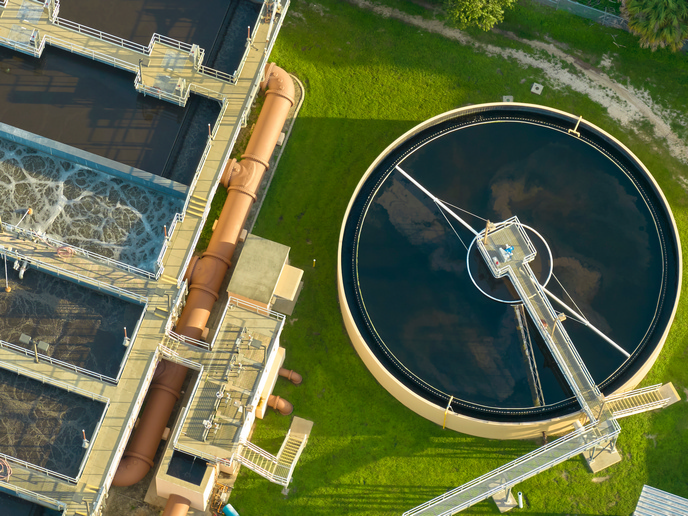
Europe’s wastewater treatment plants are key to protecting the environment, keeping rivers, lakes and coastal waters free from pollutants found in human and industrial waste. For decades, standard treatment plants have used ‘activated sludge’ – loose clumps of bacteria – to break down waste. Yet this uses a lot of space, and requires oxygen (O2) to be pumped constantly to feed the bacteria, an energy-intensive process that releases significant amounts of carbon dioxide (CO2). A major breakthrough occurred when researchers engineered these bacteria into dense, spherical structures called aerobic granules(opens in new window), which reduced both the physical footprint and costs of treatment plants. Yet even these granules demand intensive artificial aeration for O2. In the Inlight project, which was funded by the Marie Skłodowska-Curie Actions(opens in new window) programme, researchers explored how the introduction of light-driven microorganisms as ‘photogranules’ could make the process even more sustainable. “By combining waste-clearing bacteria with phototrophic microorganisms like microalgae and cyanobacteria, we create a self-sustaining ecosystem,” explains Emine Kayahan(opens in new window), a chemical engineer at The University of Leuven(opens in new window). “Here, the phototrophs act like tiny trees, using light to convert CO2 into O2, which the bacteria then use to clean the water.” Through Inlight, Kayahan and her colleagues used photobioreactors and advanced modelling and experiments. They evaluated the light input required for phototrophs to generate sufficient O2 to sustain heterotrophic growth.
Towards aeration-free wastewater treatment systems
Kayahan first collected a microbial community directly from a natural pond outside her department, before introducing it into laboratory bioreactors and imposing artificial cycles of light and food. “We engineered a niche where the desired phototrophic and heterotrophic species could thrive together and form robust photogranules,” she says. The team then ran a series of chemical analyses to track the reduction of carbon, nitrogen and phosphorus in the reactor, while mapping exactly how much light went into the systems and how much O2 came out. While current models built by the team can successfully predict light distribution at the lab scale, Kayahan emphasises that key challenges remain. “Developing novel reactor designs that can deliver light more efficiently to photogranules will be essential to ensure these systems remain viable at an industrial scale,” she adds. Beyond the lab work, Kayahan also built a highly collaborative global scientific network, including spearheading dedicated workshops and co-organising the very first international conference on photogranules. She is now leading a major global initiative to establish a standardised terminology and benchmarking system for photogranule research. A key focus of this initiative is distinguishing the true drivers of photogranulation to ensure stability at industrial scale. Ultimately, this effort provides a framework for engineering microbial communities by adjusting the reactor design and operation and establishing clear metrics to benchmark system performance. “This community effort is exactly how we will push this technology into real-world industrial applications,” she says.
A greener future for Europe’s wastewater treatment
Bringing the technology to industry will require a fundamental shift in mindset however, notes Kayahan. “We must stop viewing wastewater as a problem to be disposed of and start treating it as a resource to be upcycled.” As photogranules capture otherwise wasted CO2, there are multiple possible upsides over conventional systems. “By applying a ‘biorefinery’ approach to clean industrial streams, we can transform wastewater treatment from a costly utility into a sustainable production line,” adds Kayahan. “Testing these concepts through dedicated industrial pilot-scale systems is the natural next step.”