Developing a better understanding of microgels

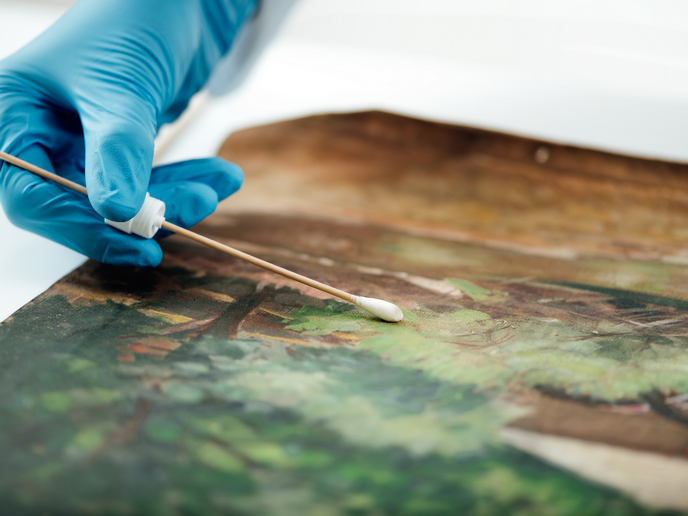
Heat-responsive microgels have emerged as a promising new material, used for everything from drug delivery and medical research to art restoration. Scientists can model these gels using computer simulations, but there is still no way of knowing their eventual properties just by looking at the initial ingredients. Many simulations and experiments are therefore still needed. “Designing a microgel with a desired internal structure still involves considerable trial and error, followed by experimental characterisation,” explains Emanuela Zaccarelli(opens in new window), research director at the National Research Council – Institute for Complex Systems(opens in new window) and Sapienza University of Rome(opens in new window). “Predicting elasticity is even more challenging, because the mechanical response of a microgel is closely linked to its microscopic architecture,” she adds. In the MGELS project, which was supported by the Marie Skłodowska-Curie Actions(opens in new window) (MSCA) programme, Zaccarelli and her colleagues proposed a new machine learning method, able to predict the structure and elastic properties of a microgel from the ingredients. This not only helps researchers understand the physical mechanisms governing elasticity, but in the longer term could help them work backwards from a desired property and identify the right microgel to develop. “This would be useful for creating tailored smart materials that could also be beneficial for biomedical applications,” notes Susana Marín-Aguilar(opens in new window), MSCA postdoctoral fellow at Sapienza University and lead researcher in the MGELS project.
A machine learning framework to find ‘cross-linkers’
The team developed their machine learning framework based on data generated from extensive molecular simulations of thermoresponsive microgels. The idea was to predict the properties of chemical bonding agents known as ‘cross-linkers’ that could infer the internal structure of the gels. They used machine learning methods to accurately predict cross-linker concentration in microgel particles, using a property known as radial density. They found this could be fed into an algorithm and compressed into a single number to deliver the desired output. They then used the same property to predict cross-linker distribution. “In this way, the model provides microscopic structural information about the particle that would otherwise be very difficult to extract experimentally,” explains Marín-Aguilar. “We have made this framework open access to maximise its use.”
Translating the findings to improve microgels
The team then went one step further, connecting this structural information to microgel properties. For example, the researchers developed an approach that uses cross-linker concentrations to predict how a gel may swell as temperature changes, along with its elasticity. Another major result was to show that under specific conditions, microgels with low cross-linker concentrations exhibit auxetic behaviour – a peculiar property in which materials are stretched in one direction and expand in the perpendicular direction. “This unusual response can provide useful mechanical characteristics and has inspired applications ranging from textiles and protective materials to biomedical and engineering technologies,” says Zaccarelli.
Further investigation into these mysterious materials
The findings show how microgels are a particularly unusual class of soft particles whose physical properties are still not completely understood, notes Zaccarelli. “Understanding the connection between their internal architecture, mechanical response and collective behaviour is one of the exciting research directions that has emerged from the project.” Through collaborations established during the project, the team intends to study these new research directions further. “We intend to continue combining simulations, machine learning and experiments, not only in relation to microgels, but also more broadly in the context of soft matter systems,” says Zaccarelli.