



Space-proven ionic liquid electrospray engines transform how small satellites navigate in space

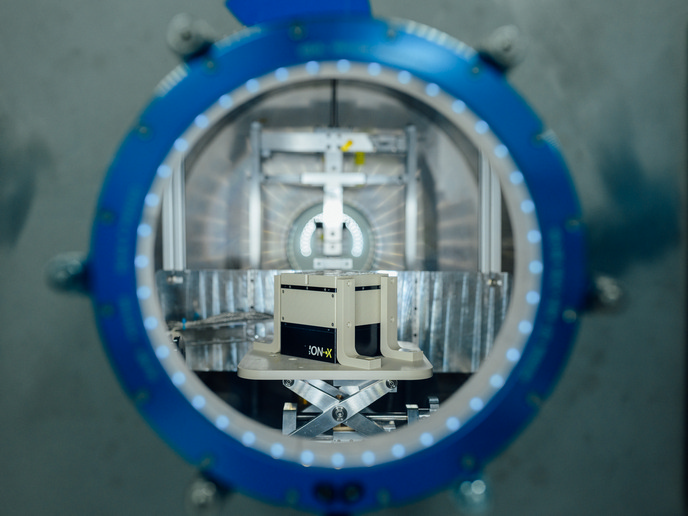
Satellites in low Earth orbit are constantly fighting against atmospheric drag and space debris. Preserving their trajectory and avoiding hazards demands high manoeuvring capability, yet conventional propulsion systems are often too bulky and expensive to build at scale for modern constellations. These limitations restrict satellite capabilities and shorten their lifespans – a growing concern as small satellite constellations expand rapidly to meet increasing demands for communication and Earth observation. Operators need to achieve maximum mobility in tight mass, power and financial limits. “In the small satellite ecosystem, every gram and every watt counts; we transform these constraints into opportunities through a new electric propulsion technology called ‘electrospray’,” notes Emmanuel Plier, coordinator of the EU-funded HYPERION project and COO at ION-X(opens in new window). Electrospray propulsion applies the principles of electro-hydro-dynamics to a liquid propellant, using electrical fields to draw out and expel fast-moving ions at high speeds. This patented technology forms the core of ION-X’s thrusters, optimising simplicity, efficiency and scalability. “ION-X’s mission is to provide satellite operators with the best propulsion system to extend spacecraft lifespans, boost manoeuvrability and secure long-term mission success,” adds Plier.
First European electrospray firing in space
Supported by HYPERION, ION-X recently reached a major milestone with the launch and orbital operation of its first ion thruster prototype. In May 2025, onboard a satellite built by Space Inventor(opens in new window) launched via SpaceX’s Transporter-12 mission(opens in new window), the system achieved its first ion beam firing in low Earth orbit. Controlled by its onboard computer and powered by a proprietary power processing unit, the thruster generated an estimated 20 µN of thrust with a 200 µA ion beam at 5 kV. “Ten years after BUSEK launched the world-first ionic liquid electrospray system for ESA/NASA LISA Pathfinder(opens in new window) in 2015, ION-X’s demonstration marked the second occurrence worldwide – and the first ever by a European company,” highlights Plier. This flight test validated all core functions, including real-time telemetry, monitoring loops, remote software updates from Earth, and the system’s ability to withstand the space environment and launch stresses. Although an in-flight anomaly limited full engine utilisation, the experience provided invaluable lessons that strengthened ground-testing and control processes.
Smarter and effortless satellite manoeuvring with less fuel
Central to spacecraft mobility is delta-v(opens in new window) – a direct measure of a satellite’s manoeuvring power. A reliable delta-v budget enables operators to perform precise station-keeping, orbit raising or debris collision avoidance, actively protecting their investments. By preserving orbital positioning and extending lifetime, delta-v translates directly into uninterrupted operational uptime and sustained revenue generation. “Using less than 200 ml of fuel, our systems can propel a 10- to 100-kg satellite for several years,” states Plier. “What makes our technology distinctive is a radical ‘plug-and-play’ approach that simplifies integration without compromising performance,” explains Plier. “The engine starts instantly without any energy-consuming pre-heating. Furthermore, its propellant is non-toxic, inert, non-pressurised and produced locally in France, thereby eliminating complex logistics and regulatory constraints.”
Building the next generation of electrospray thrusters
ION-X is moving forward at full speed. Having delivered around 10 new thrusters in 2026, the team is using findings from its initial space demonstration to develop a next-generation product. Product delivery is targeted in mid-2027 with enhanced performance and further flight demonstrations scheduled from 2027 onwards.