


Advanced MSR fuel recycling strategies could reduce radioactive waste disposal

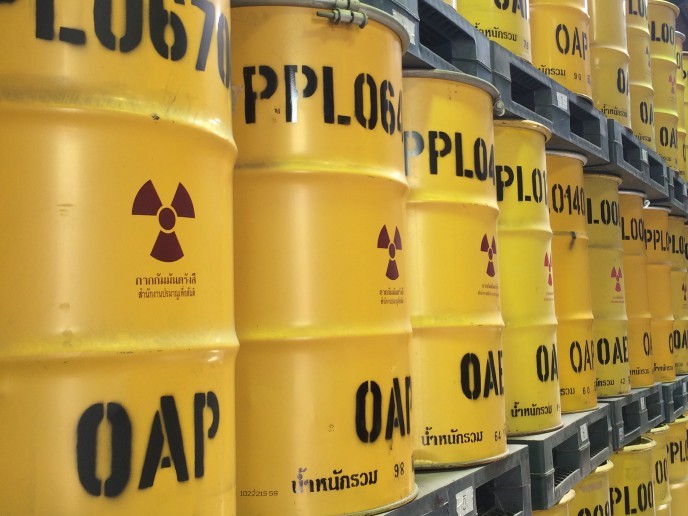
Nuclear fuel removed from a reactor after electricity generation contains radioactive materials that require careful management but also elements that can be recovered. The EU-funded MIMOSA(opens in new window) project performed simulations with laboratory tests to demonstrate fast-chloride molten salt reactor (MSR) technology and how repeated recycling could reduce underground waste disposal needs.
How nuclear fuel recycling could reduce waste disposal needs
The MIMOSA project examined different ways of combining existing nuclear reactors and fuel treatment facilities with advanced MSRs. In these advanced reactors, fuel is dissolved in hot, liquid salt. This could allow recovered plutonium and other long-lived radioactive elements to be reused without manufacturing new solid fuel each time. The project’s calculations suggested that repeated recycling across such combinations of reactors could reduce underground disposal needs by a factor of 5-9 compared to disposing of spent fuel directly after use in conventional water-cooled reactors. Achieving that reduction would depend on developing and deploying the proposed technologies. The analysis considered options for individual countries and the EU collectively. As Luc Van Den Durpel, founding partner of nuclear consultancy Nuclear-21, explains, “Rather than pointing to a single outstanding scenario, the analysis highlights how different scenarios can perform strongly at different stages, depending on the final objectives.”
Advancing technology readiness through corrosion testing and fuel characterisation
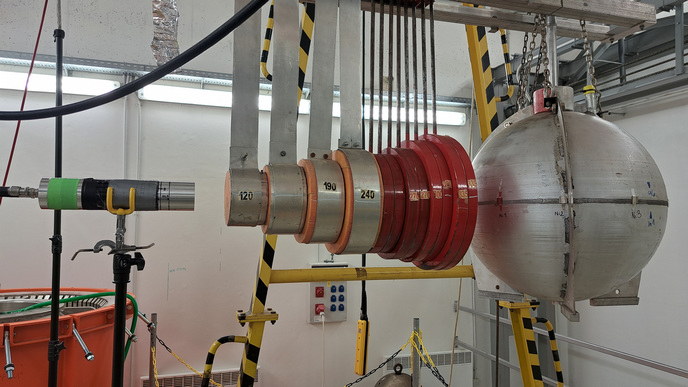
The MIMOSA project selected specific compositions of interest for studying reactor processes, synthesis and characterisation. For MSRs to support recycling, their structural materials must withstand prolonged contact with hot, corrosive liquid. The project therefore tested candidate materials in a salt mixture representing fresh reactor fuel. As Jaén Ocádiz, senior chemical engineer at reactor developer Thorizon, reports, “MIMOSA’s corrosion campaigns, overall, showed that prolonged contact with the selected medium, representative of fresh nuclear fuel salt, is manageable for the best-performing materials.” The next step is to test these methods in conditions closer to those inside a reactor and to establish how corrosion affects material strength and fracture resistance. The project also performed experiments and simulations to assess the evolution of the chloride molten salt composition in the reactor to support fuel cycle calculations and safety evaluation. “Chlorine data represents a non-negligible contributor to calculation uncertainty,” explains Evžen Losa, researcher at the Department of Neutron Physics of CVŘ – Research Centre Řež.
Recovering useful elements and preparing for reactor trials
Recycling also requires ways to separate materials from used salt. As Sylvie Delpech, research director at France’s National Centre for Scientific Research(opens in new window), reports, “A device was developed to remove metallic particles from salt and achieved a 66 % recovery rate.” Researchers also used a liquid mixture of aluminium and magnesium to extract more than 99 % of rare earth elements from salt. Another key aspect of MIMOSA was the evaluation and comparison of reprocessing schemes associated with the use of molten chloride salts as fuel at Orano’s plant in La Hague (France). Building a working demonstration reactor will require demonstrating that its materials can withstand operating conditions and that fuel can be prepared and treated in sufficient quantities. As Elisa Capelli, manager of R&D activities at Orano, concludes, “MIMOSA’s results do not indicate any fundamental technical obstacle to developing an operating chloride MSR demonstrator, although further engineering, qualification and licensing work is required.”