Crops that fight climate change from the inside out

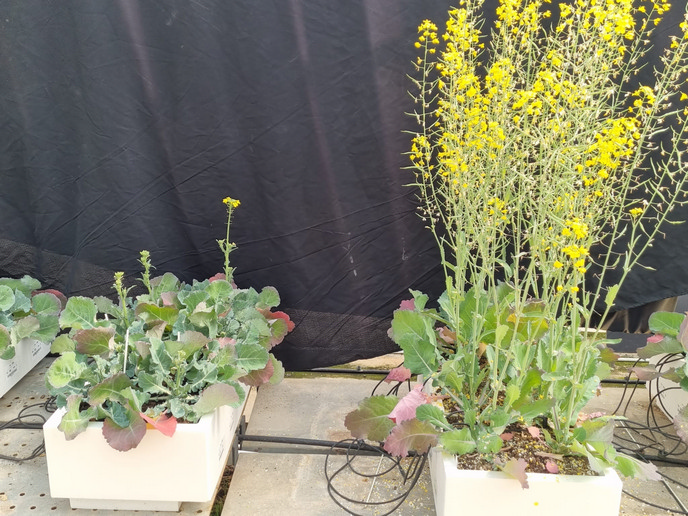
As climate change intensifies heatwaves, droughts and extreme weather, agriculture faces a dual challenge: feeding a growing global population while reducing its environmental footprint. An EIC-funded project called Crop4Clima(opens in new window) is tackling both problems at once by redesigning the way plants handle carbon dioxide. “The agriculture industry, and canola growers especially, are severely affected by the changing climate,” said Silvia Shaked, vice president of experimental technologies at Israeli biotech company Evogene Ltd(opens in new window), and project coordinator of Crop4Clima. “The market is eager for a game-changing solution that will allow crop adaptation to the new environment. I believe Crop4Clima can provide this solution.” Launched in May 2023, Crop4Clima was funded by the European Innovation Council (EIC)(opens in new window) and coordinated by Evogene Ltd. Its goal was to develop first-of-a-kind rapeseed and canola varieties that can absorb up to 60 % more CO2, use around 20 % less water and maintain high oil content, even under conditions of drought and other climate stresses.
Reprogramming photosynthesis
At the heart of the project is a synthetic biology innovation that tackles a major inefficiency in plants known as photorespiration. This process occurs when the plant enzyme rubisco mistakenly binds oxygen instead of carbon dioxide, triggering a wasteful reaction that releases CO2 and consumes energy. Photorespiration can reduce photosynthetic efficiency by as much as 20–50 %. To overcome this bottleneck, researchers from the Max Planck Institute for Terrestrial Microbiology (MPI)(opens in new window) developed a novel synthetic metabolic route called the tartronyl-CoA (TaCo) pathway. Rather than releasing CO2 during photorespiration, this pathway captures and refixes it, effectively turning a loss process into a gain. The result is a plant that behaves like it has received an internal engine upgrade: it conserves energy, assimilates more carbon and continues to grow even under stressful conditions such as heat and water scarcity.
From lab to field
Within Crop4Clima, the TaCo pathway has been successfully introduced into commercially relevant rapeseed lines using Evogene’s advanced plant-engineering platforms. Validation trials showed that the engineered plants perform consistently across generations, with clear improvements in growth, physiological health and yield. The project has demonstrated several key benefits, including enhanced drought and heat tolerance, increased carbon assimilation and sustained seed quality – a crucial factor for canola growers and downstream food and feed markets. Importantly, no commercial crops with this combination of traits currently exist. Rapeseed and canola are major crops in Europe and worldwide, and the technology demonstrates significant potential for application across other agricultural commodities such as soybean, cotton and rice.
Towards climate-smart agriculture
Beyond technical development, Crop4Clima is working towards commercial deployment. The project plans to establish a dedicated seed company and has already begun developing a business model aligned with evolving food value chains and climate goals. Pre-commercial agreements with industrial partners aim to bring the technology to full market readiness. Overall, Crop4Clima provides compelling proof that targeted metabolic pathway engineering can deliver crops that are both more productive and more sustainable. By turning plants into more efficient carbon sinks, the project points towards a future where agriculture becomes part of the climate solution, rather than a victim of climate change.