New strategies to protect our underwater cultural heritage

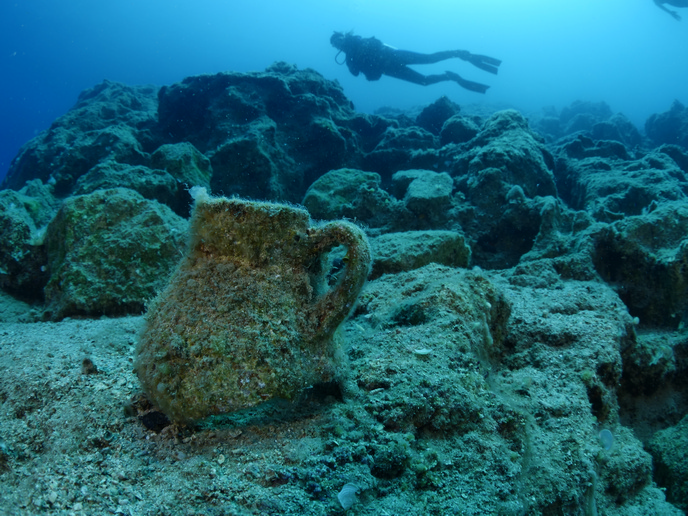
Underwater cultural heritage (UCH) – from ancient harbours to historic shipwrecks – represents an extraordinary yet highly vulnerable part of our shared history. While international frameworks such as the UNESCO Convention on the Protection of the Underwater Cultural Heritage have established important principles, there remains a considerable gap between policy and practical implementation. “Many submerged sites face environmental threats such as climate change, corrosion and human impacts,” explains TECTONIC(opens in new window) project coordinator Mauro La Russa from the University of Calabria(opens in new window) (UniCal) in Italy. “However, they often lack adequate monitoring and documentation systems, suitable conservation materials, and comprehensive management strategies.” There is also limited public awareness of the value of underwater heritage, partly because much of it remains physically inaccessible to most people.
Conservation challenges and digitalisation
The TECTONIC project therefore identified two key objectives: to enhance capacities to protect and document UCH, and to raise awareness among policymakers, stakeholders and the general public. To achieve this, the project, supported by the Marie Skłodowska-Curie Actions(opens in new window) programme, brought together expertise in conservation science, environmental monitoring, digital technologies, artificial intelligence and public engagement. “Three pilot areas were selected to test our methodologies under different environmental conditions,” says project researcher Michela Ricca, also from UniCal. “These were: the ancient harbour of Aegina and the submerged remains at Epidaurus in Greece; the marine protected area of Capo Rizzuto in Italy; and the Emma wreck site in the Nuevo Gulf near Puerto Madryn in Argentine Patagonia.” At these sites, archaeological and environmental studies were conducted. Climatic and environmental data was gathered, accompanied by advanced 3D documentation using photogrammetry and opto-acoustic multi-resolution techniques. These methods enabled the project team to carry out detailed mapping and digital reconstruction of submerged structures.
Assessing risks and planning interventions
A key success of the project has been the exchange of expertise between different countries and research areas. “Through secondments and dedicated training activities, researchers and professionals were able to share methodologies, technological approaches and conservation practices,” explains La Russa. The project also tested a decision-support system that integrates environmental monitoring and artificial intelligence, providing important data for assessing risks and planning interventions on the basis of scientific evidence. A further achievement has been the development of robotic systems capable of improving inspection and documentation activities while reducing operational risks and costs. “At the same time, advances in conservation strategies and digital technologies have enhanced both research accuracy and the ability to communicate complex archaeological data to wider audiences,” adds La Russa. Through dissemination activities, the project has significantly increased public awareness of the value and fragility of underwater cultural heritage.
Fostering awareness and responsibility
Next steps include consolidating and further developing the tools and methodologies that were improved or created during the project. Applying these methods in different environmental and archaeological contexts will also help extend the state of the art and confirm their reliability and adaptability. “Through integrating our technologies and approaches into heritage management policies, our results will gradually transition from experimental validation to practical, routine application,” says Ricca. “In this way, the work carried out during the project can continue to generate long-term impact in the protection, monitoring and sustainable management of underwater cultural heritage.” In addition, new ways of exploring UCH, supported by constantly evolving digital technologies, can make these sites more accessible to everyone, while building on a solid understanding of the heritage and encouraging awareness, inclusivity and shared responsibility.