Has Earth reached its limit?

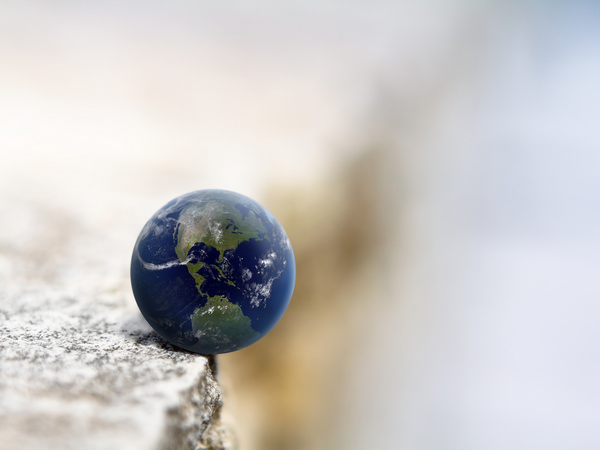
At 8.3 billion people, humanity is living beyond the Earth’s means due to unsustainable habits in food, energy and daily consumption. The main problem isn’t just about how many of us are on Earth, it’s about how quickly we are using what it provides. In a paper published in the journal ‘Environmental Research Letters’(opens in new window), a research team led by Flinders University in Australia warns that the planet may not be able to maintain the pace at which we are living today.
The math behind the growing deficit
The researchers analysed over 200 years of global population data and found that humanity is currently consuming far more resources than the Earth can sustain in the long run. The findings revealed that we’re using up Earth’s resources 70 to 80 % faster than they can grow back. To keep living this way, we would need nearly two planets’ worth of natural resources. “Earth cannot keep up with the way in which we are using resources,” comments lead author Corey Bradshaw, professor of global ecology, in a news item(opens in new window). “It cannot support even today’s demand without major changes, with our findings showing that we are pushing the planet harder than it can possibly cope.” By the late 2060s or 2070s, the population is set to soar to over 12 billion. This trajectory far outstrips the planet’s ideal capacity. “The truly sustainable population is much lower and closer to what the world supported in the mid-twentieth century,” he adds. “Our calculations show a sustainable global population closer to about 2.5 billion people if everyone were to live within ecological limits and comfortable, economically secure living standards.” This extreme population level is a high-stakes gamble, according to him. He argues that we have only survived this far by depleting our planet’s natural capital and relying heavily on fossil fuels. The study showed that before the 1950s, population growth fuelled innovation and further expansion. However, this trend reversed in the early 1960s, as global growth rates began to decline despite a still-rising population. “This shift marked the beginning of what we call ‘a negative demographic phase’,” explains Bradshaw. “It means that adding more people no longer translates into faster growth.”
Taking action before time runs out
Bradshaw gives fair warning. “Humanity’s current path will push societies into deeper crises unless we make major changes. The planet’s life support systems are already under strain and without rapid shifts in how we use energy, land, and food, billions of people will face increasing instability. Our study shows these limits are not theoretical but unfolding right now.” He calls for a radical shift in how we utilise Earth’s resources to protect the stability and safety of future generations. “Smaller populations with lower consumption create better outcomes for both people and the planet. The window to act is narrowing, but meaningful change is still achievable if nations work together.” The authors advocate for governments and society to embrace long-term planning, respecting planetary limits by reducing consumption, stabilising population growth and safeguarding the environment. “The choices we make over the coming decades will determine the wellbeing of future generations and the resilience of the natural world that supports all life,” concludes Bradshaw.