How human-nature dynamics have shaped Andean landscapes

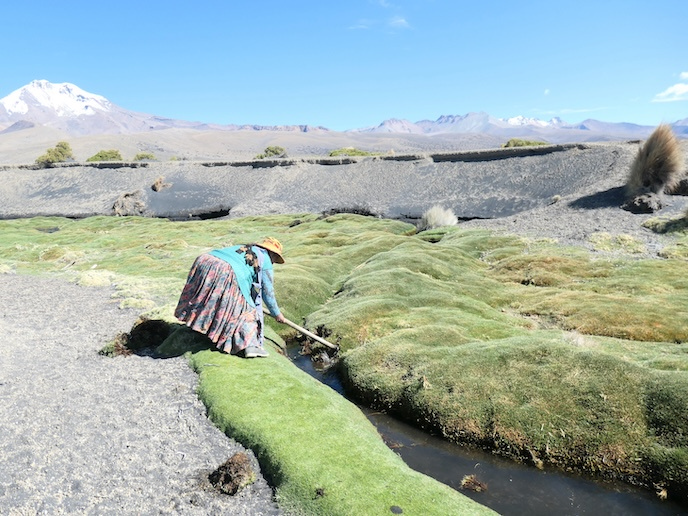
Rural landscapes are forged by human and non-human interactions, expressed for instance by seasonal changes in rainfall, agricultural activities or digging open-pit mines. “While these processes give particular landscapes their distinctive characteristics, their intimate human and non-human entanglements are not always harmonious,” says Hanne Cottyn, coordinator of the HI-LANDeS(opens in new window) project, which was supported by the Marie Skłodowska-Curie Actions(opens in new window) programme. HI-LANDeS was interested in the transformations that have shaped high Andean rural landscapes over the last 200 years, particularly the ‘altiplano’ area(opens in new window) connecting western Bolivia and northern Chile. Through two case studies, historical and ethnographic data offers new evidence about multispecies histories and competition for resources, in these (now) protected wetlands. “Revealing these histories, which have largely been deprioritised to the point of almost being silenced, helps explain some current environmental challenges,” adds Cottyn from Ghent University(opens in new window), the project host.
Revealing the multispecies histories of Andean wetlands
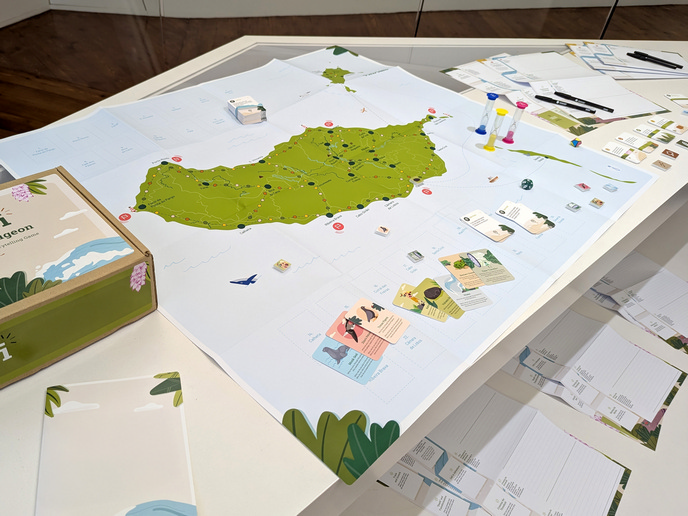
Thanks to their carbon capture potential, and role in regulating water flows, wetlands have become hotspots for conservation efforts. HI-LANDeS was interested in the Andean altiplano area partly because resilient Indigenous cultures have thrived there for millennia, despite the extreme temperatures. The communities include the Uru(opens in new window), including fishers and hunter-gatherers on Lake Poopó, and the Aymara, llama and alpaca herders within the Bolivian-Chilean border national parks. Combining archival research, multispecies ethnography and co-creation methods, HI-LANDeS tracked the shifting human-nature relations, particularly since the late 19th century, when rural areas were integrated into newly independent states and markets. In the national parks, the Bolivia-side research drew mostly on oral histories and collaboration with archaeologists. Across the border, the focus was on archives related to the area’s annexation into the Chilean state after the War of the Pacific. “Documents, indigenous memories and the landscape itself, all retain traces of how non-humans, such as animals and plants, help shape local landscapes. Using this multispecies lens, we traced, for instance, how plant(opens in new window) (totora), a previously abundant reed in Lake Poopó, has long acted as an ‘ally’ to Uru communities, enabling them to build their own territory,” explains Cottyn. Co-creation practices in the two focus areas identified how research could contribute to local priorities, resulting in a digital archive, created with the Lake Poopó Uru communities – now contributing historical evidence to their current efforts to increase their land rights. Meanwhile, the project is also developing walking trails in the Sajama National Park(opens in new window) to encourage visitors and locals to discover the dynamic histories and trade-offs embedded in past resource extraction, and according to Cottyn, arguably, current conservation, activities. “My own long conversations and walks in these areas brought the historical processes and human-nature entanglements alive,” adds Cottyn.
A more human-nature balanced approach to conservation
Andes-centred, HI-LANDeS offers contributions to EU policies such as the Green Deal(opens in new window), or more specifically the EU’s development of ‘a long-term vision for the EU’s rural areas up to 2040’(opens in new window). As such, the team has participated in various knowledge exchange activities, with publications in the pipeline. “Our research offers insights into one of today’s key socio-environmental challenges: avoiding the presentation of ecological conservation and human territorial management as being opposed to one another,” notes Cottyn. ”The co-management of the National Park by the Sajama communities, for example, demonstrates how protected areas can remain dynamic evolving landscapes and not a frozen ahistorical canvas.” Now based in northern Chile, Cottyn continues to work on the Uru community archive and on the Sajama National Park historical walks, with a new project planned which draws on HI-LANDeS project results.