Of viruses and vectors: how research helps Irish farmers protect their crops

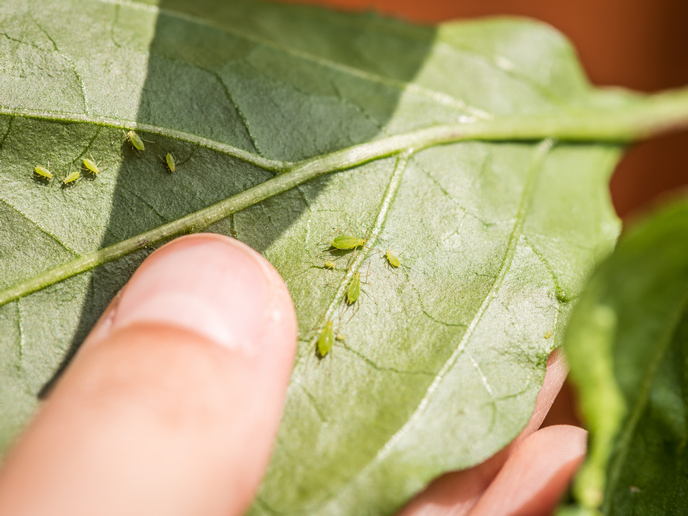
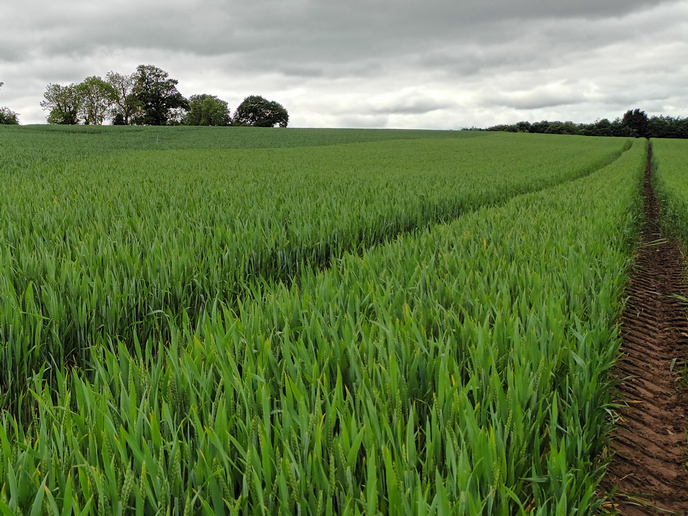
Irish cereal and potato farmers are all too familiar with the aphid. Not only do these tiny pests weaken crops by feeding on their sap, they also carry viruses such as barley/cereal yellow dwarf virus (B/CYDV) and potato virus Y (PVY) – all of which can devastate yields. In fact, severe outbreaks of BYDV have resulted in yield losses of up to 80 %. In the past, farmers mitigated this risk using neonicotinoid seed treatments, insecticides and pesticides. But with the EU banning or restricting the use of treatments and pesticides, and aphids becoming increasingly resistant to insecticides, these options are no longer on the table. “What farmers need are smarter approaches based on accurate knowledge about which viruses and vectors are present,” says Munir Mostafiz(opens in new window), a Marie Skłodowska-Curie Actions postdoctoral fellow(opens in new window) at Teagasc(opens in new window), Ireland’s Agriculture and Food Development Authority. Enter the EU-funded MONET project. Coordinated by Teagasc, the project set out to both develop better tools for identifying viruses and survey which aphid species are responsible for carrying them in Ireland’s key arable regions. Researchers also looked at how these viruses interact with and influence the behaviour of their aphid vectors. “The goal was to generate practical knowledge to help farmers move away from precautionary spraying and towards evidence-based decision-making,” adds Mostafiz.
Important findings on aphid vectors and viral strains
Having conducted a comprehensive survey of Ireland’s aphid vectors and viral strains, as well as lab experiments, the project came to some important conclusions. One of those conclusions is that the rose grain aphid is an efficient vector of BYDV-MAV[DB1.1] the dominant viral strain of BYDV in Ireland that regularly occurs in spring barley crops. “Prior to our research, this species was largely overlooked, and our finding has direct implications on how monitoring programmes should be designed,” explains Mostafiz. Researchers also showed that insecticide-resistant aphids are no more efficient at transmitting a virus than susceptible ones. However, they do pay a significant biological price with slower growth and reduced reproduction. “While this is reassuring for farmers, it also underlines why integrated pest management remains essential,” notes Mostafiz. To help with this management, the project developed and openly published three new molecular diagnostic protocols for B/CYDV and PVY. All the project’s diagnostic tools and data sets are available via protocols.io(opens in new window) and the Open Data Platform(opens in new window). Researchers also produced four peer-reviewed papers that have been published in such journals as ‘Pest Management Science’(opens in new window), the ‘Journal of Sustainable Agriculture and Environment’(opens in new window) and ‘Plant Pathology’(opens in new window).
Sustainably managing cereal and potato virus diseases
MONET leaves behind a set of openly available diagnostic tools, a published dataset, peer-reviewed findings on vector-virus interactions and a modelling framework for estimating disease spread at field scale. “Together, these outputs give researchers, advisors and policymakers better tools to manage cereal and potato virus diseases sustainably for years to come,” concludes Mostafiz. Thanks in part to his involvement with the MONET project, Mostafiz secured a postdoctoral fellowship in entomology and virology at Teagasc. Here his research will expand on the findings of virus-vector dynamics generated during MONET to understand how climate change will reshape BYDV epidemiology in Ireland.