Mammoth bones rewrite the history of Ice Age humans


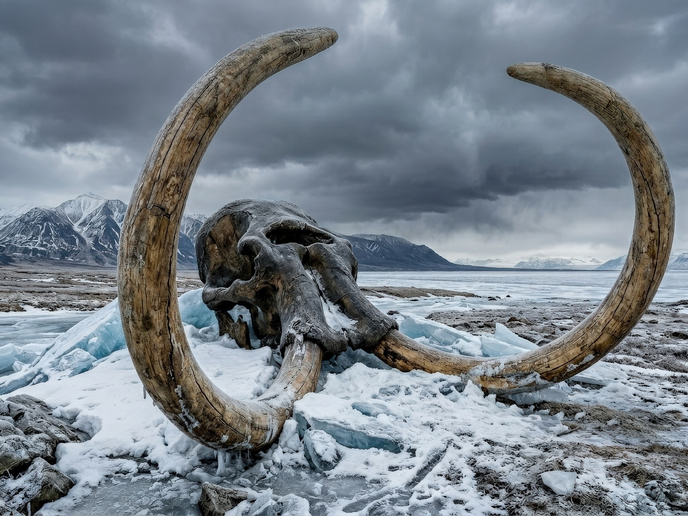
What story is hidden within the massive beds of mammoth bones found at sites such as Kraków Spadzista in Poland, Dolní Věstonice in Czechia and Langmannersdorf in Austria? The truth behind these collections, sometimes numbering in the thousands, has eluded scientists since the 1800s. Shortly before the peak of the last Ice Age, large herds of woolly mammoths would traverse the frigid grasslands and tundra of central Europe. So, were these accumulations of bones left behind the result of mass hunting, natural death or a combination of both? The EU-funded MAMBA(opens in new window) project is looking for definitive answers. MAMBA brings together an international team of researchers to investigate life between 35 000 and 25 000 years ago. It combines excavations with laboratory analyses, leveraging genetics, isotope chemistry, geoarchaeology and palaeoclimatology to reconstruct a detailed picture of the Upper Palaeolithic world. “We are bringing together fieldwork and laboratory work,” states Jarosław Wilczyński, an archaeologist and associate professor at MAMBA project coordinator Institute of Systematics and Evolution of Animals at the Polish Academy of Sciences, in a ‘Horizon’ magazine article(opens in new window). “We collect new material, but we also re-examine museum collections using methods that were not available before.” A cornerstone of the research is the analysis of ancient DNA (aDNA) and stable isotopes. While aDNA extraction from non-permafrost samples presents significant challenges, the research team is developing improved methods to unlock genetic data from degraded specimens. “We are hoping to have analysed more than 400 samples by the end of the project,” notes David Díez del Molino, an affiliated researcher at the Department of Genetics and Bioinformatics of MAMBA partner Swedish Museum of Natural History. “Given our success rate, we are potentially unlocking thousands of historically overlooked specimens for DNA research.” The team is also using strontium and oxygen isotope analysis to trace the migration routes and seasonal movements of individual mammoths throughout their lifetimes.
The unexpected hunters
Emerging evidence from project research challenges long-held assumptions about Ice Age humans. Far from being opportunistic scavengers, these populations appear to have been highly organised, skilled hunters with a profound understanding of mammoth behaviour and environmental patterns. The bone beds are now interpreted as the material trace of cooperative hunting activities. The project highlights the role of the mammoth as an important species that shaped its landscape while also serving as a critical resource for human survival. It provided Ice Age humans with meat, fat, and ivory and bone for tools and ornaments. Dorothée Drucker, a research fellow at MAMBA partner Senckenberg Centre for Human Evolution and Palaeoenvironment at the University of Tübingen in Germany, comments: “The woolly mammoth is an iconic species which played a major ecological role: a big animal that crushed trees and bushes, changed its environment, fertilised the soil with its dung.” As the climate cooled and ecosystems shifted, humans demonstrated remarkable adaptability. MAMBA experts are currently untangling the complex factors leading to the mammoth’s extinction, weighing the impacts of climate change against human hunting pressures through isotopic markers such as nitrogen-15. By examining how societies organised and survived during periods of extreme environmental stress, MAMBA (Exploring Mammoth Bone Accumulations In Central Europe) reveals that Ice Age humans, far from being passive observers, actively shaped their world, leaving a legacy that speaks to us through the bones they left behind. For more information, please see: MAMBA project website(opens in new window)