Quantum-level phenomenon in proteins sheds light on their functioning

While it is known that information within cells is transmitted through biomolecular reactions, especially between proteins, the precise mechanism remains mysterious. The most common explanation by biologists is that forces, mainly electrostatic, drive the process, helping cells organise and coordinate functions. In this widely accepted theory, information is transmitted when chemical reactions spread from one location to the next, driven by random molecular motion (Brownian motion)(opens in new window). “However, this mechanism alone doesn’t adequately explain the sheer efficiency of these reactions in living cells, leaving a gap of about four orders of magnitude between what this model predicts, and what is reported in the literature. Something else must be at play,” says Jeremie Torres, coordinator of the LINkS(opens in new window) project. LINkS looked to an aspect of cellular dynamics known as ‘long-range electrodynamic interactions’ (LEDIs), to offer an explanation for how the right molecular partners find each other, at the right time and place, for remarkably efficient biochemical reactions. “We demonstrated these interactions are real(opens in new window), a major scientific discovery that challenges long-held molecular biology assumptions,” adds Torres from the French National Centre for Scientific Research(opens in new window), the project host.
First-of-its-kind lab-on-chip biosensor
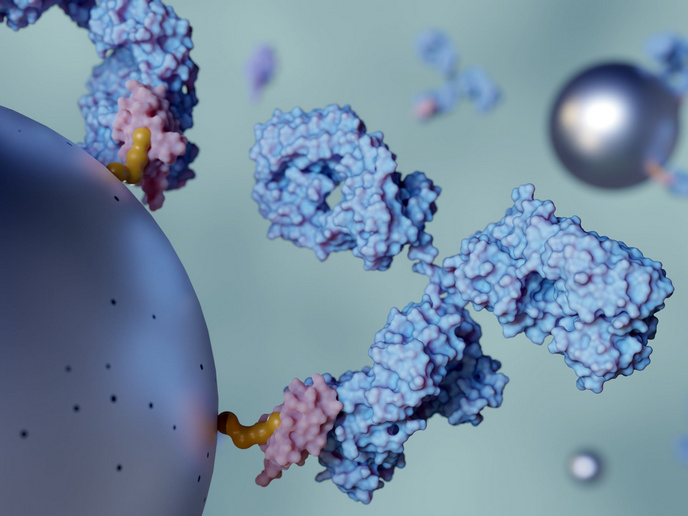
Large biomolecules, such as proteins, possess vibrational modes. When a collection of them vibrates, at the same frequency, they generate electrodynamic forces giving rise to cellular interactions or LEDIs. As Torres explains: “In the 60s, H. Fröhlich theorised that LEDIs are created when the energy of all the normal protein modes are channelled to the lowest energy mode, creating what he called ‘condensation’. Building on our previous work, LINkS allowed us to further demonstrate the phenomenon.” Detecting LEDIs had previously proven elusive because their collective protein vibrations are detected at the lowest terahertz (THz) frequency, and THz spectroscopy struggles in the aqueous media of cells. To overcome this, the LINkS team developed a breakthrough lab-on-chip THz biosensor with a configuration able to overcome water absorption, within certain limits. THz spectroscopy(opens in new window) is complemented by small angle X-ray scattering(opens in new window) and fluorescence correlation spectroscopy(opens in new window). After investigating the proteins with the biosensor, the results were compared with theoretical quantum electro-dynamics models developed by project partners. “We have provided the first experimental evidence for Fröhlich’s model which predicts that proteins can sustain collective vibrations, ‘Fröhlich condensates’, when driven by energy,” notes Torres. The team identified and experimented with various energy sources, including light-driven processes (involving exciton-phonon coupling) and thermal energy, demonstrating how the local environment (such as the surrounding water layers) plays a crucial role. “This offers new perspectives on how energy is transferred within and between proteins(opens in new window),” adds Torres. “We even discovered a new type of hybrid quantum particle, or polariton, formed by strong interactions between light and the collective oscillations of proteins, an exciting finding bridging physics and biology.”
Targeted therapies and quantum biology insights
Offering what is believed to be the first experimental evidence of quantum-level phenomena operating at the scale of proteins, LINkS’s findings are of relevance to a range of applications. “Understanding how electromagnetic fields influence living organisms could open up new medicine and biology research fields. If we can identify the specific signature of proteins, we might be able to manipulate their function and their connection to other cellular chemical partners, boosting the efficacy of drugs for example,” says Torres. While this work is already under way, the team is also exploring the implications of their quantum-level findings, researching how the duration (in time and in phase) of collective oscillation states may drive biological functions, such as photosynthesis.