Can we really do two things at once?


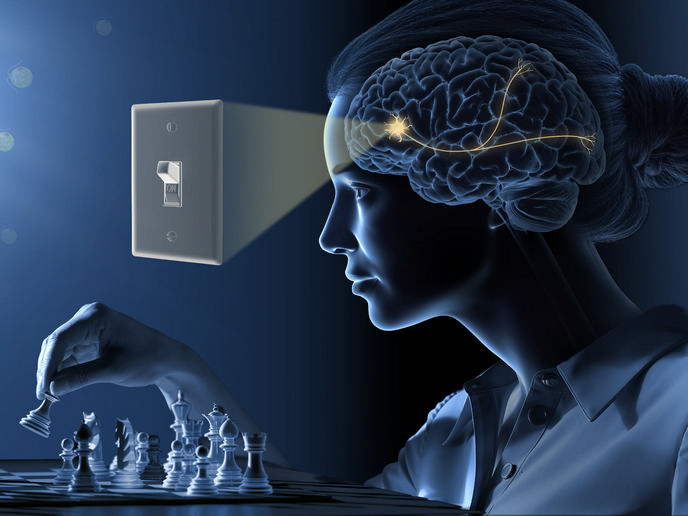
Who can forget those white-knuckled driving lessons. Eventually, driving becomes second nature. But how does driving go from stressful to effortless? A research team at Georgetown University Medical Center in the United States discovered that the brain physically rewires itself to process practiced skills with less effort. This suggests that when you practice something long enough, your brain learns to handle it without constant effort, which finally makes multitasking possible. Put another way, mastering a skill doesn’t just make you better at it, it reshapes your brain to run that task in the background, making real multitasking a reality. Published in the ‘Journal of Cognitive Neuroscience’(opens in new window), this finding challenges traditional theories of learning claiming the brain doesn’t actually multitask at all but rather switches its attention back and forth between tasks so quickly that we think we’re doing them at the same time.
The art of autopilot
“We have another stepping stone in our understanding of how the brain learns,” commented senior author and professor of neuroscience Maximilian Riesenhuber in a news release(opens in new window). “The encouraging part is that you really can learn to multitask. There is actually a way to remodel your brain architecture and use other parts of your brain.” The researchers set out to uncover how our brains actually switch a skill from active learning mode to autopilot, allowing us to perform tasks with little to no conscious effort once we’ve had enough practice. They had participants use an app to sort images of morphed cars into two categories. Over five to 10 weeks, the volunteers completed more than 30 000 trials, training their eyes to spot tiny, subtle differences. The researchers used functional magnetic resonance imaging (brain scanning technique) and electroencephalogram (test measuring electrical activity in the brain) scans to track the participants’ brain activity before and after the training. When the participants first started, they were using their prefrontal cortex to sort the images. This area of the brain involves careful, deliberate thinking, but it is limited in how much it can juggle at any one time, which is why it feels so tiring to learn something new.
How the brain shifts gears
However, after weeks of practice, the brain scans revealed what actually changes in the brain. The sorting task had moved from the prefrontal cortex to the temporal cortex – the area that acts like a huge library for storing memories and recognising complex objects. By shifting the task here, the brain basically turned a difficult, focused task into a smooth, automatic process. The Georgetown University Medical Center team plans to uncover the specific signals that tell the brain it’s time to move a skill to a new area of the brain, and discover just how much we can really handle when we finally start multitasking for real. “Another really interesting question is what kinds of tasks can be learned well enough to do in parallel,” explained first author Patrick Cox. “We can walk and chew gum at the same time, but looking at our phones to text while driving will never be safe, because we take our eyes away from the road. It comes down to being able to train fully separate neural circuits for two tasks to become compatible.”