Commercial video games are unlocking soft skills for Europe’s workforce


Europe is facing a significant soft skills mismatch(opens in new window) and difficulty identifying and developing these ‘transversal competencies’ at scale. The EU-funded MEGASKILLS(opens in new window) project developed a platform harnessing commercial video games that millions play to evaluate and develop the soft skills employers want most.
Standardising the taxonomy of the most critical soft skills
MEGASKILLS focused on six target sectors critical to the European Skills Agenda(opens in new window) (automotive and transport, health, advanced manufacturing, smart grids, tourism and construction) and four essential soft skills (critical thinking, complex problem solving, agility and flexibility, and time management). “We found no definitive list of soft skills, agreed definitions or evaluation rubrics across existing competency and skills definition models,” explains Leire Bastida of TECNALIA, project coordinator. The project stayed closely aligned with these models, collaborating and harmonising these taxonomies. “A skill like critical thinking may have a common definition, yet its practical implementation can vary significantly from one role to another within the same sector – and even more so across industries,” notes Flavio Escribano, MEGASKILLS’ technical manager. To address this, MEGASKILLS worked closely with European agencies such as those cooperating on the management of the European skills, competences, qualifications and occupations (ESCO) classification as well as 36 staff members from European SMEs across the six target sectors to develop industry-specific definitions.
Nuances of soft skills development via commercial video games playing
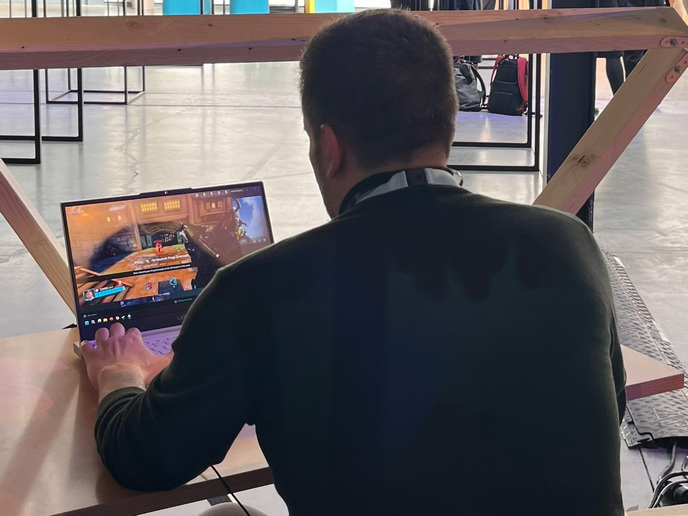
The MEGASKILLS platform is perfectly suited to soft skills evaluation and development, given the average age of gamers in Europe is now over 35. “Our platform translates what a player does while gaming on Valve’s Steam (a leading video games platform) into soft skills proficiency,” says Bastida. Data is presented in a standard Europass format, making future validation of soft skills alongside hard skills for job applicants a realistic prospect. About 500 students, managers, migrants and unemployed persons supported training and testing of the algorithm. Gamers proved highly effective at time management while strategy games significantly fostered problem-solving skills – the latter formally measured for the first time. “Hundreds of pre- and post-tests in this group showed users can significantly improve their soft skills even after fewer than five hours of play,” Bastida says. Moreover, MEGASKILLS showed how training one skill can develop others and that transferring skills from gaming to personal and professional life requires guidance. Finally, play strictly for skill development rather than leisure can trigger frustration, necessitating careful management.
From platform to policy: institutions, employers and citizens
Companies and institutions agreed nearly universally that soft skills are central to recruiting new talent and upskilling existing employees. This makes greater emphasis on soft skills training important, especially as AI and large language models render hard skills increasingly automatable. In addition, “The current Pan-European Game Information (PEGI) content rating system should be updated to highlight games’ cognitive and educational benefits along with risks,” notes Escribano. This will stimulate game producers to increase such functionalities while helping individuals select games that train them. “The market is acutely aware that the trillions of data points generated by gamers are a gold mine for behavioural analysis,” says Bastida. The MEGASKILLS platform could soon allow employers to differentiate between nearly identical academic qualifications based on precise soft skills or enable employees to diagnose and upskill themselves for desired positions. Fun and engaging soft skills development at scale could be around the corner, boosting Europe’s competitive edge.