A new grid for a new type of power

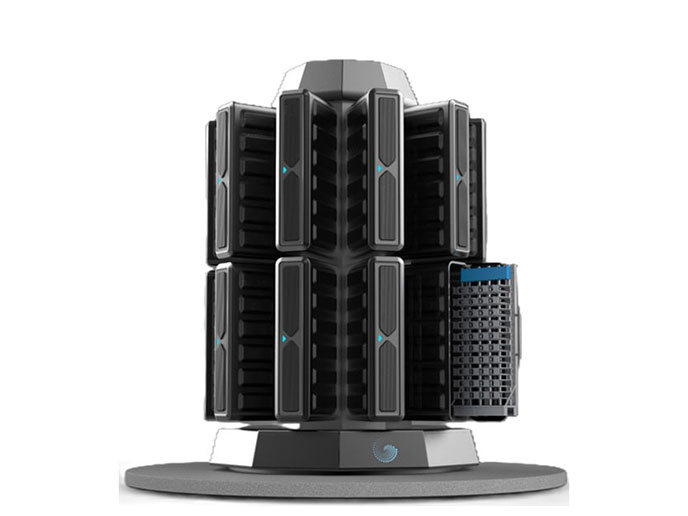
Europe’s transition to renewable energy requires more than just wind, solar and water. It also requires a new energy infrastructure. “The energy transition needs power grids that are more flexible, digital, resilient and capable of integrating high shares of renewables,” says Jonatan Peris Rivas, project manager at CIRCE(opens in new window). Helping to deliver that infrastructure is the EU-funded SSTAR(opens in new window) project. Coordinated by CIRCE, the project set out to push solid-state transformer (SST) technology beyond the low-voltage stage and make it viable for high-voltage grid applications. “SSTAR advances the field by showing that high-voltage SSTs can move from concept to experimentally validated prototypes, with credible performance, safety and sustainability data behind them,” adds Peris Rivas. SSTs are advanced power electronic devices that replace magnetic iron-core transformers with high-frequency semiconductor switching.
Three lines of innovation
At the heart of the project are three lines of innovation, one of which was a sustainable biobased dielectric fluid designed to improve insulation performance. The project ultimately delivered a 200-litre sample of its vegetable-based fluid that could be used in the SST prototype. The project also developed a high-voltage SST module based on bidirectional inductive power, as well as decentralised cascade H-bridge control architecture to scale the number of modules without a central controller. These developments were then integrated and validated in two certified testbeds, with the IPT-based SST prototype achieving 76.7 kW power transfer at 1 500 V with around 95 % efficiency under resonant operation. The decentralised cascade H-bridge converter, on the other hand, was validated with 28 series-connected modules at a simulated 66 kV grid voltage and 100 A RMS, corresponding to 660 kW per branch, without a central supervisory controller. “Our subsequent sustainability assessment showed that the SSTAR concept can significantly improve environmental performance, especially when powered by renewable electricity,” explains Peris Rivas. The project further identified industrial microgrids, data centres and offshore renewable energy installations as being the most promising applications for its solutions.
A clear path towards high-voltage solid-state transformers
SSTAR has blazed a trail for high-voltage SSTs that are not only technically promising, but also more sustainable and more relevant to real grid needs. In doing so, it has helped position SSTs as a serious enabling technology for renewable-heavy power systems – systems that will eventually enable Europe’s energy transition and electrification. “The project did not stop at laboratory ideas, it produced validated prototypes, a sustainability and social assessment, and a clear roadmap to achieving technical maturity,” concludes Peris Rivas. “That combination of technical achievement and system-level vision is probably the strongest success of SSTAR.” Building on the project’s results, researchers are now working to further advance its prototypes via new industrial partnerships, investments and funding opportunities.