Catching up with MeDiTATe: revolutionising cardiovascular care


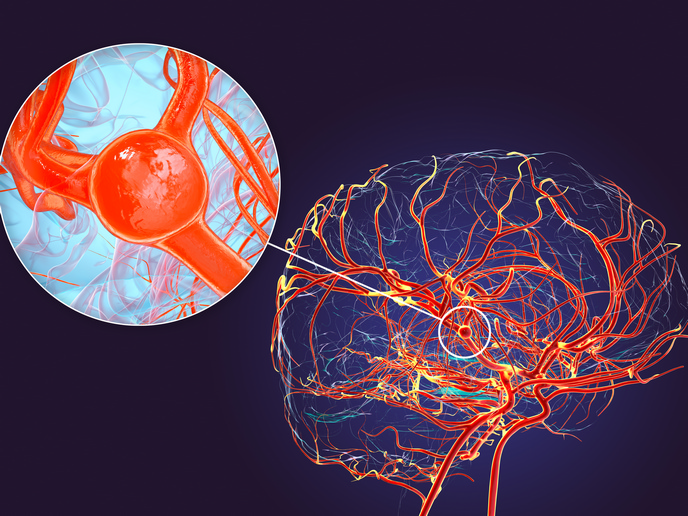
The EU-funded MeDiTATe(opens in new window) project was launched in 2020 to develop advanced computer models known as ‘digital twins’ to better prevent and treat aortic aneurysms. To make this a reality, it trained 14 early-stage researchers whose work resulted in a unified system combining advanced medical imaging with sophisticated computer simulations. The ultimate goal was to help accelerate the process of personalised cardiovascular medical procedures and improve patient care – a goal that MeDiTATe has made remarkable strides towards based on its impact since it ended in mid-2024. At the heart of the project lies the development of highly accurate and efficient digital twins capable of simulating blood flow and vessel wall behaviour in patient-specific geometries. The models were developed and validated in close collaboration with clinicians and experimental platforms. For instance, healthcare professionals tested different treatment scenarios in a virtual environment, paving the way for safer, more precise and better-informed decision-making in complex vascular procedures.
From research to application
Several technologies were developed, enabling the creation of highly accurate and fast digital twins that simulate blood flow and wall stress in a patient’s artery in real time. The methods were refined and applied in collaboration with partners such as PrediSurge(opens in new window), a French medtech company specialising in patient-specific simulation for endovascular procedures. “The collaboration helped PrediSurge consolidate its scientific credibility, extend its simulation capabilities and reinforce its position within the European digital health ecosystem,” reports Marco Evangelos Biancolini, professor at MeDiTATe project coordinator University of Rome Tor Vergata, Italy, and founder of RBF Morph(opens in new window), another consortium that benefited from the project. Through MeDiTATe, RBF Morph further developed its mesh morphing methodologies, integrating them into high-fidelity multiphysics workflows combined with reduced-order modelling and AI-enhanced pipelines. The collaboration helped RBF Morph reinforce its role within the European ecosystem of simulation-driven digital health innovation. Another outcome is LivGemini(opens in new window), a start-up founded during the project by early-stage researcher Leonardo Geronzi. It translates high-fidelity cardiovascular simulation models into interactive, deployable digital twin platforms for surgical planning and personalised treatment, providing clinicians with accessible, data-driven decision support tools. “LivGemini has already received national recognition in Italy, demonstrating how EU-funded doctoral research can evolve into market-oriented innovation,” notes Biancolini.
Spin-offs and training
The scientific and technological maturity achieved in MeDiTATe has enabled several follow-up projects: Pandora(opens in new window), ROMed2VR(opens in new window) and SafeBot4Twin(opens in new window). These initiatives extend MeDiTATe’s impact toward secure AI integration, immersive visualisation and broader clinical translation of digital twin technologies. Last but not least, MeDiTATe (The Medical Digital Twin for Aneurysm Prevention and Treatment) also directly inspired the creation of the course ‘Digital Twins: Modelling and Applications’. Embedded in the international master track ‘Technology and New Frontier Management’ at the University of Rome Tor Vergata, the course transfers MeDiTATe methodologies into higher education, training Europe’s future engineers and innovation managers in simulation-driven digital medicine. The ‘Life After’ feature shines a light on finished EU-funded projects and what they have achieved since the end of EU funding. If you are interested in having your project featured as a ‘Life After’ project, please send us an email to editorial@cordis.europa.eu and tell us why!