Digital twins reveal patterns of breast cancer treatment resistance

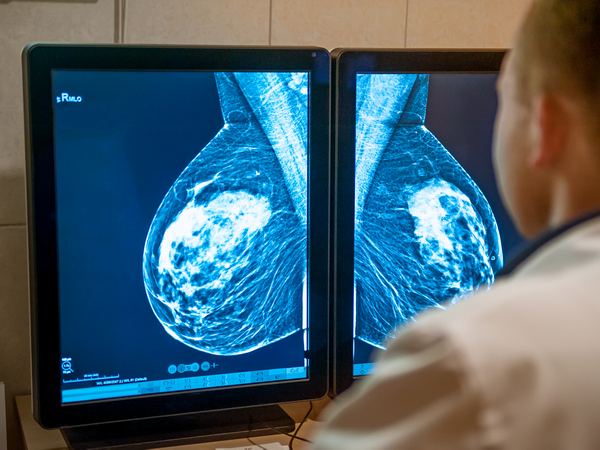
The World Health Organization estimates that 375 079 women in the EU had breast cancer in 2022, the most common cancer in women. The disease is classified into well-recognised, molecular subtypes. But despite solid preclinical evidence, only some patients benefit from drug combinations. “The fact that responses vary, shows that patient and tumour heterogeneity is still present within the categories with which we currently work,” says Vessela Kristensen, professor in the Department of Medical Genetics at the University of Oslo(opens in new window). Trying to establish where resistance might be expected and finding a way to identify alternative treatment paths that will be more effective, is central to increasing survival rates. This necessity gave rise to the RESCUER(opens in new window) project, hosted by the University of Oslo, one of a variety of EU-supported projects tackling breast cancer. RESCUER gathered interdisciplinary expertise in the fields of surgery, pathology, oncology, molecular biology, bioinformatics, philosophy, mathematics and statistics. “We aimed to understand the mechanisms of treatment resistance both locally, on the tumour, as well as on the entire body at systems level, including host immunogenic, metabolic and inflammatory responses,” notes Kristensen.
Digital twins simulate patients’ responses to multiple treatment pathways
A clinical oncologist can treat a patient only once. Treatment with the highly toxic drugs, used when the disease has advanced, gives little time for trial and errors. Clinical trials to test treatment outcomes can take years and be very costly. So the project took a different approach. By collecting the millions of data points at genetic, epigenetic, metabolic and immune levels, measured for each individual, a digital twin of the patient can be created. These digital twins can then be ‘treated’ again and again to establish what will be effective. Kristensen explains the concept: “Molecular data is harnessed to numerically characterise a tumour or individual genetic, metabolic or immune profile. These numbers are then used to recreate the tumour in a computational avatar.” When the computer simulations are done and novel dependencies between genetic, metabolic and immune factors and pathways have been identified, the information then needs to be applied to humans. This requires the generation and validation of new molecular data that represents entire biological sets – such as genes (genomics), RNA (transcriptomics), proteins (proteomics) or metabolites (metabolomics) – collectively known as ‘omics’. “It’s a question of building up a comprehensive picture of the impact of the various treatment pathways, layer by layer,” Kristensen adds. Having analysed the computer modelling of processes driving resistance to treatment, from those happening within a single cell through to those driving tumour development in an organ, healthcare providers can identify which treatments are likely to be effective.
Machine learning approaches offer the ability to design unlimited virtual trials
In addition to direct validation in new clinical trials, in humans in vivo, RESCUER has developed and utilised a number of experimental systems, which allow for the experimentation and perturbation of the discovered biological effects. Such experimental systems include extensive drug screens in tumour cell lines, or directly in tumour patches engrafted either in mice or on alternative surfaces such as hydrogels. But it is not only about pushing medical frontiers back. Kristensen feels proud that the project has created a sustainable research network that has initiated long-lasting collaborations and supported 20 young scientists, who have successfully launched their careers in 12 different countries in Europe. “I hope that we have perhaps dismantled some silos, presenting mathematical models to clinical oncologists, and biology to mathematicians.” “When mathematicians saw that biological processes can be represented by differential equations they said: ‘Finally we can read biology!’ When it comes to establishing mechanism-based prediction models for treatment response, I feel like a pioneer. In my own lifetime, machine learning will rapidly improve treatment pathways.”