Recycling high-tech products to boost competitiveness

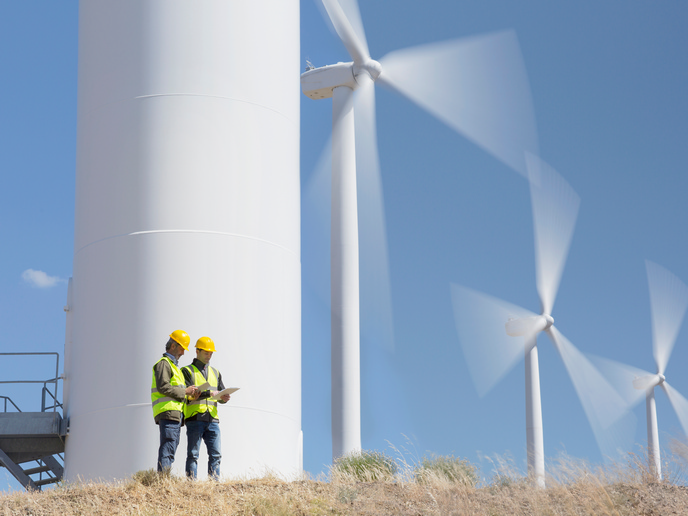
Rare earth elements (REEs) are a group of 17 metals that are critical to the construction of high-tech applications, including wind turbines, electric car motors, highly efficient industrial motors and mobile phones. “REEs are an important component in the strongest permanent magnets that exist today,” explains REEPRODUCE(opens in new window) project coordinator Ana Maria Martinez from SINTEF(opens in new window). “They are so strong that even small amounts give you the magnetic properties you need (for building lower-weight electric vehicles or offshore wind turbines for example).”
Sustainability and reliability of supply
There has been growing interest in the potential of recycling end-of-life products containing REE materials. “There is untapped potential here, with less than 1 % of REE magnets in Europe currently being recycled, mainly at pre-consumers stage,” notes Martinez. The REEPRODUCE project sought to boost Europe’s REE recycling capacity by testing the efficiency of pilot technologies along the whole value chain, from end-of-life products to new magnets. The project also wanted to demonstrate that REE recycling in Europe could be economically viable.
Sorting, extracting, processing and producing new magnets
To achieve its aims, the project validated innovative technologies, with dedicated pilots built for each of the steps along the complete value chain. The first step involved a sorting machine capable of identifying end-of-life products containing REE magnets. A prototype robotic arm then extracted the part of the end-of-life product containing REE magnets. This might be the wheels in an electric scooter, for example, which are becoming more and more common in urban environments. Furthermore, an automated system extracted the REE magnets from the different components. The next step was to run the material through a complex process to turn the discarded magnets into REE oxides. The hydrometallurgical pilot was built with a capacity of 70 tonnes of magnets per year, and consists of several steps, able to accommodate discarded magnets of different chemical compositions and impurity contents (oxides, metal coatings, etc.). The last step converts the REE oxides into REE metals and alloys, from which new magnets can be produced. The prototype built by REEPRODUCE has the capacity to produce around 22 tonnes of REE metals per year and will be validated in August 2026.
Competitive and resilient REE production
Recycling REE magnets here in Europe will bring environmental benefits, reducing the need to mine and import material from abroad. This fits into what the EU is trying to achieve through policies such as the Critical Raw Materials Act, which aims to reduce reliance on foreign suppliers and increase recycling rates of critical materials. “It is a complicated value chain and market,” says Martinez. “But there are also economical and security risks in not having a reliable and resilient REE value chain in Europe.” Significant investment is needed to build plants capable of recycling REE magnets at scale. A business plan(opens in new window) is being developed to support the market uptake of REEPRODUCE solutions, along with the establishment of resilient REE recycling and production in Europe. “We need to extract as many magnets as possible from the discarded products,” notes Martinez. “We calculate that a recycling plant would need to extract a minimum of 1 000 tonnes of REE magnets a year to be economically viable. And then those magnets of different compositions must be refined and converted into new magnets, all in all in an economically and environmentally sustainable way.”