Turning food waste into a sustainable alternative to palm oil

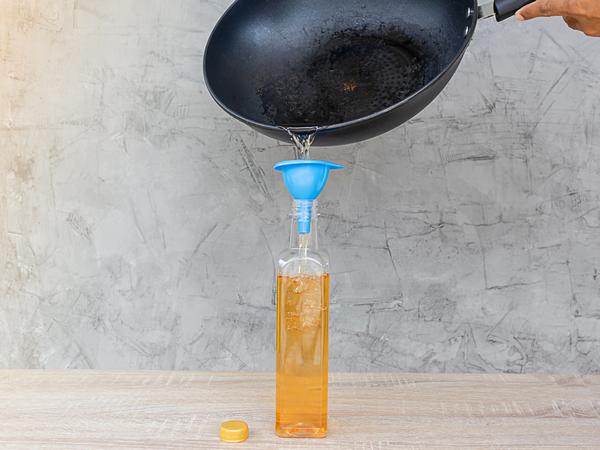
Palm oil is found in around half of all supermarket products, from instant noodles to chocolate bars, and most personal care items. However, despite its versatility, the world’s most widely used vegetable oil comes at a heavy environmental cost. Its production is linked to widespread deforestation, biodiversity loss and greenhouse gas emissions, while Europe remains heavily dependent on imports from a small number of producer countries. The NoPalm Oil project, funded by the European Innovation Council(opens in new window), is tackling this challenge with an unexpected ally: yeast. By feeding naturally occurring microorganisms with agricultural and food processing waste, researchers have developed a fermentation platform capable of producing oils and fats that can directly replace palm oil in foods, cosmetics and cleaning products. The world clears 700 000 hectares of rainforest every year for palm oil and demand is still growing, explains Jeroen Hugenholtz, Chief Technology Officer and co-founder of Dutch biotechnology company NoPalm Ingredients(opens in new window), which developed the fermentation platform. “Every factory we build saves around 2 700 hectares of rainforest and cuts up to 90 million kilograms of CO2 annually. That’s why this can’t wait.” As the EU Regulation on Deforestation-free Products(opens in new window) increases pressure on companies to eliminate links to deforestation from their supply chains, demand for sustainable alternatives is growing. NoPalm Oil provides a timely solution to fill that gap.
Feeding yeast instead of palm trees
While microorganisms producing oils may sound futuristic, the biology is surprisingly simple. “Most people don’t realise yeast naturally produces fat. It’s not something we engineered into it, it’s biology that’s been there all along,” says Hugenholtz. “Just like a palm tree stores energy as oil, our yeast cells do exactly the same thing.” Feeding the yeast with waste rather than crops is where the real innovation lies. Instead of growing on crops, it consumes agricultural and food industry side streams such as dairy waste, vegetable residues and citrus peel, transforming materials that would otherwise be discarded into valuable fats. The process has already been demonstrated in industrial fermenters holding 120 000 litres, an important step towards commercial production. According to the researchers, the technology can reduce carbon emissions by over 90 % compared with conventional palm oil production while using only about 1% of land required to produce the same amount of palm oil.
Local production from local waste
Because the yeast can grow on many different waste streams containing sugars or organic acids, the same technology can be adapted to different regions using locally available feedstocks. “Instead of one fragile tropical supply chain, you get local production from local waste serving local markets. That’s real resilience, and a fundamentally more sustainable model,” notes Hugenholtz. The first commercial applications are expected in cosmetics, with food products, expected to follow after regulatory approval. The company is now preparing its first commercial-scale production facility in Belgium.
Beyond palm oil
Although replacing palm oil remains the immediate goal, the researchers believe the platform has much broader potential. “Right now we’re focused on a semi-solid fat that works as a drop-in replacement for palm oil or even milk fat. But the same platform can produce fats that mimic cocoa butter, and the ability to tune the fatty acid composition means we can also target very specific uses,” says Hugenholtz. By transforming waste into valuable ingredients, the NoPalm Oil project is demonstrating how industrial biotechnology could help Europe reduce its dependence on imported vegetable oils. An important step in helping Europe build a more circular, resilient and sustainable bioeconomy.