A bright future for drought-resistant sunflowers


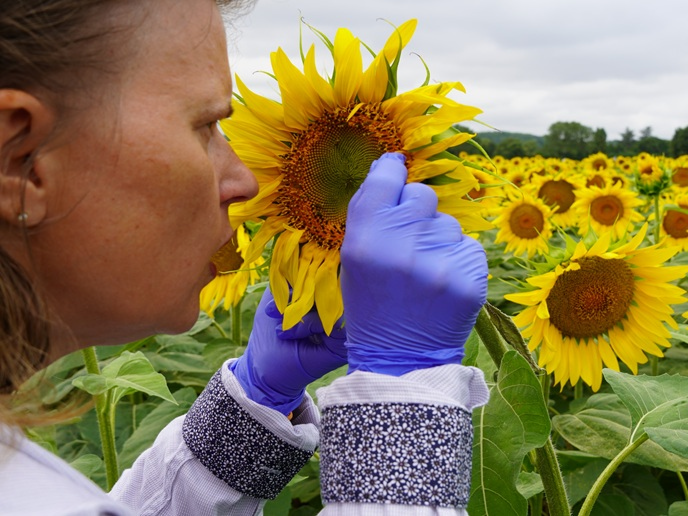
Originating in North America, today around 75 % of the world’s sunflowers are grown in continental Europe. However, climate change impacts such as rising temperatures and water scarcity are having a negative impact on sunflower yields. Developing varieties which tolerate drought and stress will increase crop resilience and reduce European dependence on imported seed oils, as well as reduce the amount of water required for irrigation, boosting climate resilience. “There is also increasing societal demand for plant proteins,” says HelEx(opens in new window) project coordinator Nicolas Langlade, from the National Research Institute for Agriculture, Food and Environment(opens in new window) (INRAE) in France. “Sunflower seeds contain about 43 % oil and 17 % protein. They are mainly used in animal feed, but there is also potential in human food applications.”
Developing climate-smart sunflowers
The HelEx project sought to support European production of sunflowers by strengthening their tolerance to drought and heat – Langlade calls them ‘climate-smart sunflowers’. To achieve this, it combined classical breeding approaches and cutting-edge gene editing. The project brought together 17 partner organisations encompassing researchers, plant breeders, biotech SMEs and farmers. Building on previous work that identified the genomic regions responsible for drought tolerance in sunflowers, the researchers screened wild sunflower populations from arid regions in the United States. The most drought-tolerant strains were then crossed with commercial European varieties. With a year left to go, the project is currently sowing the last field trials of these new sunflowers across France, Germany, Hungary, Romania and Serbia to confirm if its techniques lead to more drought- and heat-tolerant crops. By acting now, HelEx aims to ensure that Europe’s sunflower industry can adapt and prepare for changing climatic conditions. “If we don’t do anything, then sunflower yields will decrease and might no longer be viable in places like Greece and Bulgaria,” adds Langlade. The development of climate-smart, drought-resilient sunflowers will also open new commercial opportunities for farmers in northern European countries. The project’s industrial partners (Limagrain, RAGT and Lidea, represented by Innolea, as well as MAS Seeds and Syngenta) hope to eventually deploy these ‘climate smart’ hybrids across Europe.
From pollinators to protein: unlocking new value from sunflowers
To make sunflowers more attractive to pollinators, genes that control sunflower UV-colour and the sugar content of their nectar were identified. “We also discovered that bees recognise differences in the microbiome in nectar,” notes Langlade. “They are more attracted to certain types of microbes.” This results in a sunflower variety that farmers can grow to attract pollinators, increasing yields of nearby crops. “This sunflower produces six times more nectar and pollen than conventional varieties,” remarks Langlade. “It also flowers in summer, which is when many hives starve, as resources for pollinators are more abundant in spring. This could be great for honey producers as well.” The project also sought to identify genes responsible for characteristics such as protein content. Higher protein sunflower seeds could meet growing consumer demand for plant-based protein, helping Europe to transition away from carbon-intensive animal protein production and the imported soybeans that it relies on, strengthening the resilience, competitiveness and sustainability of the European agri-food sector. The new sunflower is currently undergoing a rigorous registration process for placing it on the market, with Langlade expecting the crop to be available in 2028.