Brewery waste turned into recyclable bio-based bottles and trays

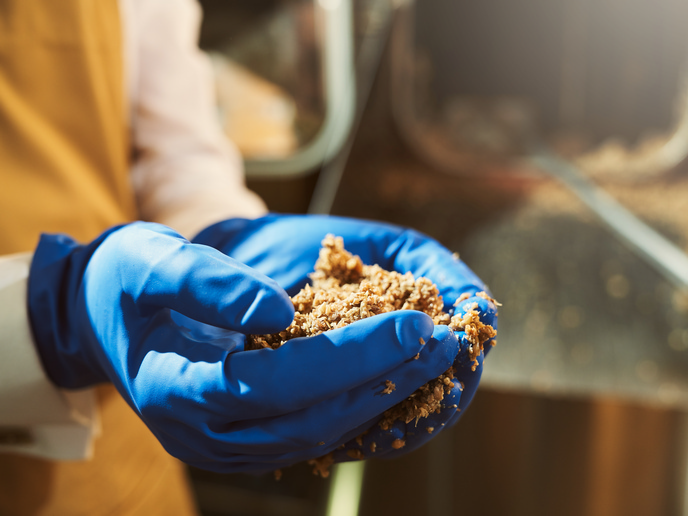
Packaging made from renewable raw materials must protect products, work with industrial equipment and be recycled after use. As EU packaging rules(opens in new window) push towards packaging that can be recycled economically, the EU-funded BioSupPack(opens in new window) project connected these requirements in one value chain. Supported by Horizon 2020(opens in new window) and coordinated by Spain’s AIMPLAS Plastics Technology Centre(opens in new window), the project used brewery spent grain, the grain left after brewing, as a raw material in fermentation to make polyhydroxyalkanoates (PHAs), natural polyesters produced by microorganisms. Its packaging and recycling work covered rigid formats, waste sorting and two routes for recovering the material after use.
PHA packaging trials cover bottles, trays and displays
BioSupPack developed formats for food, home-care and beverage products. The most advanced was an injection-moulded display for beer bottles used in the HORECA sector. Project coordinator Rosa González Leyba of AIMPLAS says: “This last one was validated in real-use conditions for nearly one year with very positive results and feedback from the end users.” The PHA formulation also performed well during injection moulding. For fibre-based packaging, PHA-coated ice-cream trays showed promising recyclability, while a preliminary accelerated test produced positive compostability results. On a semi-industrial extrusion blow moulding line, which forms bottles by blowing heated material inside a mould, the team adjusted processing parameters and produced two designs: one for dressings and another for fabric-washing liquids. Tests characterised the bottles and examined how the material interacted with their intended contents.
Sorting and enzymatic recycling recover PHA packaging
During validation on a pilot recycling line, BioSupPack’s sorting prototype identified and separated more than 95 % of PHA packaging from mixed plastic packaging waste. Food residues would then be removed by washing prior to enzymatic recycling. Other materials left after sorting would not hinder enzymatic recycling because the enzymes target only PHA. González Leyba explains: “Regarding post-consumer waste, the project addressed enzymatic recycling as the more suitable route for this polymer, recovering the value of the material by obtaining the monomer and reintroducing it in the PHA production process.” The recovered monomer, or molecular building block, can be used to produce new PHA, including material suitable for food-contact packaging. Post-industrial scraps followed a separate route: mechanical recycling allowed the scrap material to re-enter PHA mixtures for bottles. Existing plants would need the adapted sorting technology to direct post-consumer PHA packaging to enzymatic treatment.
PHA packaging needs scale-up and food-contact safety tests
Fibre-based trays and bottles require larger-scale trials to reveal any further adjustments needed in their formulations or processing. Both prototypes underwent overall migration tests, which assess whether substances transfer from packaging. Before food-contact applications can enter the market, these preliminary studies must be complemented by tests for specific substances and unintentionally present compounds. Production volume is also central to price competitiveness with fossil-based plastics. González Leyba says: “The optimisation of PHA production at larger scales in Europe, using different feedstocks, would allow current prices to go down and spread the use of this material in different sectors.” Scaling up PHA production would require further research, industrial investment and reliable spent grain logistics. BioSupPack modelled an online platform connecting European breweries offering spent grain with potential users to improve feedstock management and transport needed for larger-scale production.