Caging bacteria to fight infection

Every year, Shigella bacteria cause an estimated 160 million cases of illness worldwide. Once inside human cells, these pathogens evade many conventional immune defences, making them difficult to eliminate and contributing to the growing challenge of antimicrobial resistance. The ERC-funded(opens in new window) ENTRAPMENT project has revealed an unexpected ally in the fight against these intracellular bacteria: septins(opens in new window). These are an understudied component of the cell’s internal skeleton that can physically trap invading microbes and mark them for destruction.
A new role for the host cell cytoskeleton
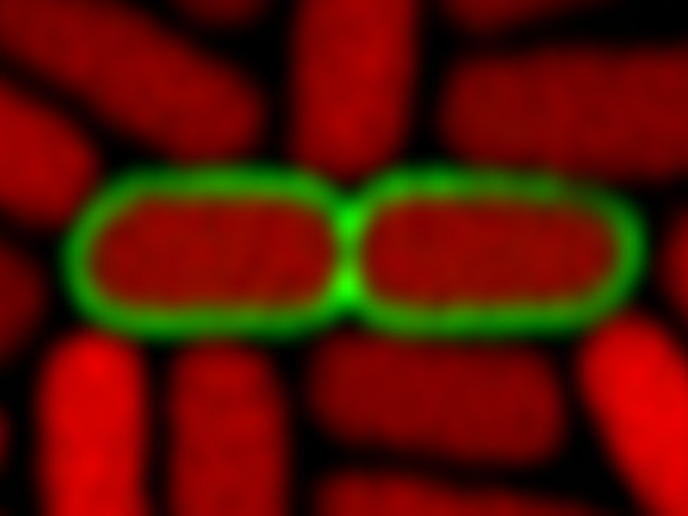
Septins are filament-forming proteins best known for their role in cell division. Before ENTRAPMENT, little was known about their contribution to immunity. The project(opens in new window) has fundamentally changed this view by demonstrating that septins act as an active defence system against bacterial infection. “When important human pathogens such as Shigella breach the cell membrane and move through the cytosol, septins recognise and entrap actively replicating bacteria in cage-like structures,” explains the principal investigator, Serge Mostowy. Septin cage entrapment restricts bacterial replication and dissemination, acting as a structural determinant of host defence that complements conventional immune defences. At the same time, they recruit the intracellular recycling process known as autophagy, allowing infected cells to eliminate the trapped pathogens. The discovery establishes the cytoskeleton beyond a structural framework. It reveals it as a direct participant in cell-autonomous immunity, the ability of individual cells to defend themselves against invading microbes.
Immunity redefined
To study the breadth of septin roles in cellular immunity, researchers employed transparent zebrafish larvae, which allowed them to observe bacterial infections and immune responses inside living organisms with exceptional resolution. Unlike conventional mammalian models, zebrafish faithfully reproduce the key stages of Shigella infection while enabling real-time visualisation of interactions between bacteria and immune cells. These experiments were combined with in vitro reconstitution experiments(opens in new window) and AI-assisted microscopy(opens in new window) to uncover how septin cages assemble and function. Beyond septin biology, researchers also uncovered new mechanisms involved in innate immune training and identified factors contributing to the remarkable success of Shigella as a human pathogen. They also documented complex variability between individual host cells and bacterial populations during infection. “We discovered that septins entrap cytosolic bacteria based on biophysical cues such as bacterial cell curvature while simultaneously targeting them for autophagic destruction. This indicates that the cytoskeleton itself acts as a direct antibacterial weapon,” highlights Mostowy.
Towards new antimicrobial therapies
Moreover, ENTRAPMENT demonstrated that septins play broader roles in immunity than previously appreciated. The study identified unexpected functions in blood cell development and inflammatory cell death, showing that cellular architecture and immune signalling operate hand in hand to eliminate intracellular pathogens. By uncovering how cells physically trap and eliminate bacteria, the project has established septin-mediated immunity as a new research frontier. Because septin cages recognise fundamental physical properties of bacterial cells, they may be less vulnerable to the emergence of antimicrobial resistance than conventional antibiotics. This opens promising avenues for developing therapies that strengthen the body’s own defences instead of directly targeting bacteria. “Our discoveries position the septin cytoskeleton as a legitimate therapeutic target that can help combat antibiotic-resistant infections,” concludes Mostowy.