


Innovation in aquaculture


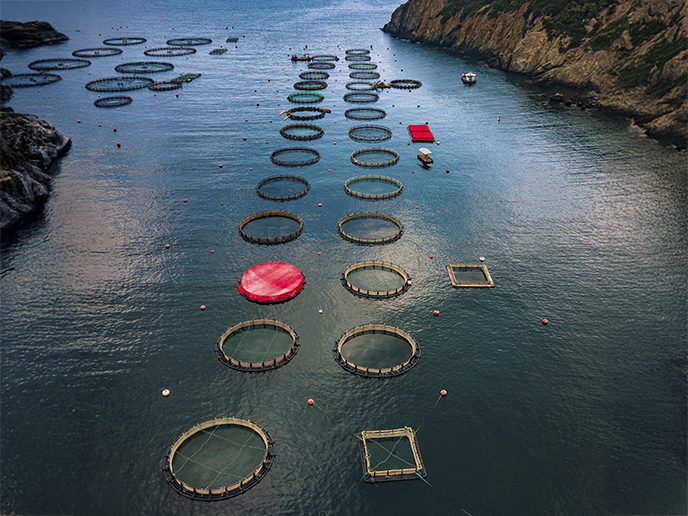
The EU alone farms an estimated 1 million tonnes of fish, molluscs, algae and crustaceans every year, with a value of approximately EUR 4.6 billion(opens in new window). The sector’s 14 000 enterprises – many of which are family-owned micro and small businesses – also directly employ around 57 000 people. While these numbers may look impressive, the reality is that the EU represents less than 1 % of global aquaculture volume. And while aquaculture globally has seen a 54 % increase in production over the past decade, production in the EU has stagnated since 2017(opens in new window). What’s driving this lack of growth? EU aquaculture has specialised over the years, and is now dependent on just a handful of species, namely trout, mussels and sea bass – many of which require high-resource feed. This lack of diversity also means Europe is reliant on imports for much of its seafood, which further increases the sector’s environmental footprint. Another factor preventing growth is that the EU’s available aquaculture space is vastly underused compared to comparable regions. Even with nearly 68 000 km of coastline and more than half a million natural lakes, 67 % of the EU’s aquaculture production is concentrated in just four Member States: France, Greece, Italy and Spain. The EU is looking to turn the tide on aquaculture production. But growth cannot come at the expense of its ambitious climate goals. This means aquaculture needs to be scalable, but also sustainable. To achieve this, the EU adopted the Strategic guidelines for a more sustainable and competitive EU aquaculture(opens in new window). Research and innovation play an important part in these guidelines. By supporting research, innovation and implementation projects that deliver new technologies, training, regulation and value chain enhancements, EU funding programmes such as Horizon Europe, the European Maritime, Fisheries and Aquaculture Fund (EMFAF) and the LIFE programme are working collaboratively to achieve the EU’s strategic aims in the sector. This Synergy Info Pack highlights 26 EU-funded projects overseen by the Directorate General for Research and Innovation(opens in new window) (DG RTD) and the European Climate, Infrastructure and Environment Executive Agency(opens in new window) (CINEA) that reflect how this pluralistic approach fosters a strong, reciprocal research and innovation ecosystem. In the following pages you’ll discover how bio-based antibiotic alternatives can sustainably prevent fish diseases and why fungi and insects can be used as sustainable alternative ingredients to soy- and fishmeal-based aquafeed. You’ll also learn what researchers are doing to increase the production of organic aquaculture in Europe. But it’s not just fish and shellfish production that are benefiting from EU-funded research. Innovative solutions are also being developed to increase algae farming, reuse fish waste, integrate aquaculture into offshore wind farms and municipal wastewater treatment plants, and train the next generation of aquaculture professionals. Together, they show how EU research and innovation funding is turning the tide towards a competitive, climate-neutral and resilient aquaculture sector in the EU.