


Automated wind turbine maintenance delivers benefits

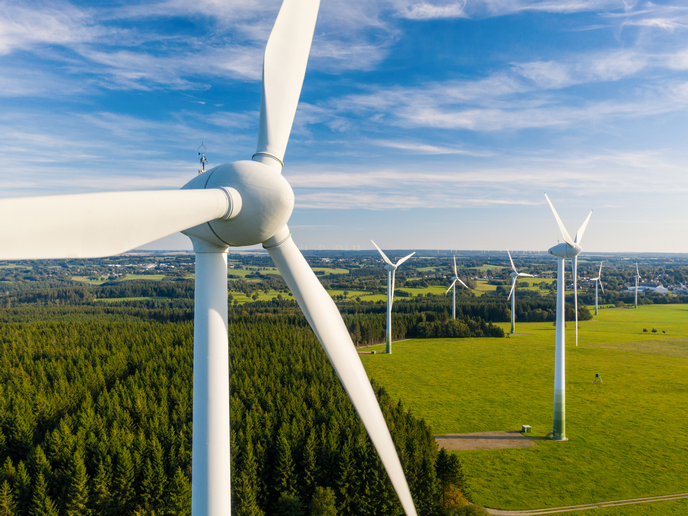
Wind turbine blades are exposed to harsh environmental conditions throughout their lifetime, leading to defects such as cracks, delamination, impact damage, debonding and leading-edge erosion. A major challenge is that many of these defects develop beneath the blade surface and cannot be reliably detected through conventional visual inspections or drone-based surveys. “Maintenance is also labour-intensive, costly and often requires technicians to work at height,” says Romain(opens in new window) project member Nuno Rego from the EDP Group in Portugal(opens in new window). “Downtime during repairs can result in significant production losses and increased operating costs for wind farm owners.”
Robotic inspection of wind turbine blades
The overall objective of the EU-funded Romain project was to develop and validate a robotic maintenance system capable of inspecting and repairing wind turbine blades directly in the field. To achieve this, the project brought together experts in robotics, wind turbine operations, non-destructive testing, artificial intelligence (AI) and composite repair technologies. “The work was carried out in several stages,” explains Rego. “First, we developed a robotic platform capable of climbing and positioning itself on wind turbine blades. We also created an advanced inspection system to detect hidden defects.” The project team then developed AI algorithms to automate defect identification and interpretation of inspection data, and designed robotic repair technologies. These included automated patch application and advanced welding-based repair concepts. “We integrated the main subsystems into a single robotic maintenance platform,” adds Rego. “These were tested in laboratories and dedicated test facilities at Aerones’ facilities in Riga, Latvia, where a dedicated blade test environment was created.”
Detecting and repairing hidden subsurface defects
Field trials were then carried out to validate the entire inspection-to-repair process in real operational conditions. These took place at La Cabaña and El Gramal wind farms in Spain, operated by EDP Renewables. These trials demonstrated the ability of the robot to access the turbine blades, inspect them, and identify localised defects with the support of AI-based analysis. Patch repairs on operational wind turbines were successfully carried out. “One particularly important result was the successful use of shearography (a laser-based measurement technique) to detect hidden subsurface defects that were not visible through conventional inspection methods,” notes Rego. “These were later confirmed through follow-up inspections months afterwards.”
Successfully operational in wind farms
Romain has shown that robotic blade maintenance is technically feasible and can be deployed successfully in operational wind farms. Next steps include further improving AI-based defect detection performance and processing speed, and refining the repair system to handle a wider range of defect types. “We also want to include additional maintenance activities such as surface preparation and finishing,” says Rego. “In the meantime, we will continue to validate the technology with wind farm operators, and explore commercial opportunities through our project partners, including Aerones, Tecnalia, Front Technologies and EDP.” Indeed, the project team believe that the innovation has strong industry potential. A techno-economic analysis indicated that robotic maintenance helps to reduce operational costs, increase the number of repairs completed within a maintenance campaign, and reduce weather-related delays. In this way, the Romain project hopes to support the future growth of Europe’s renewable energy sector.