How ancient sticklebacks are helping current biodiversity efforts

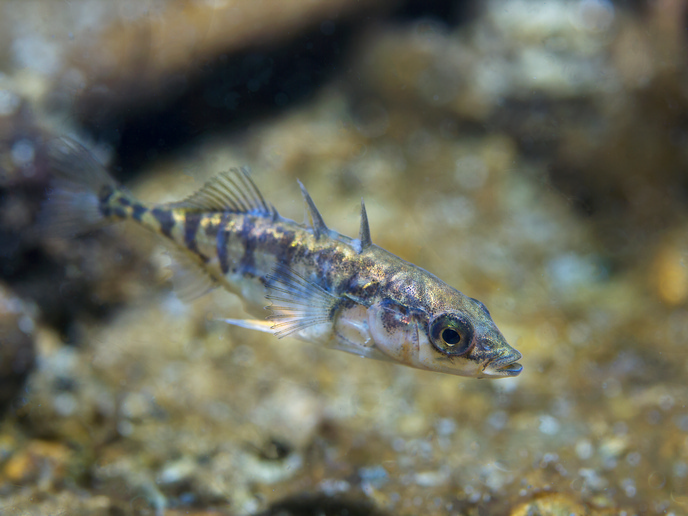
Against a backdrop of accelerated environmental change, conservationists lack comprehensive observational accounts of species adaptations over long timescales. Consequently, many scientific unknowns remain, such as how damaging genetic mutations ‘hitch’ rides on beneficial genetic adaptations. “Survival adaptations come with evolutionary trade-offs. Understanding which genetic variations allow populations to adapt, and at what genetic cost, could offer insights into population resilience,” explains Andrew David Foote(opens in new window) from the University of Oslo. To help fill this knowledge gap, Foote coordinated the EXPLOAD project which was funded by the European Research Council(opens in new window) and investigated different parallel three-spined stickleback adaptations, driven by the same genes.
Capturing the chronology and tempo of genomic changes
While evolution is often a slow and staggered process, three-spined stickleback develop adaptations relatively quickly. This, alongside their long-term abundance in northern hemisphere lakes, makes them a model study species. With the help of the Norwegian Geological Survey, EXPLOAD collected marine, brackish and freshwater sediment cores from ‘postglacial isolation lakes’. These formed at the end of the last glacial period almost 12 000 years ago when the ice sheets retreated and the land gradually rebounded. As the land rose, newly formed marine bays isolated from the sea, eventually became freshwater lakes. “As lakes were often colonised by three-spined stickleback independently, their sediments offer natural experiments,” explains Foote. “Sampling several lakes over different timescales reveals parallel stickleback adaptations, offering insights into whether damaging genetic mutations increase alongside freshwater adaptations.”
Tracing the path of genetic variation
State-of-the-art genomic approaches focused on genetic regions that control the formation of defensive and feeding morphology, alongside behavioural and physiological traits. For example, the EDA gene(opens in new window) underpins the development of protective bony armour plates. The variant of the EDA in marine sticklebacks results in protective bony armour plates along their sides, while freshwater stickleback have reduced armour plating but faster early life growth, beneficial in colder winters. As ancient DNA is very fragmented, the team also collected high quality DNA from a living stickleback, and sequenced its genome to create a kind of skeleton onto which the ‘flesh’ of the ancient DNA could be added. “Genetic variation preserved in sediment as old as 13 000 years, allowed us to observe evolution unfolding in a way previously not possible,” says Foote. It was initially expected that beneficial mutations spreading through low-recombination regions would drag damaging mutations with them. However, the sticklebacks seemed to have purged these(opens in new window), suggesting that mutational adaptation costs aren’t universal. “We need a more nuanced understanding of the interaction between recombination, genome structure and selection,” notes Foote. When comparing ancient DNA from different lakes, the team also found that the genes which adapted to freshwater earliest, also effected the biggest morphological or physiological changes. Having co-evolved, these were also often clustered together, such as those linked to the EDA gene.
Developing a general palaeogenomics tool
EXPLOAD’s methodologies, especially analysis of sedimentary ancient DNA, have wider potential, for example affording palaeoecology and archaeology information about past organisms and ecosystems with few fossil records. Foote is now branching out to additional sediment cores and lakes, to better understand why the rate and trajectory of adaptation differs between independently colonised freshwater environments. “We aim to develop sedimentary palaeogenomics into a more general tool for reconstructing evolutionary change, rather than inferring it from living population comparisons,” adds Foote.