Better seagrass habitat monitoring could boost biodiversity

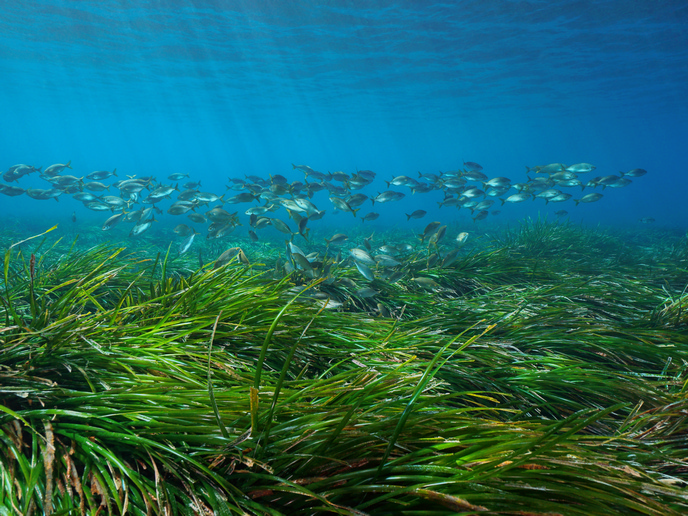
Seagrasses are underwater flowering plants which form the foundation of coastal marine ecosystems. They capture and store more carbon than terrestrial forests, while supporting fisheries, improving water quality and stabilising coastlines against erosion. Posidonia oceanica(opens in new window) is one species unique to the Mediterranean Sea and vital to the regional economy, underpinning tourism and fishing. “Unfortunately, ongoing human pressure – including urban development, tourism, overfishing, alongside nutrient run-off and increased storms – has led to decline in Mediterranean seagrass habitats. Without Posidonia oceanica, this entire ecosystem will collapse,” says Nicole Foster, coordinator of the POSIDONIArXiv project, developer of a novel approach to biodiversity monitoring of seagrass ecosystems.
Learning from three monitoring approaches
To assess present-day biodiversity in Posidonia oceanica meadows and observe how well ancient sediments capture marine biodiversity over time, the Marie Skłodowska-Curie Actions(opens in new window) supported POSIDONIArXiv project adopted and compared three methods. Alongside underwater visual surveys and sediment infauna (under a microscope), in collaboration with University of Copenhagen(opens in new window) researchers, POSIDONIArXiv also explored the analysis of environmental DNA (eDNA) – DNA shed by marine organisms into the ocean. eDNA was retrieved from surface sediments and sediment cores one metre under the ocean floor (time capsules of evolving biodiversity) from Ibiza and Formentera, the Balearic Islands, Spain – as proxies for differing levels of human impact; high and low respectively. Sediment eDNA’s success rate in detecting taxa was closer to that of the infauna survey than the visual survey. While overall eDNA did detect substantially more taxa than either method, according to Foster, it may show a biased representation of marine taxa, favouring sediment-dwelling organisms. “However, this can still be valuable information concerning the health of the ecosystem and offers an alternative when visibility or access issues make other marine surveys challenging,” notes Foster from the Spanish National Research Council(opens in new window), the project host.
The composition of past and present seagrass ecosystems
Carbon dating found the sediment cores to be up to 1 000 years old. Biogeochemical analyses then characterised the samples’ marine community composition, with sediment sections also analysed for organic and inorganic carbon, grain size and carbon isotopes. Specialist labs extracted DNA from these sediments to amplify genetic regions using polymerase chain reaction(opens in new window) (PCR), meaning organisms could be identified by matching these genetic identifiers to those in a database. “We chose gene regions across the tree of life to detect the breadth of marine organisms that reside in Posidonia oceanica ecosystems,” adds Foster. “But while detecting marine organisms is important, understanding how they create a functioning and stable ecosystem offers greater insights into the health of a seagrass habitat.” So collaborating with University of Zurich(opens in new window) experts, Foster combined trophic information about the organisms detected with eDNA, to assess how these form a network, also exploring species’ nestedness and turnover through time – work which remains ongoing.
eDNA as a key tool to monitor biodiversity in seagrass habitats
Better monitoring of their habitat biodiversity benefits seagrass protection and management, alongside the local environment and economy. And using eDNA to reconstruct past ecosystems could generate otherwise unattainable insights, including a glimpse into their natural state. “Alongside improving Posidonia oceanica habitat conservation, examining human-induced changes will prioritise species to protect,” remarks Foster. The team continues to analyse their sediment core eDNA data to build a fuller picture of historical change over time in these fragile environments, to be presented to Balearic Island government bodies. Meanwhile, according to Foster: “Our new surface sediment eDNA approach can already be adopted for conservation monitoring plans.”