


Innovative solutions for a more circular construction sector

Not only does the construction sector use a lot of resources, it also generates a substantial amount of waste. In fact, accounting for approximately 25–30 % of all waste, construction and demolition waste (CDW) is the largest waste stream in the EU. The problem is that within this waste are valuable components and materials that could be recycled and reused. “Because the sector lacks the ability to effectively sort and separate these potentially reusable materials from what is truly waste, valuable components and materials are often not separated in a way that enables high-quality reuse or closed-loop recycling,” says Timo Hartmann, a professor of Civil Systems Engineering at the Technical University of Berlin’s(opens in new window) (TU Berlin) Civil Engineering Institute(opens in new window). With the support of the EU-funded Reincarnate(opens in new window) project, Hartmann is leading an effort to help the construction sector prevent waste, extend the lifetime of buildings and components, and enable the high-quality reuse and recycling of construction materials. “Reincarnate aims to make buildings, construction products and materials remain valuable resources throughout their life cycle rather than becoming waste at the end of use,” he adds.
Digital solutions enable circular construction
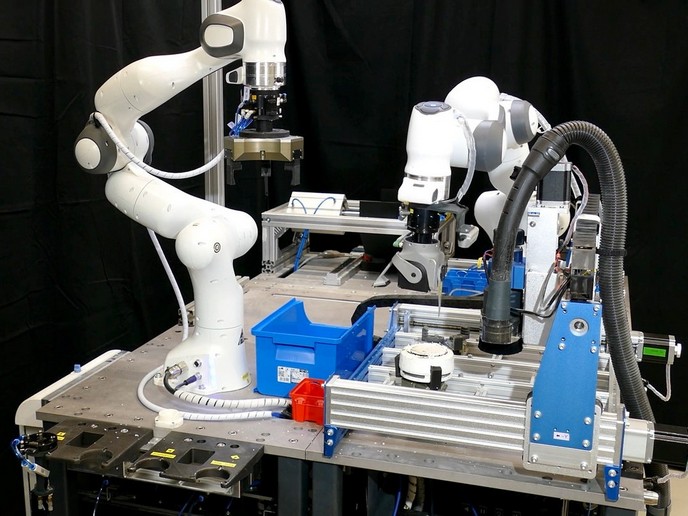
To do so, the project used a combination of digital solutions, including building information modelling (BIM), digital information management, the Circular Potential Information Model(opens in new window) (CP-IM), material and building assessment, internet of things and tracking technologies, reuse and recycling planning, and robotic automation. “Reincarnate advances the field by demonstrating how digital information and physical assessment can be connected into practical circular construction workflows for determining what can be maintained, reused or recycled and how this can be implemented in practice,” explains Hartmann. For example, using various combinations of these technologies, the project developed solutions for tracking components, inspecting and valuating buildings, and circular renovation and value-flow planning. It also delivered data-driven and machine learning methods for assessing recycled materials and supporting material/component evaluation.
Solutions demonstrated across different materials, buildings and life-cycle stages
The project’s solutions were brought together and validated across eight demonstration cases(opens in new window) covering different materials, buildings and life-cycle stages. One of those demonstrations focused on a circular value flow where flat glass from existing buildings is recovered, processed and used to produce new flat glass that can be reinstalled as a window component. The demonstration achieved a 91 % flat-glass-to-flat-glass recycling rate and obtained an end-of-waste declaration showing that the recovered material meets specific product standards and is thus no longer classified as waste. Other demonstrations explored building a tiny house with reused materials and products, BIM-based prefab element tracking, and a non-destructive crack detection in masonry structures, amongst others.
A strong foundation for building towards commercialisation
According to Hartmann, the successful completion of these diverse demonstrations provides a strong foundation for taking the results beyond the research project. “The next step is to build on the demonstrated solutions through further implementation, replication and development,” he concludes. “This includes applying the CP-IM and individual innovations in additional construction projects, further developing the most mature technologies towards operational and commercial use, and continuing research where additional development is required.”