


How local science in Estonia rewrites Baltic prehistory

Biomolecular archaeology has long seen its infrastructure concentrated in a small number of large laboratories in western Europe. The EU-funded PaleoMIX(opens in new window) project was established at the University of Tartu in Estonia to address this regional imbalance. Research focused on neolithisation, the transition from foraging to farming, in the Eastern Baltic.
Democratising research into biomolecular archaeology
“We demonstrated that cutting-edge biomolecular archaeology can thrive beyond the traditional centres of excellence, inspiring others to build similar capacities in regions where such research was previously out of reach,” notes project coordinator Mari Tõrv. The inspiration stemmed from three key elements. The first was Tartu’s strong existing foundations in biomolecular archaeology, including its ancient DNA laboratory(opens in new window) and new archaeochemistry laboratory(opens in new window). The second was an exceptional group of international researchers and collaborators returning from abroad with new expertise. The third was the revival of an earlier unfunded Marie Skłodowska-Curie fellowship idea built on institutional partnerships with the University of Copenhagen, the University of Burgos and the University of York that made this collaborative effort possible.
How biomolecular archaeology studies prehistoric lifeways
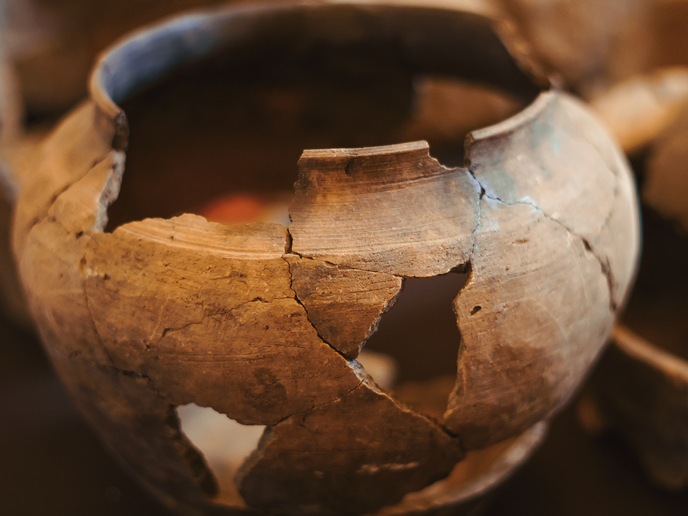
To explore neolithisation in the Eastern Baltic, researchers applied novel biomolecular and bioarchaeological methods to examine pottery and human remains, providing new clarity on prehistoric lifeways. “Lipid analyses of pottery proved that dairy products arrived in the region alongside early farming populations. Proteomic analyses identified the exact animal species whose dairy products were processed in those pottery vessels,” explains Tõrv. Furthermore, compound-specific isotope analysis of human remains showed that the transition to farming was not straightforward, revealing that early farmers continued to heavily consume fish – a dietary nuance not evident by bulk isotope analyses alone. Implementing additional methods, including ZooMS(opens in new window), SPIN, stable isotope analyses on single amino acids, AMS radiocarbon dating and bioinformatics, PaleoMIX refined the chronology of the transition and provided new insights into how farming was adopted in northern Europe.
An international research hub
Beyond research activities, PaleoMIX set out to establish the University of Tartu as a recognised centre for biomolecular archaeology in the Baltic region. This was achieved through capacity building, research, community engagement and ethical leadership. Staff training, knowledge exchange and new equipment significantly strengthened in-house capacity. These investments translated into scientific outputs. The use of novel biomolecular methods generated new insights into past lifeways, diets, mobility and human-environment interactions. International visibility grew in 2023 when the project team organised the 10th biennial meeting of the International Society for Biomolecular Archaeology, bringing together over 400 researchers from across the world. To ensure long-term sustainability, PaleoMIX created the open online course ‘Unlocking the Past: Basics of Biomolecular Archaeology’ for students and professionals. Importantly, researchers established a code of conduct for invasive biomolecular sampling to ensure responsible research practices.
Local research strengthening European identity
“We made vital contributions to preserving European cultural heritage by enabling archaeological collections from the Baltic region to be analysed and interpreted within the communities and countries they originated in,” states Tõrv. This strengthens local stewardship of cultural heritage and supports informed decisions about its protection and management. PaleoMIX also contributed to a more inclusive understanding of European history by bringing new evidence from the Eastern Baltic into wider discussions of European prehistory. It demonstrated that Europe’s shared heritage is built upon a rich diversity of regional experiences and cultural traditions. While core activities are complete, research publications resulting from the project are still actively being released. Efforts are ongoing to enable the launch of a joint master’s programme in biomolecular archaeology leveraging the active participation of all project partners.