Free rides, real data: Maltese island’s autonomous bus pilot puts the public in the driver’s seat


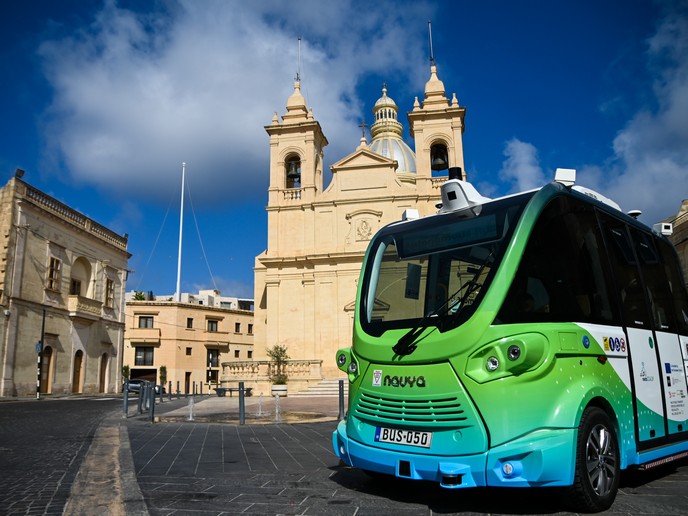
The EU-funded metaCCAZE(opens in new window) project has begun its public testing of the first autonomous bus service on Gozo, Malta’s second-largest island. Gozo is one of six cities in which the project is demonstrating successful zero-emission mobility solutions initially tested in Amsterdam (the Netherlands), Limassol (Cyprus), Munich (Germany) and Tampere (Finland). The goal is to show how autonomous mobility could support smarter, more sustainable transport. During the public testing phase, the bus will follow a real-world route between Ċangura (San Lawrenz) and Dbieġi (Il-Wilġa in Għarb). It will run from Monday to Saturday, excluding public holidays, between 09:30 and 12:45 and 14:00 and 16:45, with departures every 15 minutes. The service will be available to residents and visitors to the island free of charge during this phase. “The start of the public testing phase represents an important step in this project, as it gives the public the opportunity to experience autonomous transport for the first time in Malta,” states Konrad Pule, General Manager of metaCCAZE project partner Malta Public Transport, in a recent news item(opens in new window). “While this is a pilot initiative, it allows us to better understand how this technology performs in a real-world environment and how passengers interact with it.”
Ensuring a safe journey
Safety remains at the heart of the pilot. Every journey will be supervised by a trained operator ready to intervene and take manual control at any moment. The service will operate in line with the regulatory requirements of Transport Malta, the government body overseeing transport on the island. During this testing phase, metaCCAZE will collect operational data with which to comprehensively evaluate the pilot. Passengers will also be invited to provide feedback on the service through a short survey(opens in new window) to be completed after their journey. Project partner University of Malta will use this information to gain insights into users’ experiences, expectations and perceptions of autonomous public transport. These insights will help shape the design of future mobility solutions that meet the needs of local communities, residents and visitors. “Research lies at the heart of the metaCCAZE project, exploring how autonomous mobility can be implemented effectively in real-world settings,” notes Maria Attard, Director of the University of Malta’s Institute for Climate Change and Sustainable Development. “Beyond technological feasibility, the University of Malta is examining public acceptance, user experiences and the wider social impacts of the service. The pilot will also provide valuable insight into how lessons from other European contexts can be adapted to the specific mobility needs and realities of Malta and Gozo.” Beyond Gozo, metaCCAZE is also testing its technologies in five other follower cities: Athens (Greece), Krakow (Poland), Milan (Italy), Miskolc (Hungary) and Poissy, Yvelines (France). In September 2026, the project took part in a webinar(opens in new window) on shaping sustainable cities with new mobility services, presenting the mobility solutions for its Miskolc pilot. The session – joined by the two EU-funded projects GEMINI and SPINE – focused on new shared mobility services, digital and physical interventions, and public transport measures to improve urban mobility and encourage more sustainable travel. metaCCAZE (Flexibly adapted MetaInnovations, use cases, collaborative business and governance models to accelerate deployment of smart and shared Zero Emission mobility for passengers and freight) ends in December 2027. For more information, please see: metaCCAZE project website(opens in new window)