Inoculating against anti-vax messaging through empathy

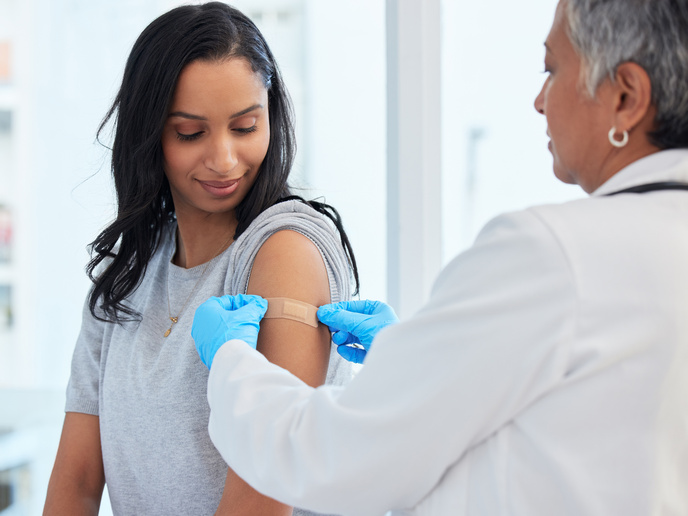
While vaccines have saved more lives than pretty much any other medical intervention or invention, vaccination has always been met with scepticism, hesitancy and opposition. Worryingly though, the ‘anti-vax’ movement has grown in strength in recent years. The WHO recently warned that vaccine hesitancy(opens in new window) was one of the biggest public health issues facing the world. “If too few people get vaccines, then there is no herd immunity,” explains JITSUVAX(opens in new window) project coordinator Stephan Lewandowsky from the University of Bristol(opens in new window). “This is happening right now in the US with measles, which was considered to have been eradicated a few years ago. Babies no longer getting Hepatitis B shots could have liver disease in 20 or 30 years and will die younger.”
Attitudes underlying vaccine hesitancy
The problem is that vaccine hesitancy is not easily dealt with. Lewandowsky points out that strongly held opinions often arise from deep-seated attitudes that are central to a person’s identity. “People are also different,” he adds. “This is why a one-size-fits-all approach to tackling vaccine hesitancy doesn’t work.” The JITSUVAX project set out to address this by bringing together a team of psychologists, scientists and clinicians to better understand the different reasons for vaccine hesitancy. From this, new personalised tools and approaches to tackle misinformation were developed. “We looked at anti-vax argumentation from scientific literature and fact-checked COVID-19 misinformation,” says Lewandowsky. “Using machine learning tools, we then classified these findings into what we call ‘attitude roots’ (i.e. the underlying psychological motivations).” Some 11 attitude roots were catalogued, with four in particular standing out. These were: conspiracy theories (often reflecting a lack of trust in institutions); political concerns; moral and religious concerns (such as over vaccinations connected with sexual activity); and fear.
Space for honest conversationTraining to counter misinformation
The project team has gone on to train doctors in Finland, France, Germany, Romania and the United Kingdom – nearly 400 healthcare professionals have been trained in the United Kingdom alone. Since project completion, a non-profit spin-off called JITSUVAX Training(opens in new window) has been set up to continue this work. “We currently have two employees and bookings to the middle of 2026,” notes Lewandowsky. “Our hope is that this turns into a self-sustaining engine.” Fundamentally, JITSUVAX has shown that countering vaccine misinformation and overcoming the increasing number of bad faith actors on social media is possible. “There are still a lot of reasonable people in the world,” remarks Lewandowsky. “ERI is about understanding people’s attitudes and fears. Just showing that you are prepared to listen to people can make a huge difference.”