Closing the loop: a blueprint for textile circularity


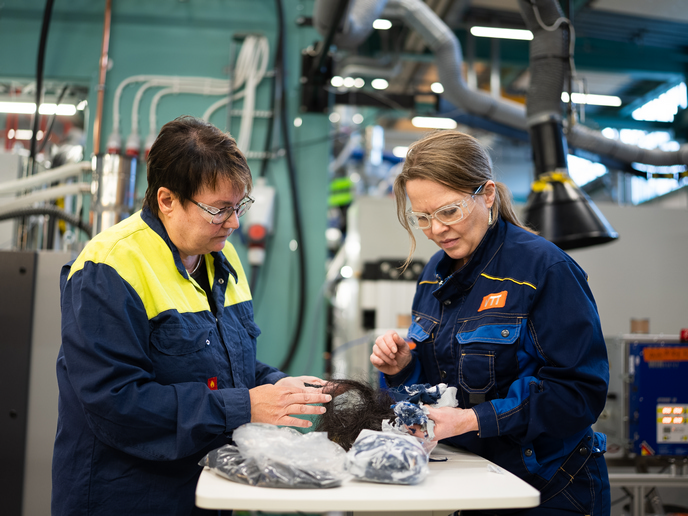
Europe generates millions of tonnes of textile waste every year, yet only a fraction is recycled. Household textiles – the sector’s largest waste stream – are a complex mix of fibres and materials. Most recycling technologies are fibre-specific, and current sorting remains largely manual. Sustainable and safe circularity will require control over materials flows. The EU-funded tExtended(opens in new window) project is addressing these needs. Over four years, the consortium has been developing a knowledge-based blueprint for the optimised circular flow of textiles. The goal is to demonstrate the potential for up to 80 % reduction in textile waste through extended reuse of textiles and advanced recycling technologies. In addition to waste reduction, it will enable a more sustainable textile ecosystem.
Traceability and smarter routing and recycling
Effective recycling begins with knowing a material’s contents. “tExtended has developed and tested tools including hyperspectral imaging, capable of identifying textile composition with high accuracy,” notes project coordinator Pirjo Heikkilä of VTT(opens in new window). A scientific publication(opens in new window) highlights its performance as a quality control method in sorting. In addition, new quality control concepts are currently being tested in the real-scale demonstration activities. Complementing this, tExtended’s traceability tool is designed to feed directly into the EU’s forthcoming digital product passport (DPP), mandatory for textiles by 2030. The legislation will require digital data on a product’s origin, composition, repairability and end-of-life options, potentially accessible via a QR code or radio frequency identification (RFID) tag. tExtended’s textile traceability and DPP-related tools will support this, ensuring material information is captured at production and remains available to sorters, recyclers and consumers throughout a product’s lifecycle. tExtended’s textile waste router is a decision-support tool that helps stakeholders identify the most appropriate strategy for different material types. “Our textile waste router will help optimise textile waste flows and understanding of the impacts of different routing options including textile reuse, remanufacturing and various recycling methods,” explains Heikkilä. It can also be used to raise awareness of circular strategies suitable for different kinds of textile materials. Furthermore, the project has developed colour removal processes that increase the value of recovered fibres, separation methods suited to mixed-composition textiles, and a variety of recycling approaches (fibre mechanical, thermo-mechanical and chemical).
Looking to the future through modelling and comparisons
tExtended has applied system dynamic modelling to predict how different interventions – including legislative changes – could affect textile waste volumes and the circular ecosystem. The project has also conducted environmental comparisons of recycling options using a ‘safe and sustainable by design’ framework. Together, these can help policymakers and industry determine where investment and regulation can have the greatest impact.
Engaging the chain from consumers to industry
“Several industry partners have already integrated new collection, sorting and quality concepts into their operations, with new business opportunities anticipated around products with high recycled-fibre content from post-consumer sources,” notes Heikkilä. An e-learning centre hosted on the project website will offer circularity education for stakeholders from consumers to businesses. Technical solutions alone cannot drive circularity. tExtended’s social innovation workshops(opens in new window) have raised consumer awareness and encouraged participation in textile reuse and pre-sorting through community activities in Finland, Latvia, Ireland and Belgium. The tExtended project is showing that tackling textile waste at scale demands a holistic response – combining sensing technologies, digital infrastructure, optimised recycling pathways, environmental analysis and broad stakeholder engagement. With its blueprint near completion, the project offers a credible roadmap for transforming Europe’s textile sector into a circular economy.