Saving Eurasia’s pine forests from their most destructive parasite



Bursaphelenchus xylophilus, a microscopic parasitic roundworm commonly known as the pinewood nematode, remains the most devastating threat to pine forests across Europe and Asia. Up until now, the EU has required that all susceptible tree species within a 500-metre radius of any infested tree be cut down. However, this drastic measure has not helped eradicate the disease in Portugal, and previous modelling suggests it is ineffective in vast, pine-only forests.
A more selective approach
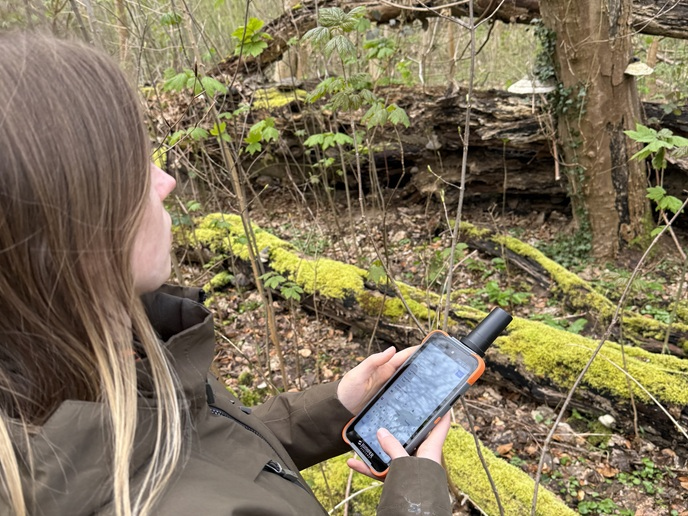
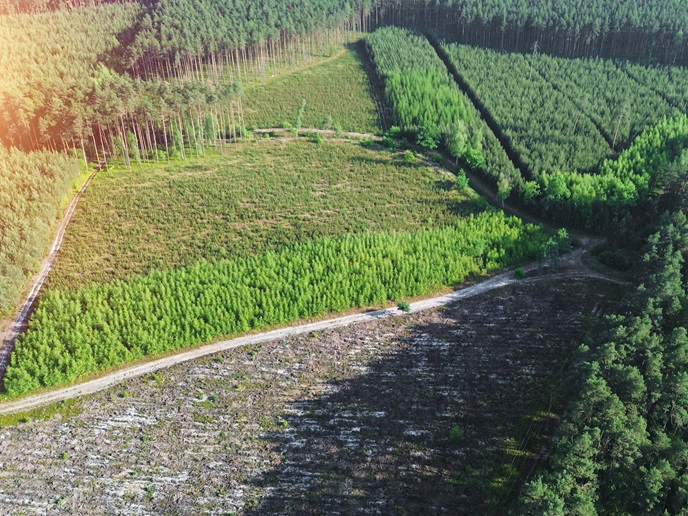
A new study supported by the EU-funded HOMED(opens in new window) and FORSAID(opens in new window) projects now challenges the status quo. Researchers from France, the Netherlands and Portugal have compared the cost-effectiveness of mandatory clear-cutting against selective felling, where only trees displaying visible symptoms are removed. The research team focused on the maritime pine stands of the Landes forest in south-west France, simulating various monitoring strategies. These included ground-based visual monitoring from forest roads and paths, ground-based monitoring combined with trapping of Monochamus galloprovincialis, the pine sawyer beetle carrying the parasite, and aerial monitoring combined with AI-assisted image analysis. Study findings indicate that aerial monitoring significantly outperforms traditional ground surveys. While ground-based monitoring remains the current standard, the integration of remote sensing and AI promises greater detection efficiency in the future. The study’s comprehensive model accounted for the costs of monitoring and analyses to identify the nematode, the different types of felling and the economic loss associated with felling healthy trees. It also calculated cost-effectiveness based on the dispersal behaviour of the pine sawyer beetle, different monitoring methods and intensities, and varying ratios of symptomatic to infested trees.
The best-case scenario
The results are striking: under optimal monitoring conditions – specifically, repeated surveys by aircraft with high detection efficiency at the times when infested trees show symptoms – selective felling can be up to 200 times less costly than clear-cutting. This massive saving is primarily due to the preservation of non-infested trees, which clear-cutting unnecessarily destroys. However, the study also highlights a critical caveat. The nematode can only be eradicated under these optimal monitoring conditions. If monitoring is insufficient, eradication becomes impossible regardless of the felling method used. In such non-optimal scenarios, the objective shifts from eradication to containment. Even then, selective felling of declining trees offers the superior cost-effectiveness ratio. Ultimately, the research supported by the HOMED (HOlistic Management of Emerging forest pests and Diseases) and FORSAID (Forest surveillance with artificial intelligence and digital technologies – FORSAID) projects underscores that the key to managing this destructive parasite lies not in the intensity of felling but in the quality of monitoring. Improving monitoring through advanced remote sensing and AI is essential in order to effectively limit the spread of the pinewood nematode while still preserving the economic and ecological value of Europe’s pine forests. For more information, please see: HOMED project website(opens in new window) FORSAID project website(opens in new window)