A research approach to track pesticides in soil-water bodies


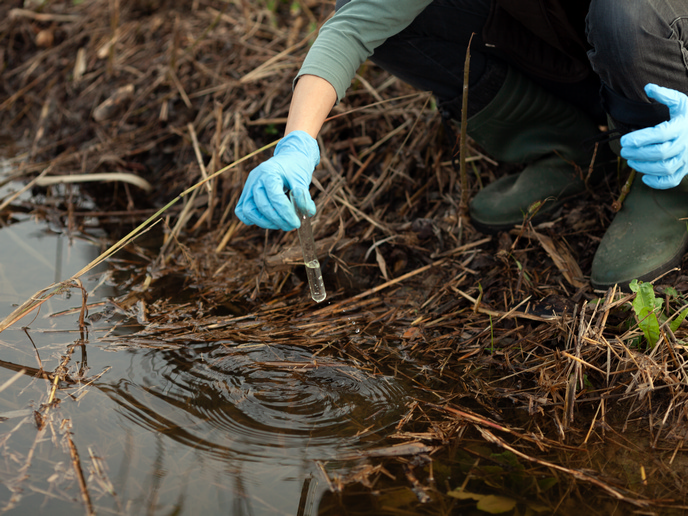
As populations grow, so does pesticide use in agriculture. These chemicals are relevant for crop protection and increasing food security. However, pesticides also raise serious concerns about potential health and environmental impacts. The EU-funded RECYCLE(opens in new window) project worked on improving our understanding of how pesticides migrate and transform through soil and waters, aiming to find ways to mitigate adverse ecosystem effects. Existing methods for studying pesticide contamination in soil-water systems are limited in their ability to transfer findings from laboratory-controlled experiments into robust assessments of real-world systems. These systems are complex and heterogeneous. Even small variations in their properties can affect pollutant migration, accumulation and transformation. Uncertainty is then always associated with modelling results. The RECYCLE project brought together a multidisciplinary team of experts in environmental engineering, hydrology and geochemistry, along with leading research institutions and industrial partners across Europe and beyond. The team developed tools to study pesticide environmental behaviour and distribution, supporting evidence-based and sustainable water and agricultural management. “One of the main benefits of the RECYCLE approach is its enhanced ability to understand pollutant behaviour in support of long-term risk-aware water-resource management through advanced conceptual and modelling tools developed within the project,” says RECYCLE project manager Laura Ceresa.
Monitoring pesticide pathways
RECYCLE employed laboratory experiments and numerical modelling to study how pesticides interact with mineral and iron-rich materials naturally present in soils. These materials can potentially trap pesticides before they further penetrate groundwater bodies. The project also combined environmental monitoring, geostatistics and hydrological simulations to monitor pesticide transport and identify areas more vulnerable to contamination, such as eutrophic streams(opens in new window). A major case study focused on the Italian Po River Basin examines flow patterns and paths ensuing from interactions of river networks and groundwater, affecting water sources that support millions of people. According to Ceresa, “These tools helped us better understand how pesticides and nutrients move, become trapped and transform within soils, rivers and groundwater systems, while also accounting for uncertainty intrinsically associated with environmental predictions.”
Pesticide circularity
Pesticides have traditionally been viewed through a negative lens as inherently harmful substances. But what if they can be reused in a safe and sustainable manner? RECYCLE explored this possibility with the goal to reduce the demand for newly manufactured pesticides and encourage more sustainable farming practices. While further investigations and validation are needed before full technological implementation, the project has significantly advanced fundamental scientific knowledge underpinning this circular concept. “Inspired by existing approaches based on reuse of nutrient-rich reclaimed water, RECYCLE encouraged a shift from a purely remediation-oriented perspective towards more circular and sustainable water- and resource-management approaches,” Ceresa says.
A collaborative effort with long-term value
One of RECYCLE’s strongest assets was its interdisciplinary nature. “RECYCLE not only generated new scientific knowledge; it also contributed to building lasting research expertise and international collaborations in the field of sustainable water and environmental management, helping strengthen scientific cooperation and knowledge exchange across Europe and beyond,” stresses Ceresa. Equally important is the long-term value of the methodologies developed within the project. These outputs will continue to support research and environmental-management activities beyond project completion, establishing a robust foundation for future policies and efforts towards a safe and climate-resilient agriculture.