From waste to value: unlocking the full potential of algal biomass


Algal biomass is produced at massive scale globally, yet much of its potential remains untapped. In some cases, up to 95 % of processed biomass is discarded or used in low-value applications. This inefficiency represents a major bottleneck for the algae sector and a missed opportunity for Europe’s transition to a circular bioeconomy.
Algal biorefinery innovation
The EU-funded CIRCALGAE(opens in new window) project addressed this challenge by developing sustainable, scalable solutions to transform algal side streams into high-value products across multiple industries. The consortium designed a step-by-step cascade biorefinery approach to extract multiple valuable fractions(opens in new window) from algae biomass. This approach combines green and industrially scalable technologies that facilitate the recovery of compounds such as proteins(opens in new window), polysaccharides and bioactive molecules for use in food, feed and cosmetics. For example, high-pressure homogenisation(opens in new window) allows efficient and selective recovery of intracellular components without relying on harmful solvents. Downstream techniques such as membrane filtration further refine these fractions, ensuring that each ingredient meets specific functional and quality requirements. “All processes have been designed with scalability and sustainability in mind, providing solutions that industry can adopt directly without compromising environmental performance,” explains project coordinator Amparo Jiménez Quero.
Functionality assessment for real-world applications
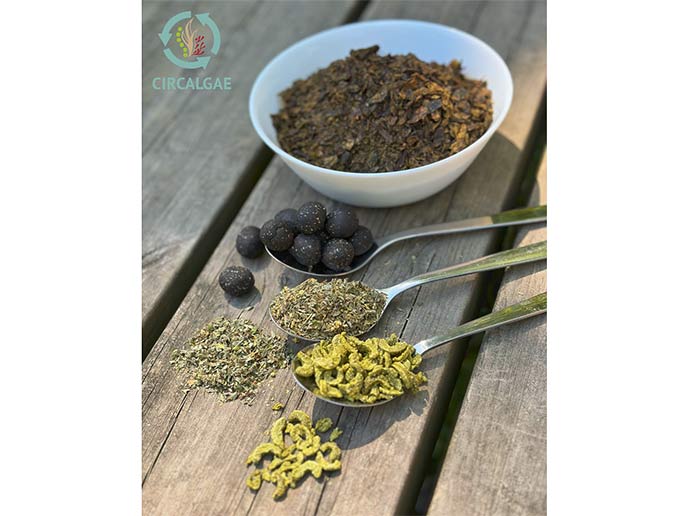
A defining feature of the project was the evaluation of bioactive effects early in development, ensuring end-use application. This approach has delivered particularly strong results in the food and feed sector using nutrient-rich ingredients derived from residual biomass. For example, residues from Spirulina processing were transformed into nutrient-rich ingredients with a strong amino acid profile, suitable for incorporation into food and feed products such as vegan cheese, energy balls and sponge cakes. In parallel, minimally processed fibre- and protein-rich fractions produced through high-pressure homogenisation showed promising effects in feed formulations, supporting animal health and performance. Residues from Laminaria hyperborea processing yielded fucoidan, a bioactive compound with antioxidant properties, while the remaining biomass was successfully repurposed as a fibre-rich ingredient for extruded snacks and breakfast cereals, achieving complete utilisation of the side-stream. Similarly, hydrothermal extraction of Gelidium corneum enabled the recovery of carbohydrate- and protein-rich fractions that were tested as health-promoting feed ingredients, while the remaining cellulose-rich material was further valorised in other industrial applications. Algae-derived bioactive ingredients, such as antioxidant-rich extracts and functional polysaccharides, have also been successfully incorporated into formulations such as creams and body milks. “Overall, we demonstrated that integrated, scalable biorefinery processes can unlock the full value of algae biomass and generate ingredients with clear nutritional and commercial potential,” explains principal researcher Antonio Martinez Abad.
Towards a sustainable future
The CIRCALGAE project achieved notable success in reducing algal biomass waste and converting it into valuable products. Many of the processes and ingredients developed are already close to market implementation, demonstrating the project’s practical relevance. At the same time, scientific outputs and openly available deliverables contribute to a growing knowledge base for sustainable biomass valorisation. Beyond technological innovation, the project has established a strong collaborative network linking industry, academia and stakeholders across the algae value chain around Europe. These connections have created a solid foundation for continued cooperation, which is expected to evolve into concrete market solutions and new business opportunities. “We see CIRCALGAE as a seed for future developments: the concepts, technologies and approaches developed are highly transferable and can be adapted to other biomass types and regional contexts, strengthening Europe’s position in the bioeconomy,” concludes Jiménez Quero.