A lab-on-chip approach delivers precise soil nutrient measurements

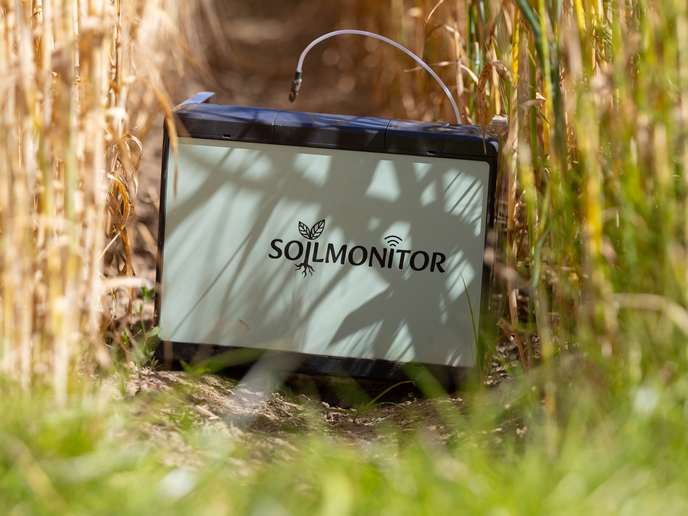
Fertilisers deliver key nutrients that boost crop yields. Improved agricultural production is an economic incentive for farmers as well as a challenge facing the world’s growing population. But studies show that as much as 60 % of agricultural land in the European Union is being overfertilised, negatively impacting biodiversity, water quality and crop yield. Farmers need precise information on what is happening underground, and the EIC-funded SOILMONITOR(opens in new window) project has developed a solution – a miniature soil-testing device designed to gather one hundred samples in a year and analyse them for key nutrients. Putting this accurate and continuous information in the hands of farmers allows for tailored fertilisation that optimises crop production while minimising negative environmental impacts.
A lab-on-chip soil monitor for farmers
The project’s eponymous soil monitor was developed at Kiel University in Germany and built on the earlier BEAMOLED project. The multidisciplinary team included experts in chemical engineering, electrical engineering, soil science and business. Buried at root height between 30 and 60 cm underground, the lab-on-chip system (25 cm x 15 cm x 10 cm) is about the size of a shoe box. Soil water extraction is carried out by a porous alumina ceramic intake component and a peristaltic pump. While extraction is easier with sandy soils, the small amount required for soil analysis enables the device to function well in a variety of conditions. The soil is then processed on a microfluidic chip(opens in new window), the prototypes of which are created as shown in this project video(opens in new window). Using colour-forming assays and an optical readout system based on insights from the BEAMOLED project to test for the presence and concentration of targeted nutrients, the soil monitor then sends information to the farmer’s cell phone using LoRaWAN(opens in new window). Currently the project also uses narrowband IoT wireless technology to transfer this information. Project partners envision a deployment of three to eight units per field, depending on soil heterogeneity. When the units are placed, a built-in test function will allow farmers to ascertain that the device is functioning properly before filling in the installation trench. Throughout its 12-month autonomous operation, the soil monitor will collect spent samples and reagents in a disposable cartridge.
A spin-off company for soil monitoring
As a recipient of an EIC Transition grant(opens in new window), commercialisation has been part of the SOILMONITOR plan from the beginning. The spin-off company will initially market the soil monitoring system for high-value crops such as vegetables and seed cultivation, with follow-up plans involving broader applications. Project coordinator Martina Gerken suggests a long-term price below 500 EUR per unit. Even before the price tag reaches this manageable target, the soil monitor is a good investment. “The return on investment for farmers can be very fast,” Gerken explains. “For high-value crops such as tomatoes or strawberries, even a conservative 5 % improvement in marketable yield through optimised nutrient management can offset the sensor cost within a single growing season.” The soil monitoring system is designed to operate maintenance-free for a year, but the device itself is made for extended use. “We follow a razor-and-blade approach,” Gerken shares. “Farmers purchase the sensor system once and then replace annual consumable cartridges containing the microfluidic components.” SOILMONITOR has delivered a marketable solution for precision agriculture. Easy to use and worth the investment, this small device will improve crop yields and support environmental stewardship.