Non-opioid local pain control for major spine surgery

Spine fixation surgery is among the most painful medical interventions performed today. Approximately 1.2 million patients undergo these procedures every year across Europe and the United States, and their pain after surgery is still mostly managed with opioids in high doses. Despite their widespread use, opioids often fail to provide adequate pain relief while increasing the risk of serious side-effects, long-term dependence, and chronic postsurgical pain. The EIC-funded OPERAS project set out to improve perioperative care by developing an implantable hydrogel that delivers sustained local pain relief directly at the surgical site to reduce the need for systemic opioid treatment.
Sustained pain relief
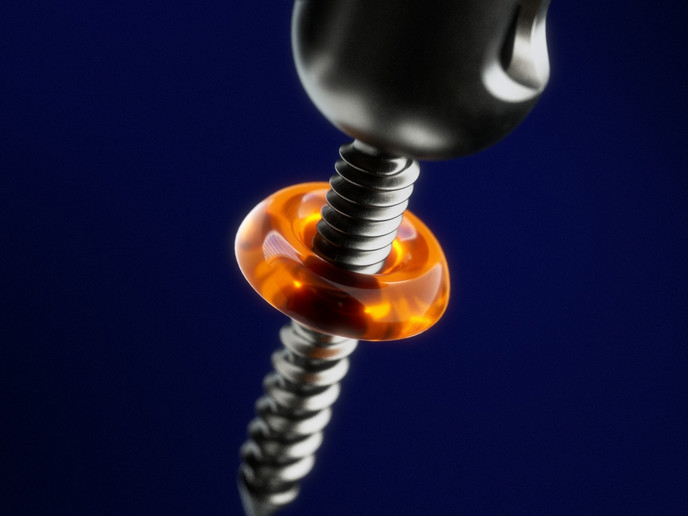
The project was centered around on BR-003(opens in new window) (Bupi-Ring), ring-shaped hydrogel designed to be co-implanted with standard spine surgery screws. It releases the approved and well-established local anaesthetic bupivacaine directly at the surgical site for more than 72 hours, covering the critical early period of recovery when pain is most intense. In contrast, conventional local anaesthetic injections typically remain effective for up to eight hours. Unlike many new technologies, BR-003 integrates seamlessly into existing surgical procedures without requiring any changes to the surgeon’s workflow. Once the drug has been released, the hydrogel naturally biodegrades within the body. “The objective was to provide prolonged local pain relief exactly where it is needed while avoiding the limitations associated with systemic opioid therapy,” explains project coordinator Hein Jonkman.
Clinical safety and efficacy
A major milestone was the successful completion of a first-in-human Phase Ib clinical trial(opens in new window) involving 11 patients across two hospitals in the Netherlands and Switzerland. The study primarily evaluated safety by measuring systemic exposure to bupivacaine following implantation. “The clinical trial demonstrated that systemic drug levels remained far below the accepted safety threshold in every patient, with no serious adverse events attributed to the study drug,” highlights Jonkman. The average peak plasma concentration of bupivacaine remained 13 times below the recognised safety limit(opens in new window). Drug levels remained detectable for two weeks, confirming sustained local drug release well beyond the immediate postoperative period. Exploratory analyses also suggested important clinical benefits. Compared with patients receiving standard care, participants treated with BR-003 required 42% fewer opioids during the first three postoperative days while reporting 49% lower back pain scores. Although these efficacy findings require confirmation in larger trials, they provide encouraging evidence that prolonged local drug delivery could substantially improve pain management after surgery.
Next-generation pain management
OPERAS also established a clear pathway towards regulatory approval. Researchers completed the protocol for an adaptive phase II/III pivotal clinical trial, with confirmation from the European Medicines Agency and the United States Food and Drug Administration that a single European pivotal study could support approval in both markets. “Within three years, we progressed from a promising laboratory concept to independently validated first-in-human clinical evidence,” notes Jonkman. If future clinical trials confirm these promising early findings, SentryX’s surgical pain blockers could help reduce opioid dependence, improve patient recovery, and establish a new standard of care for pain management after spine surgery.