Can a memory be erased?



First we should define what we mean by “erased”. There are two broad schools of thought on this, the first embodied by the Russian Nobel Prize winner Ivan Pavlov (of Pavlov’s dog fame). In the 1920s, he suggested that the extinction of memory happens through the active process of suppression. More recently, scientists have proposed that the erasure of memories, especially traumatic ones, could involve revisiting rather than suppressing them. This is because each time we remember something, our memory of it becomes malleable and can be changed – a phenomenon exploited in exposure therapy. “A key breakthrough in the past few years has been the concept of how memories are stored in so-called engram cells,” says Gräff, a researcher with the Brain Mind Institute(opens in new window) at the Federal Institute of Technology Lausanne (EPFL) in Switzerland. “The idea is that each time we learn or experience something new, cells in our brain are activated, leaving a memory trace.” In the Remote memory traces project, funded by the European Research Council(opens in new window), Gräff and his team were able to identify and tag neurons in mice that are activated by a specific traumatic memory. Experiments showed that ‘unlearning’ of a specific memory takes place in the same cells used to store the traumatic memory. This suggests that letting go of a memory happens at the cellular level. “Follow-up tests suggested that mice were able to successfully unlearn, or, if you like, erase the memory of a traumatic incident,” adds Gräff. “Though it is more accurate to say that the association to a particular traumatic event has been erased.”
A memory switch
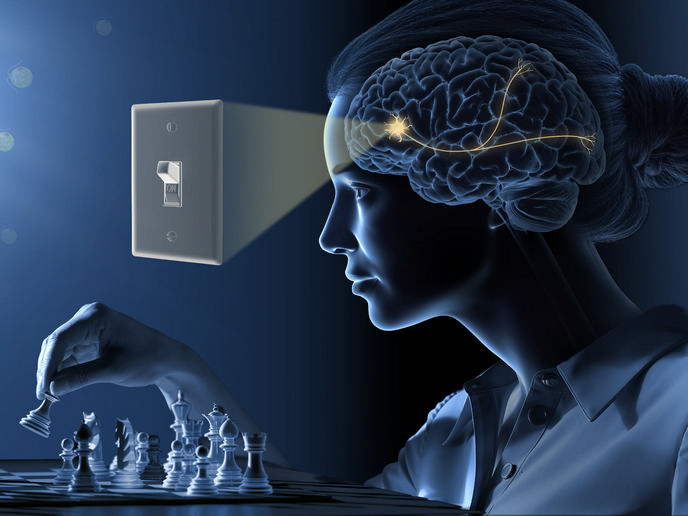
Could we harness this knowledge to specifically target and erase specific memories? “In theory this is possible,” remarks Gräff. “In mice, we were able to insert a molecular switch in engram cells. Turning this ‘off’ effectively got rid of the memory.” Erasing a memory in the human brain however would be orders of magnitude more complex. “Hypothetically, could we use gene therapy to switch specific neurons on or off?” asks Gräff. “I would say yes, but with the caveat that at the moment we would be going in blindly, not knowing for sure that we would be erasing one memory and not the other. So right now, this approach is just not feasible.” More practically, Gräff is looking to build on findings related to ‘unlearning’ traumatic events, to see for example if safe pharmacological solutions could be used to enhance the benefits of exposure therapy. This could bring major benefits for people with PTSD, helping them confront traumatic memories, and move on.